
Sakhir Circuit begins crucial testing phase to validate new era of engines and aerodynamics By Luís Henrique Costa
6 min read
 |
The countdown to one of the most anticipated seasons in the recent history of motorsport entered its definitive stage with the confirmation of the track schedules. The Federação Internacional of Essas sessions represent the moment of truth for the teams who spent the European winter developing cars under strict new technical guidelines.
Team planning for this year is significantly more complex due to the weight reduction of single-seaters and the simplification of active aerodynamics. Cada kilometer traveled in the desert will be vital to validate the data obtained in the simulators, especially to understand how the new energy recovery system behaves under high local temperatures. The main objective is to guarantee the necessary reliability for the championship’s debut at Austrália, scheduled for March 8th.
Back. On. Track. 😤
This week, we’re putting the class of 2026 through their paces at Testing in Bahrain!#F1 #F1Testing pic.twitter.com/UBvYLIJ4HJ
—Formula 1 (@F1)February 9, 2026
Intense preparation and first data collected at Espanha
Before definitive embarkation for the Bahrein, the teams carried out preliminary activities on Spanish soil for basic checks of internal systems. Durante On the 26th and 30th of January, the Barcelona route served as the stage for the shakedown, where Lewis Hamilton caught attention by topping the time tables with its new Ferrari. The Mercedes also demonstrated solidity by completing the highest accumulated mileage, totaling 500 test laps without presenting critical failures in the new components.
A notable absence from this early phase was Williams, which faced delays in the chassis production schedule and chose to focus on direct preparations for Sakhir. Essa decision puts extra pressure on Alexander Albon and Carlos Sainz, who will need to make up for lost time during the available desert dates. The initial focus of activities will be to ensure that the new movable front wing system works in harmony with the rear flaps, avoiding instability at high speeds.
- Lewis Hamilton recorded the fastest lap in the initial shakedown carried out on Espanha.
- The Mercedes accumulated 500 laps, leading the preliminary mechanical reliability ranking.
- Audi and Cadillac used the period to integrate new management software systems.
- Red Bull focused on the initial calibration of the new engines developed in partnership with Ford.
Detailed schedule of track activities at Bahrein
The first series of official tests will begin on February 11th, following a rigorous schedule of eight hours of open track per day. Morning sessions begin at 4am local time, lasting until noon, with a mandatory break for lunch and mechanical adjustments. The afternoon period resumes activities from 1pm to 5pm, allowing teams to test tire compounds in varying asphalt conditions, from intense heat to nighttime cooling.
In the second week, between February 18th and 20th, the focus changes drastically from systems checks to full race simulations. Este is the moment when the drivers test the behavior of the cars with a full tank of fuel and evaluate the wear of the new narrow tires. The gap between the two weeks of testing is used by factories in Europa to produce updated parts based on problems detected in the first round of Sakhir.
Technical changes and challenges of new power units
The current regulations brought visual simplification, but unprecedented electronic sophistication to the maximum category. The cars are 30 kg lighter and have reduced dimensions, which should provide greater agility on closed circuits and facilitate overtaking on straights. The big news lies in the increase in electrical power, which now shares equal prominence with the internal combustion engine, requiring much more strategic energy management on the part of competitors.
The official entry of Ford in partnership with Red Bull and the arrival of Audi as a factory team changes the balance of forces behind the scenes. The Honda, in turn, begins its exclusive journey with the Aston Martin, now under the technical direction of Adrian Newey, promising a highly integrated set. Essas partnerships will be tested to the limit in Sakhir, where dust and side wind often expose weaknesses in the refrigeration systems and air intake of the new units.
Impactful debuts and new formations on the grid
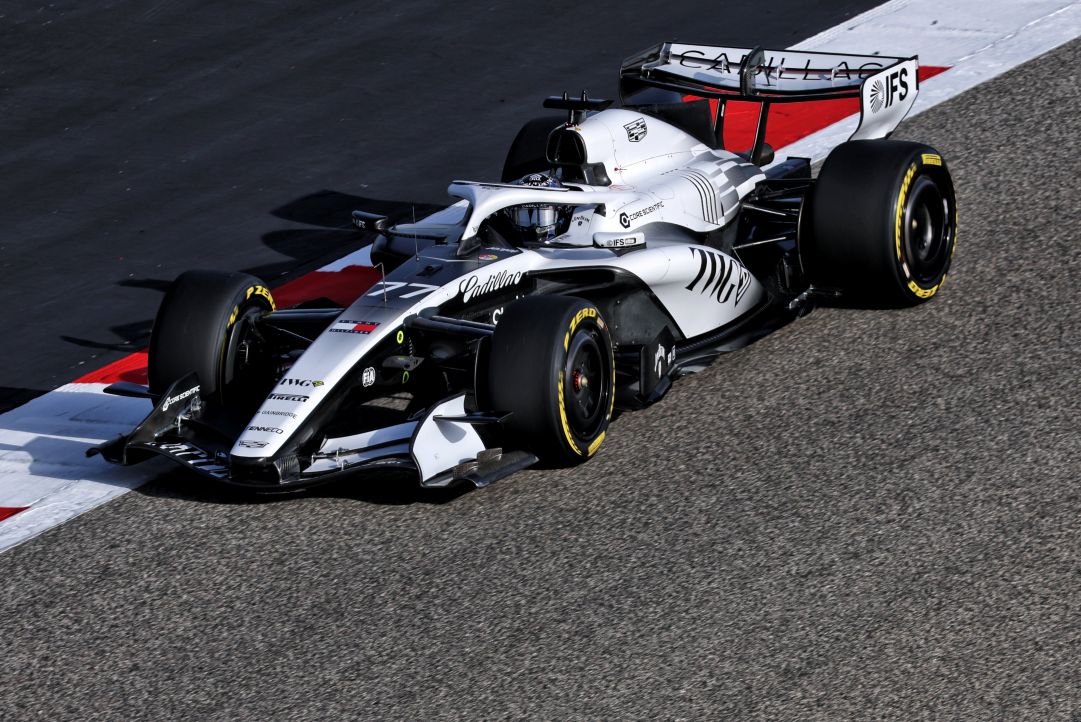
The current grid presents one of the greatest musical chairs of recent times, mixing established veterans with promising young talents. Gabriel Bortoleto, now lead driver for Audi, will have his first big opportunity to lead the development of a factory car alongside Nico Hulkenberg. Outro highlights the debut of Cadillac as the 11th team, bringing Sergio Pérez and Valtteri Bottas to captain the American project in its initial foray into the world championship.
Among the newcomers, Arvid Lindblad takes his place at Racing Bulls after a meteoric trajectory in the youth categories, being the only absolute newcomer of the season. Andrea Kimi Antonelli also begins his official journey as the holder of Mercedes, occupying the vacancy left by Hamilton and forming a pair with George Russell. Essas new partnerships require intense work adapting to radio procedures, seat adjustments and braking calibration during the six days of testing scheduled at Bahrein.
Technical procedures and data collection on the track
During sessions at Bahrein, it is common to see cars equipped with metallic structures known as aero rakes, which contain aerodynamic pressure sensors. Esses devices allow engineers to compare real airflows with computational models developed in CFD and wind tunnel. The use of flow vis paint also remains fundamental, painting parts of the bodywork to physically visualize how air travels over the new, smaller wings and redesigned floor.
Teams use this period to perform data correlation, ensuring that updates planned for the course of the year have a solid foundation. Caso if a car presents unstable behavior or excessive vertical oscillation, technicians need to identify the cause immediately to avoid losses at the beginning of the season. The use of the extra power mode and overdrive button will also be extensively tested to define the most efficient engine maps for the opening race.
Pre-season testing is the only time of the year when mileage is not restricted, allowing reserve drivers to also gain track time. Caso the incumbent presents physical problems, as occurred in previous years, the replacements must be ready to take the wheel and continue the data collection program. Mechanical reliability will be the first major filter, as the new regulation tends to severely punish basic design flaws in energy recovery systems.
Streaming activities ensures that fans and analysts can closely observe the design trends adopted by each lead designer. Observa There is an interesting variation in the design of the side air intakes, with some teams opting for more aggressive solutions to maximize the flow under the car. The efficiency of the DRS and the new active aerodynamics will be the key point in determining who will have the final speed advantage on the long straights of the Melbourne circuit next month.
Expectations for the opening of the world championship
After testing ends on February 20th, teams will have just over two weeks to process the massive volume of information collected. Transporting equipment to Austrália requires impeccable logistics, while factories work double shifts to produce replacement components. The climate of uncertainty is what makes the current regulations so special, as no one knows for sure who interpreted the new FIA rules best.
The expectation is that the order of forces will undergo significant changes compared to the previous cycle, with Audi and Cadillac trying to break the hegemony of traditional brands. The role of pilots like Fernando Alonso and Lewis Hamilton will be crucial in guiding development through experience gained from other regulation changes. Bahrein will provide the initial draft of what promises to be one of the most balanced and technically challenging seasons in modern Fórmula 1 history.
Keywords
f1 pre-season testing, sakhir circuit, formula 1 calendar, new f1 teams, audi and cadillac formula 1 debut
Pesquisa Links
https://ge.globo.com/motor/formula-1/
https://www.uol.com.br/esporte/f1/
https://motorsport.uol.com.br/f1/news/