
Sixth generation RAV4 debuts hammerhead design and 100% hybrid engine with cutting-edge technology By Carolina Costa
4 min read
 |
The global automotive industry eagerly awaits the renewal of one of the world’s best-selling SUVs. The Toyota is in an advanced stage of development for the sixth generation of the RAV4, a model that promises to break aesthetic and mechanical paradigms. The project indicates a complete transformation that aims to maintain the brand’s leadership in the competitive medium SUV segment, aligning with new energy efficiency and connectivity requirements.
The Japanese automaker’s recent strategies point to a break with the visual conservatism of previous versions. The new vehicle will adopt a bolder and more futuristic identity, seeking to attract an audience that values both mechanical robustness and stylistic innovation. Além from appearance, the big change lies under the hood, with the definitive elimination of purely combustion versions in favor of total electrification.
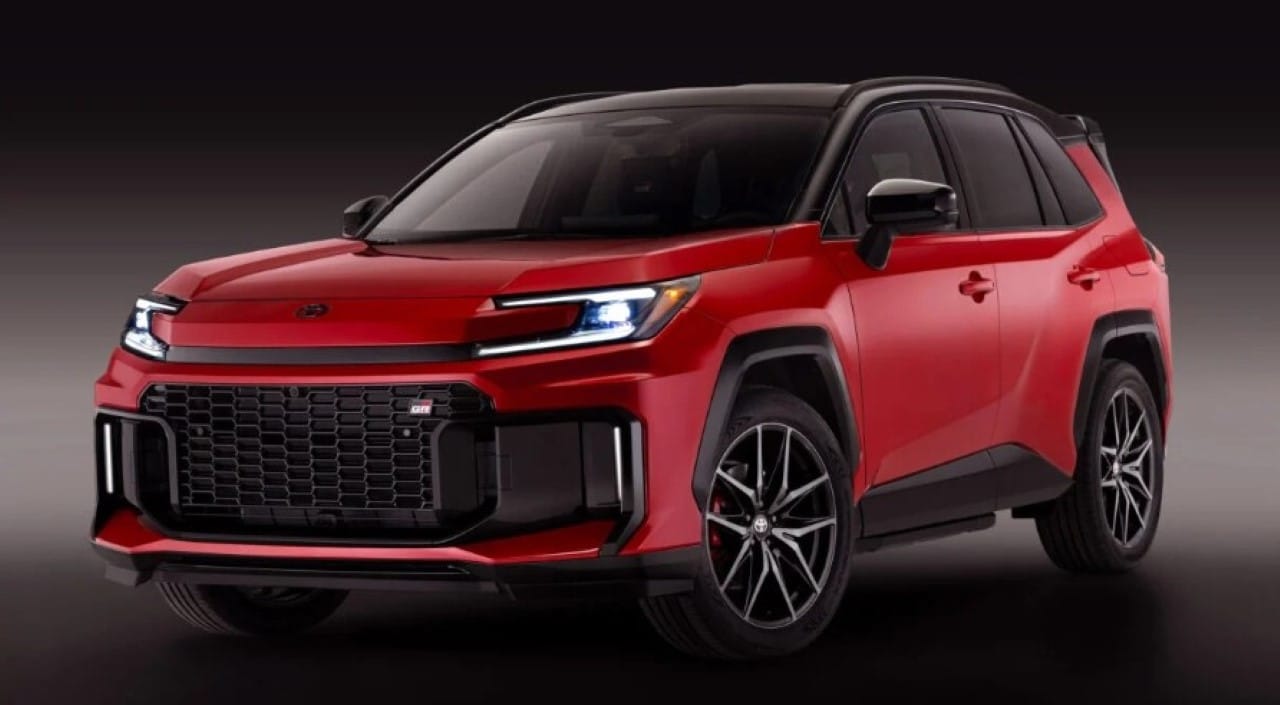
Market information suggests that the model’s official unveiling should take place at the end of 2025. The schedule predicts that sales in international markets, including the Brasil, will gain strength in the first half of 2026. The SUV is expected to establish new safety and comfort standards, consolidating the Toyota’s transition to an increasingly sustainable portfolio.
Visual identity inspired by the hammerhead concept
The aesthetic revolution of the new RAV4 will be marked by the adoption of the design language known as “hammerhead”. The Este style, already present in the brand’s recent launches such as the new Prius and the C-HR, gives the car a significantly more aggressive and aerodynamic appearance. The front of the vehicle will be completely redesigned, integrating “C”-shaped LED headlights with a more discreet front grille and a robust bumper, optimizing airflow and fuel efficiency.
The sides of the SUV will gain more pronounced creases and wheel arches with a quadrangular design, reinforcing the model’s vocation for mixed use and off-road adventures. The rear will not be left behind in the renovation, receiving interconnected LED lights that provide a unique light signature and a cleaner, more sophisticated look. Essa aesthetic change represents a bold step by Toyota to differentiate its product in a market saturated with options with generic looks.
Technological interior and focus on user experience
The cabin will undergo a radical modernization, prioritizing ergonomics and the digitalization of controls. The panel will be restructured to house a new multimedia center with a floating screen, which in the most complete versions can reach 14 inches. The system promises a more agile and intuitive interface, compatible with the connectivity demands of modern drivers.
The instrument panel will also be fully digital and configurable, allowing the driver to personalize trip and navigation information. The automaker will invest in soft-touch materials and refined finishes, raising the perception of interior quality to levels close to those of premium brands. Connectivity will be a strong point, with wireless support for Apple CarPlay and Android Auto, as well as induction charging and multiple USB-C ports distributed throughout the cabin.
Occupant comfort will be enhanced with new design seats designed to offer better body support on long journeys. Acoustic insulation will receive special attention, aiming to reduce the intrusion of external noise and the mechanical assembly. The new interior architecture will also benefit visibility and access to controls, keeping the driver’s focus on the road.
Goodbye to purely combustion engines
The sixth generation will mark the end of exclusively gasoline engines for the RAV4, consolidating the Toyota’s electrification strategy. The entry options must feature an evolution of the conventional hybrid system (HEV), combining a 2.5 Atkinson cycle gasoline engine with electric motors. The set has been improved to deliver faster responses and further reduce fuel consumption.
The combined power of the hybrid system should exceed the 226 horsepower of the current generation, ensuring agility both in urban traffic and when overtaking on the highway. The E-Four all-wheel drive system, which uses a dedicated electric motor for the rear axle, will be optimized to offer greater stability and grip on slippery surfaces, distributing torque intelligently according to demand.
Plug-in version with extended autonomy
For consumers looking for maximum efficiency and the possibility of running in 100% electric mode, the Toyota will offer an improved plug-in hybrid (PHEV) version. Este model will feature a higher capacity battery, designed to deliver a range of more than 100 kilometers on a single full charge.
This autonomy will allow most users to carry out their daily journeys, such as going to and from work, without using a drop of fuel, reserving the combustion engine only for long trips. The PHEV version will also stand out for its performance, positioning itself as the most powerful and sporty option in the line, combining sustainability and driving pleasure.
Advanced security and TNGA platform
Security will be one of the central pillars of the new project, with the adoption of the latest version of the Toyota Safety Sense package. The vehicle’s structure, based on the updated global TNGA platform, will offer greater torsional rigidity, which translates into greater protection in the event of impacts and more precise and safe dynamic behavior.
Driving assistance systems have been refined with longer-range sensors and cameras:
– Pre-collision Sistema with pedestrian and cyclist detection in low light.
– Controle adaptive cruise (ACC) with Stop-and-Go function for heavy traffic.
– Assistente lane keeping time with active centering and steering correction.
– Monitoramento of blind spots and rear cross traffic alert with automatic braking.
The combination of these technologies aims to drastically reduce the risk of accidents and make driving on highways less tiring. Toyota thus reaffirms its commitment to road safety, democratizing technologies that were previously restricted to luxury vehicles.



