
Djokovic cancels participation in Qatar citing fatigue and focuses on preparing for American tournaments By Thiago Lemos
5 min read
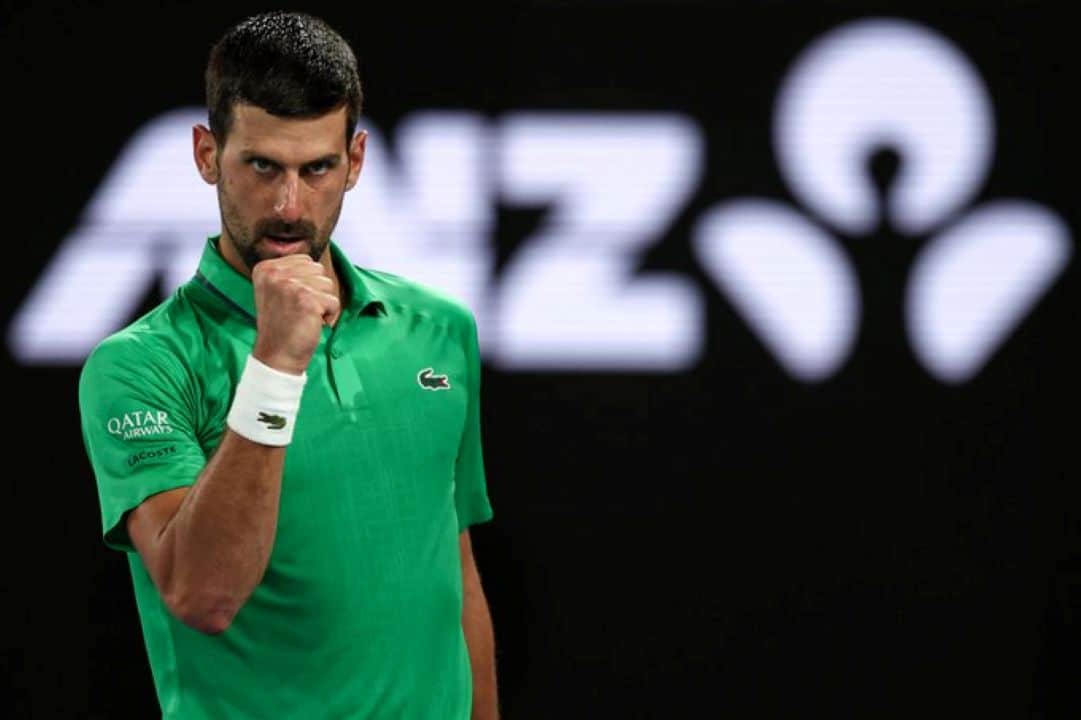 |
The organization of the ATP 500 of Doha confirmed this Wednesday that Novak Djokovic will not compete in the tournament at Catar. The current number 3 in the world rankings officially announced his withdrawal from the main draw, citing the need for physical recovery after the wear and tear accumulated at the start of the season. The decision frustrates the expectations of local fans, who expected to see the two-time champion of the event in action on the fast courts of the Oriente Médio.
The 38-year-old Serbian tennis player opted for a conservative approach to his schedule, prioritizing rest after an intense campaign in the Australian Open. Em Melbourne, Djokovic advanced to the final, where they were bested by The effort expended in the first Grand Slam of the year resulted in accumulated fatigue that made its competitive presence in Doha unfeasible.
From Novak, to Rafa. From one legend to another 🙌pic.twitter.com/gsxs91w4ku
— #AusOpen (@AustralianOpen)February 1, 2026
This is the third time this year alone that the athlete has decided not to participate in scheduled competitions, following a career management line focused on longevity. Antes of the Qatari tournament, he had already declined invitations to the ATPs 250 of Brisbane and Adelaide, preferring to focus his energies exclusively on events of greater magnitude. The strategy aims to avoid chronic injuries and keep the body fit to face considerably younger rivals.
Intelligent management of the sports calendar
The absence of the Oriente Médio reinforces the Djokovic team’s meticulous planning for the 2026 season. The veteran’s focus is almost entirely on the four athlete who is on his way to four decades of life competing at a high level.
Experts point out that this selectivity is the only possible way to maintain competitiveness against the new generation. The pace imposed by players like Jannik Sinner and Alcaraz himself requires a physical response that is only possible with adequate recovery periods. The “Sunshine Double”, made up of the Indian Wells and
The return to the courts should take place on Califórnia, during the first half of March. Indian Wells is a place where Djokovic has a winning record and playing conditions that favor its backcourt style. Até there, the period will be dedicated to specific conditioning and rehabilitation training, aiming to reach Estados Unidos with 100% of their physical capacity restored.
Financial supremacy and economic data
Despite reducing the number of tournaments played, Djokovic’s efficiency when he takes the court guarantees him an unparalleled financial position in the history of the sport. A runner-up finish in Austrália earned major points and a significant prize pool, bringing his total career earnings to more than $192.6 million. Esse amount, converted, exceeds the barrier of R$ 1 billion, consolidating the Serb as the tennis player who collected the most in official awards.
To illustrate the size of this fortune, economic analysts compare the athlete’s earnings with the Produto Interno Bruto (GDP) of sovereign nations. The value accumulated by Djokovic exceeds all the wealth produced annually by countries such as Tuvalu, Montserrat and Nauru. Essa financial strength allows him to make decisions based purely on technical and health criteria, without the pressure of needing to compete to secure income or sponsorships.
- Novak Djokovic has accumulated more than US$192.6 million in official ATP prizes alone.
- The value exceeds the annual GDP of several small island nations.
- Carlos Alcaraz leads the current ranking with 13,650 points, followed by Jannik Sinner.
- Djokovic remains in the top 3 with 5,280 points, ahead of Alexander Zverev.
The challenge against youth on the circuit
Djokovic’s maintenance at the top of the world rankings depends directly on its ability to adapt to the modern game. The final in Melbourne showed that, although the Serb’s technique remains impeccable, the physical intensity imposed by Alcaraz is a growing obstacle. Para To counterbalance the muscular explosion of the youngsters, Djokovic has invested in tactical variations, shortening points and using more access to the net and “drop shots”.
The competitive scenario of 2026 looks like a battle of generations. Enquanto Alcaraz and Sinner compete for the lead point by point, Djokovic runs on the outside, choosing his moments to attack. Physical preservation is not just a matter of avoiding injuries, but a tactical necessity to be able to keep up with the speed of the ball in the final stages of major tournaments, where games usually last three or four hours.
Even with the absence of Doha, the tournament continues at a very high technical level, with the presence of the two leaders in the ranking. Para Djokovic, watching from afar is part of the sacrifice necessary to try to regain the crown in Indian Wells. The expectation is that, rested, he can once again challenge the hegemony of the duo that currently dominates the circuit, proving that his longevity still has victorious chapters to be written.
Preparation focused on Estados Unidos
Djokovic’s routine over the next few weeks will be divided between active rest and high-intensity training based on Europa. The transition to North American hard courts requires a specific adaptation, different from the Australian court. The Serb’s technical team must focus on mobility and resistance, simulating the heat conditions and ball bounce characteristic of the Californian desert.
The objective is clear: reach Estados Unidos not just to participate, but to win. With 24 Grand Slam titles, the Serbian’s motivation now lies in expanding his records and defending his legacy against new talents. The withdrawal of Catar, therefore, should be read by rivals not as a sign of weakness, but as a warning that Djokovic is arming itself to reach maximum strength in March’s Masters 1000.



