

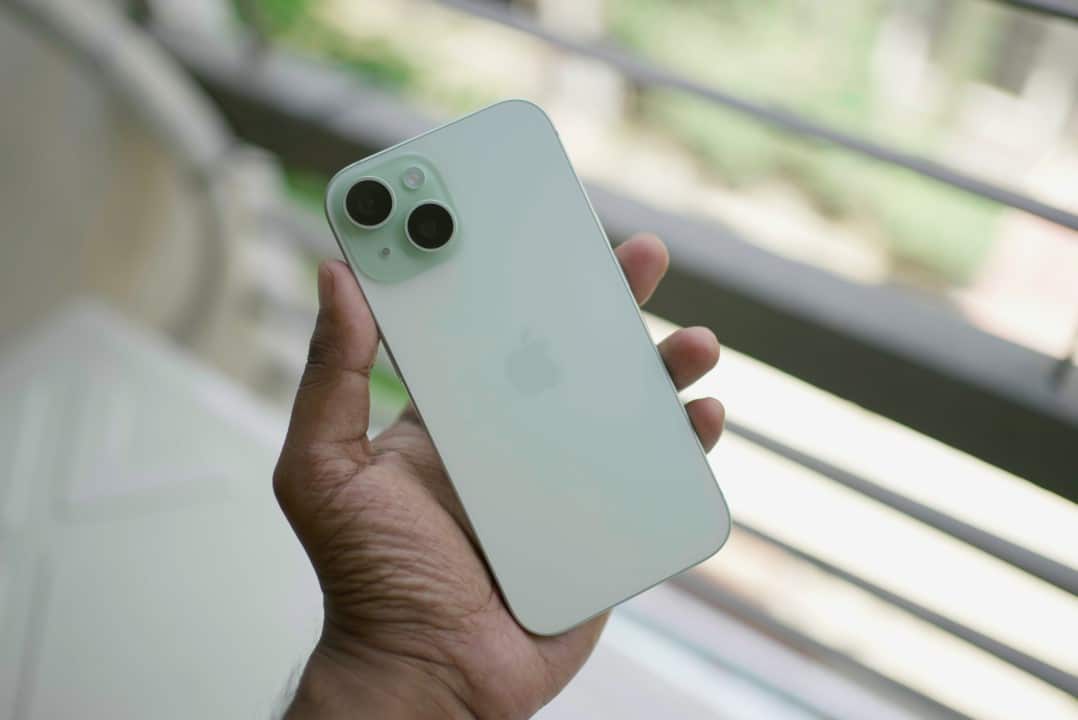
The mobile technology sector is going through a period of significant transformation with a focus on improving optical hardware. Recent Vazamentos indicate that Apple is preparing a structural change in the cameras of the long-awaited iPhone 18 Pro, investing in mechanical components to increase the quality of the images. The strategy marks a move away from solutions purely based on software and artificial intelligence, seeking superior photographic realism.
Industry experts point out that the inclusion of a variable aperture in the lens system of the upcoming Apple device is expected to redefine competitive standards. The technology allows you to physically control the entry of light into the sensor, simulating the functioning of professional cameras and the human eye itself, something that digital algorithms still struggle to replicate perfectly.

This move in Cupertino had an immediate effect on the global supply chain, with rivals accelerating their own development projects. The search for precision components has become the new priority for major manufacturers, signaling that the megapixel war is being replaced by the battle of optical physics and precision mechanics in compact devices.
On the same topic: IPhone 18 Pro’s optical innovation transforms the market and puts pressure on Samsung with variable aperture
Race for optical supremacy
Information released by “leaker” Digital Chat Station on the social network Weibo details that Apple is working on two critical updates for the iPhone 18 Pro’s photographic system. The project involves implementing a main camera with variable aperture and an improved telephoto lens, designed to capture details with greater fidelity in different lighting conditions.
Market analysts, such as Ming-Chi Kuo, corroborate these expectations, suggesting that technology will be an exclusive differentiator for the Pro line. Relatórios originating from Coreia from
The competition’s response was not long in coming. Fontes linked to the South Korean industry, cited by the ET portal News, reveal that Samsung instructed its partners to resume the development of interchangeable lens prototypes. The company sees the innovation of the Apple as a direct threat to its position in the mobile photography segment, creating an urgent need to update its top of the line products.
Advantages of the mechanical system
The transition from fixed to variable aperture offers practical benefits that transform the end-user experience. Diferente of current models, which rely on digital processing to adjust exposure and blur, the new mechanical system acts directly on the physics of image capture. Key improvements include:
More on this story: Apple develops camera system with variable aperture to equip the future iPhone 18 Pro
- Natural light control: The lens expands in dark environments to capture more light without generating excessive digital noise.
- Sharpness in high light: The mechanism contracts in strong light, preventing overexposure and ensuring more precise details.
- True depth of field: The “bokeh” effect (blurred background) is generated by the lens optics, resulting in perfect cutouts around hair and fine objects.
- Less reliance on AI: Redução of visual artifacts common in software-overprocessed photos.
The history and challenge of Samsung
The Samsung has a pioneering history with this technology, having introduced variable opening in the Galaxy S9 and S10 models, launched at the end of the last decade. However, the functionality was discontinued in subsequent generations due to high production costs and the complexity of maintaining thin devices with the integrated mechanism.
Returning to this technology poses significant engineering challenges. The South Korean giant now needs to overcome the obstacles that made it abandon the project previously, developing solutions that are economically viable and that do not compromise the ultra-thin design of modern smartphones. The goal is to replace software dependency with genuine mechanical innovation, avoiding the strategic mistakes of the past.
Impact on the production chain
Demand for miniaturization of complex mechanical components has put specialized suppliers such as Largan Precision and Sunny Optical in the spotlight. Essas companies are key to enabling mass production of the advanced lens modules needed for the iPhone 18 Pro and future Android competitors.
The current scenario demonstrates that the smartphone market has reached a new level of maturity, where the competitive advantage lies in the ability to emulate cinema equipment. The combination of robust hardware with refined software promises to provide consumers with creative tools previously restricted to professionals, consolidating the cell phone as the main camera for most people.
Learn more: IPhone 18 Pro should gain thicker camera bump with variable aperture lens
***
iPhone 18 Pro, variable camera, mobile technology, Apple
Samsung Galaxy S26 innovation and competition in the premium smartphone market