
Jessie Diggins overcomes broken rib and wins bronze medal in cross-country skiing By Thiago Lemos
9 min read
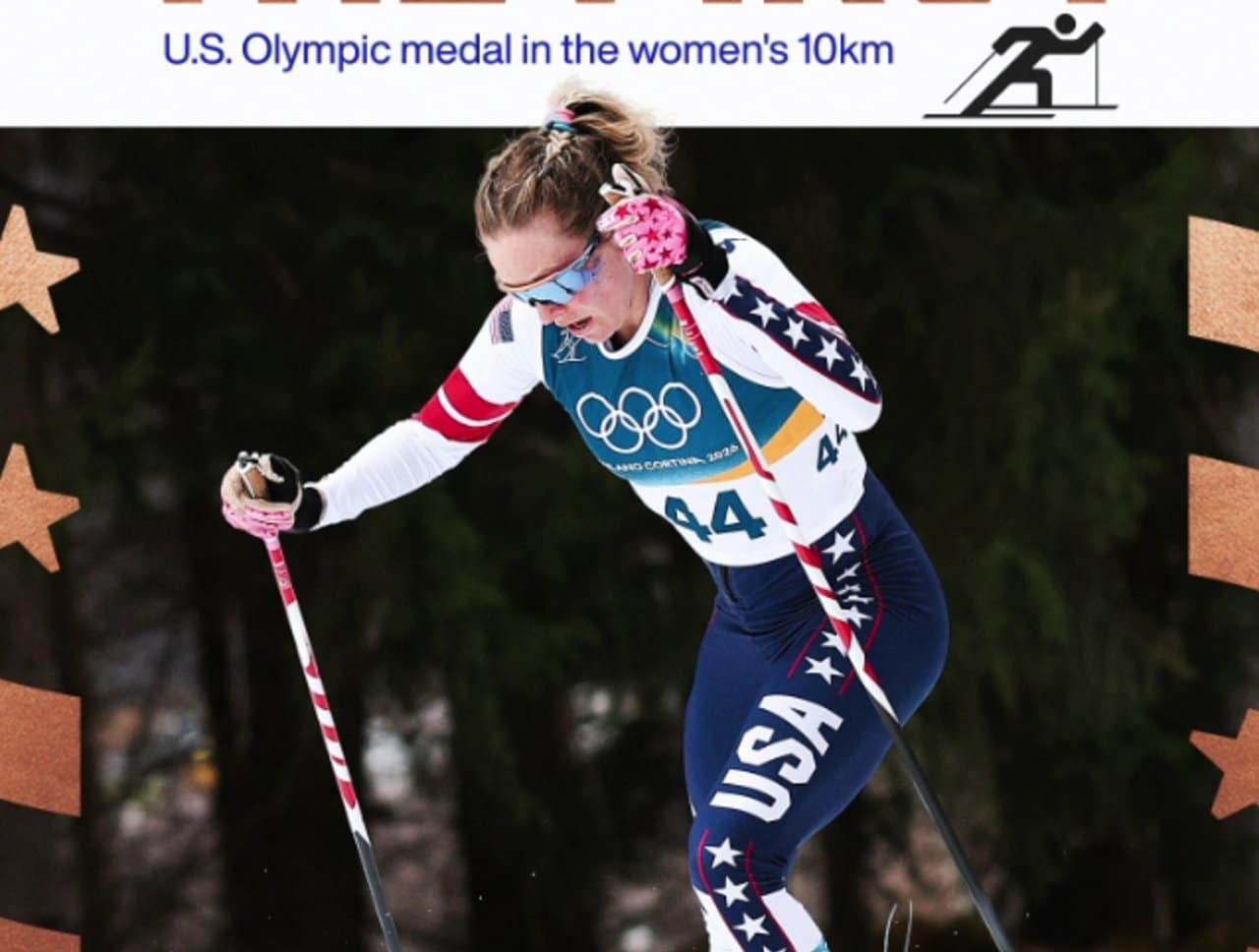 |
The North American skier Jessie Diggins starred in one of the most memorable moments of the Olimpíadas of Inverno Milão-Cortina 2026 this Thursday, February 12th. Mesmo Competing with a broken rib, the 34-year-old athlete demonstrated extraordinary physical endurance by completing the 10km cross-country skiing race in Tesero, in Itália. Diggins finished the course with a time of 23min38s9, securing the bronze medal after an effort that took her to the limit of exhaustion.
Upon crossing the finish line, the American collapsed in the snow, showing visible signs of intense pain, crying and screaming that mobilized the medical team and her fellow delegation members. The incident that resulted in the injury occurred last Saturday, during the skiathlon competition, when the skier suffered a serious fall during the journey. Apesar of the subsequent fracture diagnosis, Jessie Diggins chose to remain in the competition, focusing on individual overcoming to maintain Estados Unidos’s chances of podium.
Winning bronze on Italian soil expands the veteran’s trophy gallery, who already had three previous Olympic medals, including a historic gold in the Jogos in PyeongChang in 2018. The race podium was completed by the Swedish Frida Karlsson, who took the gold, and Ebba Andersson, who took the silver medal.
🥉 A herculean effort from Jessie Diggins for#Bronze👏
—The Olympic Games (@Olympics)February 12, 2026
She takes a podium spot in an exciting cross-country skiing women’s 10km interval start free at#MilanoCortina2026🤩@FISCrossCountry | @TeamUSA | #MedalAlert | #Samsung | #OpenAlwaysWins pic.twitter.com/XacrCjYEJZ
Details of the injury and recovery process in the test
The injury suffered by Jessie Diggins has been kept under close observation by the Estados Unidos medical team since the weekend. The athlete only had the fracture confirmed after tests carried out after completing the 20km skiathlon race, which makes her participation in the 10km even more impressive for the audience present. In her official reports, the skier highlighted that the level of pain felt during physical exertion exceeded her initial tolerance expectations.
- The initial crash occurred during high-speed maneuvers on the Saturday of the competition.
- The medical diagnosis confirmed the rib fracture caused by a direct impact against the frozen ground.
- The decision to compete was made together with the technical committee, prioritizing the athlete’s desire.
- Immediate treatment involved physiotherapy protocols and analgesic control to support the journey.
Even with the breathing difficulties imposed by chest compression, Diggins maintained a competitive pace against the main favorites from Escandinávia. The strategy adopted by the American was to focus on the cadence of her strides and the efficient use of the sticks, trying to minimize excessive trunk rotation. The resilience demonstrated in Tesero reinforces its position as one of the greatest global references in sport today.
Technical performance and dominance of Suécia on the podium
The final result of the 10km race reflected the high technical level of the European competitors, who dominated the first places from the start. Frida Karlsson confirmed her favoritism by setting a time of 22min49s2, establishing a comfortable advantage over her other opponents along the Italian circuit. Sua compatriot, Ebba Andersson, maintained Swedish consistency by finishing the course in 23min35s8, guaranteeing the double for the Nordic country.
The dispute for third place was intense, with Jessie Diggins needing to accelerate in the final meters to secure his position in the official medal table. The American managed to overcome extreme fatigue and physical discomfort to beat her direct pursuers’ time by a narrow margin of seconds. Este bronze represents not only a sporting feat, but a milestone of perseverance within the Milão-Cortina Olympic cycle.
Athlete’s report on tolerance to physical suffering
On social media and in official statements, Jessie Diggins shared the emotional and physical perspective of facing an elite race with an active bone injury. Ela described the journey as an ongoing exercise in pain tolerance, admitting that she was taken by surprise by the intensity of the discomfort during the steepest climbs. The athlete emphasized that although the original plan did not involve dealing with such obstacles, control over individual reactions is what defines the Olympic spirit.
The support received by her teammates was cited as a fundamental factor in the skier not giving up after the first kilometers of the race. Diggins highlighted that the feeling of representing his country and the dedication of the coaches served as fuel to ignore the body’s warning signs. The gratitude expressed by the competitor demonstrates the unity of the North American group amid the unexpected challenges of this edition of Jogos of Inverno.
History of achievements and legacy of Jessie Diggins in sport
At 34 years old, Jessie Diggins has consolidated her trajectory as the most successful cross-country skier in the history of the Estados Unidos in terms of Olympic podiums. Sua career is marked by versatility in different distances and styles, earning the respect of traditional opponents such as the Norwegians and Swedes. The gold medal in 2018 had already broken a historic fast for the country, and the bronze in 2026 adds a chapter of heroism to its biography.
The athlete’s longevity at a high level is attributed to her rigorous training regimen and her mental ability to face adverse weather and physical conditions. Especialistas point out that Diggins raised the level of the sport in América from Norte, encouraging new talents to enter less popular winter sports. The performance at Itália will be remembered as one of the great examples of overcoming in the history of cross-country skiing competitions.
Expectations for the rest of the Olympic calendar at Itália
With the conclusion of the 10km race, the focus of the American delegation turns to the physical recovery of its main star for the next competition windows. The condition of Jessie Diggins’s ribs will continue to be monitored daily by doctors, who will assess the feasibility of his participation in relay races or longer distances. The current priority is to ensure that inflammation in the affected area is reduced to avoid further damage to the competitor’s health.
The Olimpíadas of Inverno Milão-Cortina 2026 continues with an intense schedule in several venues spread across the north of The event has been marked by stories of overcoming and broken records, keeping public interest high in international broadcasts. The Swedes’ victory and Diggins’s podium represent the world’s sporting elite coming together in search of maximum glory on ice and snow.
Impact of performance on the teams’ overall score
The bronze won by Diggins is essential for the medal count of Estados Unidos, who seek to maintain a prominent position in the competition’s general ranking. Cada point obtained in individual tests reflects the investment in technology and training carried out by national federations over the last four years. The skier’s resilience ensures that the US remains competitive in a sport traditionally dominated by European nations.
- Suécia leads the sport after the double with gold and silver in Tesero.
- The Estados Unidos maintain consistency with podiums in consecutive editions.
- Noruega and Finlândia continue their search for recovery in the next ski events.
- Diggins’s individual performance is rated as above the historical average for athletes with similar injuries.
Technical preparation for challenges at high altitudes
The Tesero track is known for its variation in altitude and technical curves that require maximum precision from athletes during the 10km course. Preparation for this specific event involved months of acclimatization and terrain studies to optimize the skis’ glide on different types of snow. Para Jessie Diggins, the challenge was doubled, as each deep breath necessary for muscle oxygenation caused direct pressure in the region of the fractured rib.
Coaches highlighted that the Diggins technique was adapted to protect the injured side, using more leg strength to the detriment of chest explosion. Essa mudança sutil na biomecânica de esqui permitiu que ela mantivesse a velocidade necessária para o bronze sem agravar a fratura de forma incapacitante. The result is the result of a combination of sporting intelligence and psychological resistance rarely seen in competitions of such magnitude.
Reaction from the public and the international sporting community
The image of Jessie Diggins collapsing after the test generated a wave of support and admiration on various news portals and social networks around the world. Comentaristas sports and former athletes praised the American’s courage, classifying her performance as one of the most inspiring in the recent history of Olimpíadas of Inverno. The ability to transform physical pain into competitive motivation is seen as the pinnacle of professionalism in high-performance sport.
Many highlighted that, regardless of the color of the medal, the story of Diggins in these Jogos is already written as a symbol of determination. The athlete, who has always been vocal about the challenges of mental and physical health, uses her platform to show the raw reality of elite sport. The global recognition serves as a positive reinforcement for his career, which enters a phase of definitive consecration after the events at Itália.
Considerations on the safety and health of Olympic athletes
The case of Diggins also raises important discussions about the limits of the human body and safety protocols in highly dangerous events. Médicos athletes warn that competing with fractures requires careful assessment to avoid compromising internal organs, such as the lungs, in cases of further falls. The American delegation assured that all risks were calculated and that the athlete’s integrity was monitored using electronic devices throughout the journey.
The evolution of protective equipment and medical support techniques allows situations like this to be managed with greater precision than in past decades. Real-time monitoring of heart rate and effort levels helps the coaching staff decide the exact moment to intervene if the competitor’s health is at immediate risk. In the case of Jessie, medical authorization was based on the stability of the fracture and the athlete’s ability to manage discomfort without loss of consciousness.
Continuity of competitions and next steps in Milão-Cortina
The cross-country skiing competitions at Milão-Cortina 2026 continue in the coming days with sprint and team relay events, where the Estados Unidos traditionally have a strong presence. Jessie Diggins’s participation in these subsequent stages will depend exclusively on his recovery in the next few hours and the assessment of pain at rest. The technical committee informed that there will be no pressure for her to compete if there is a risk of worsening the bone injury.
Meanwhile, Vila Olímpica remains vibrant with the arrival of new athletes for the ice and snow disciplines that will still be contested. The organization of the Jogos has received praise for the structure of the tracks and the support offered to foreign delegations. The climate of healthy competitiveness and individual overcoming continues to be the engine that drives this Olympic edition, with Jessie Diggins appearing as one of its main icons of bravery.
The impact of a medal won under such conditions reverberates far beyond the medal table, serving as a lesson about human resilience in the face of unforeseen adversity. Diggins’s bronze in Tesero is already considered one of the defining moments of 2026, reinforcing that sport is made up of statistics, but, above all, of life stories. The public is now waiting for the official medical reports to find out if the American will still have one last appearance in these historic Jogos.


