

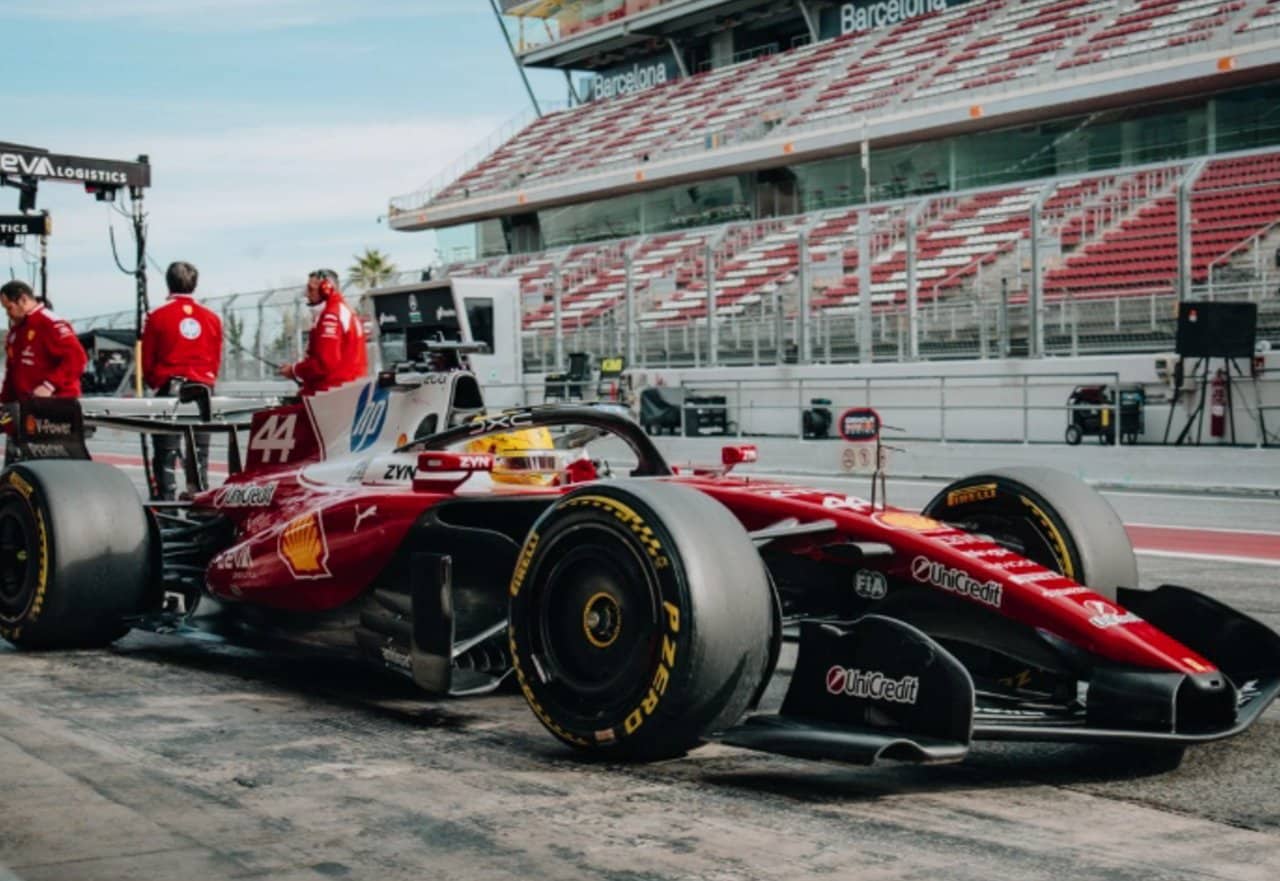
The second day of pre-season testing of the Formula 1 at the Bahrein, held this Thursday, February 12, 2026, brought to the surface widespread discontent among the main names on the grid. Lewis Hamilton and The central focus of the complaints lies in the energy recovery system and the constant need for battery management, which, according to the pilots, compromises driving at the limit and the purity of the sport.
Track activities on the Sakhir circuit revealed that the transition to the new engine and aerodynamic regulations is far from consensual among competitors. Enquanto the teams seek to decipher the operation of the compression ratio of the Mercedes engines, which equip eight cars on the grid, the drivers feel overwhelmed with functions that go beyond the search for pure speed. The current scenario reverses the logic of previous years, where average teams tried to impress sponsors with low times; now, the priority is to hide the game and deal with extreme technical complexity.
- Lewis Hamilton highlighted that the new rules made the category excessively complicated for those behind the wheel.
- Max Verstappen compared the new models to a more powerful version of the Formula E, criticizing the lack of driving pleasure.
- Gabriel Bortoleto completed 67 laps with the Audi, recording the sixth best time and showing consistent progress.
- Mercedes, despite the favoritism indicated by rivals, faced technical problems that reduced Kimi Antonelli’s track time.
- Lance Stroll expressed frustration with the Aston Martin’s performance, stating that the car is considerably behind the leaders.
Locked in for Day 3 😤
—Formula 1 (@F1)February 13, 2026
Take a look at who’s driving on the final day of the first test in Bahrain!#F1 #F1Testing pic.twitter.com/P4M7OTqxrc
The Power Management Dilemma in 2026 Engines
The main complaint of Max Verstappen is the way the power flow is distributed during a fast lap in the Bahrein. The Dutchman was emphatic when stating that the fun of driving a Formula 1 car is being replaced by bureaucratic management of hybrid systems. Para the three-time champion, the category should represent the pinnacle of mechanical and human performance, but the current regulations require the driver to act almost like a software engineer while negotiating the curves of the international route.
This perception of loss of essence is shared by Lewis Hamilton, who sees the excess of electronics as an obstacle to the traditional sporting spectacle. The Briton reiterated that the complexity of the technical guidelines can alienate the public and make it difficult to understand what really happens inside the cockpit. Ambos the drivers suggest that the previous model allowed for greater aggression, where individual talent prevailed over the ability to conserve electrical charge for the following straights.
Technical evolution and the compression ratio controversy
Mercedes began the year under intense scrutiny due to its interpretation of the rules on the compression ratio of the new 2026 engines. Observadores technicians noted that cars equipped with German engines, such as those from McLaren and the factory team itself, demonstrate superior efficiency in recovering kinetic energy. Toto Wolff tried to minimize expectations by pointing to Red Bull-Ford as the team to beat, but the movement in the pits indicates that the technological advantage may lie with the Brackley team.
Max Verstappen countered Wolff’s statements, suggesting that Mercedes is using a communication strategy to divert focus from its mechanical innovations. Enquanto the political debate heats up the paddock, engineers struggle to stabilize the cars, which are visibly more unstable in heavy braking zones. The start simulation has also been a critical point, with several drivers reporting difficulties in finding the ideal torque point without compromising the car’s internal systems.
Performance of Brazilians and the reality of average teams
Gabriel Bortoleto continues an accelerated learning curve in his debut season for Audi, focusing on consistency rather than isolated lap times. The young Brazilian driver highlighted that no team is operating at 100% potential at the moment, predicting that the true hierarchy will only be revealed at the Austrália GP. The performance of the Audi is viewed with moderate optimism, contrasting with the situation of the Aston Martin, which appears to have lost its way in aerodynamic development during the winter break.
The difference in performance between the top teams and the intermediate field is still unclear, given the variation in fuel load used in the tests. Ferrari and McLaren maintain a low-key but solid work schedule, consistently appearing in the top five times without chasing qualifying laps. The consensus among experts is that reliability will be the determining factor in the first stages of the championship, surpassing even the gross maximum speed on circuits with high energy demands.
Expectations for the season opener in Melbourne
The Grande Prêmio of the Austrália takes on unprecedented importance due to the uncertainty generated by pre-season testing on the Bahrein. Além of the battle for positions, the race in Albert Park will serve as a real-time laboratory to test the resistance of the new components under race conditions. The instability of the cars and the unpredictability of battery management promise a chaotic event, where the energy conservation strategy will be as vital as changing tires.
The motorsport community eagerly awaits post-race comments, especially from figures like Hamilton and Verstappen, who do not usually filter opinions on the regulations. If the race confirms the difficulties highlighted in the tests, the FIA could face pressure for technical adjustments in the first half of the year. On the other hand, if the complexity results in strategic overtaking and alternation of leadership, the new regulation could be validated despite initial criticism from the show’s protagonists.
The impact of technology on the pleasure of professional riding
The transition to cars more dependent on energy recovery systems raises a profound debate about the future of Formula 1 as a motorsport. Pilotos Veterans argue that the batteries’ heavy weight and intermittent power delivery alter the nature of competition, making it less intuitive. Esta paradigm shift requires the new generation of pilots, like Kimi Antonelli and Gabriel Bortoleto, to develop specific skills that differ radically from what was required just five years ago.
The challenge for teams now is to balance technical sophistication with the need to provide equipment that allows drivers to extract maximum performance. The fear that F1 will become “a new category” with no characteristics echoes not only in the pits, but also among more traditional fans. The definitive answer as to whether the essence was lost or merely transformed will come with the lights out in Melbourne, when the theory of tests will give way to the reality of the clues.
The search for solutions to instability and management problems continues in the remaining days of training, with all attention focused on the behavior of the engines in long-duration simulations. The ability to adapt will be the difference for those who want to start the year ahead, regardless of the criticism of the new technological format of the competition.