
Hamilton and Verstappen condemn engine complexity and warn of loss of driving pleasure By Janderson Luiz
5 min read
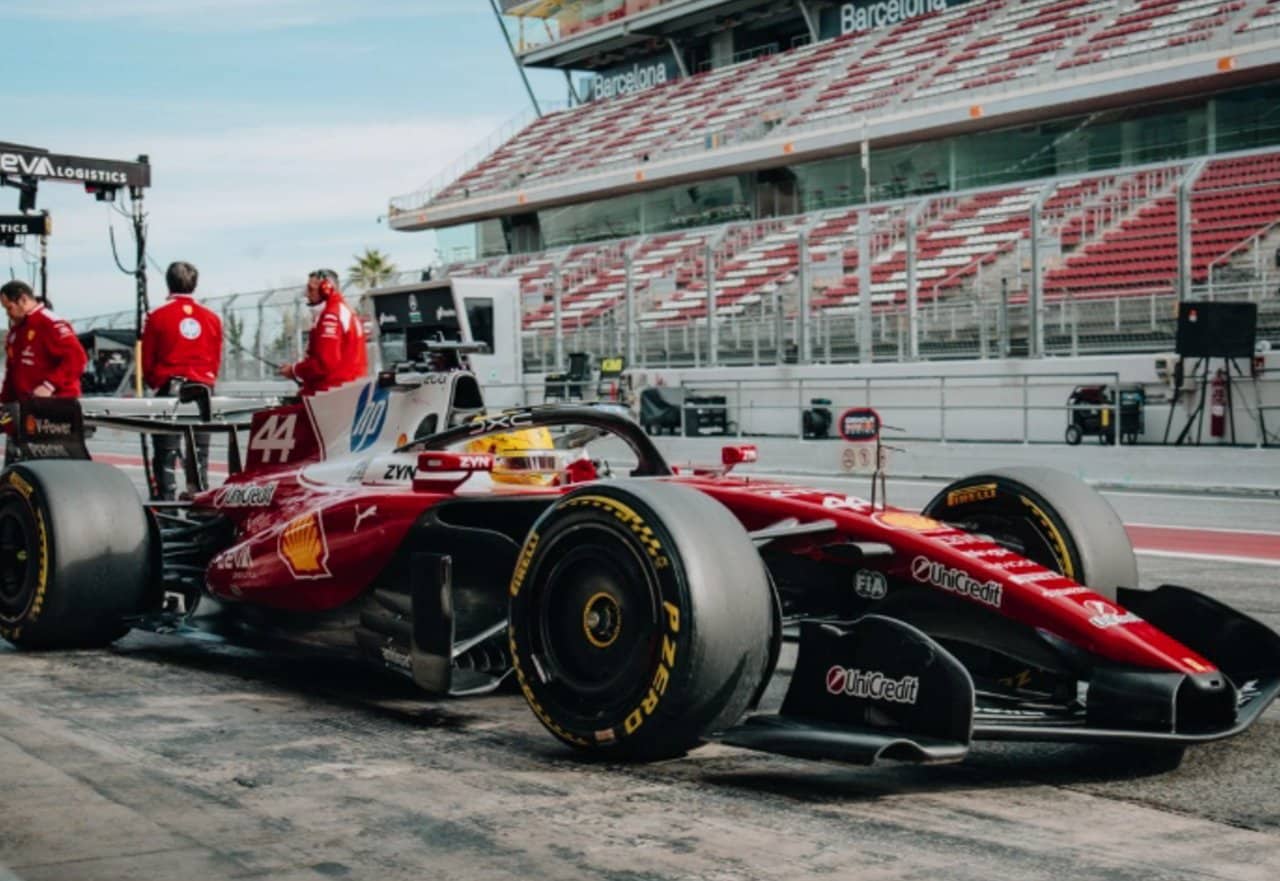 |
The atmosphere at the Sakhir circuit, during the second day of pre-season testing, was marked by tension that went beyond the usual search for fast lap times. The new technical guidelines implemented for the championship, focused intensely on energy recovery and electrical efficiency, generated a chorus of disapproval among grid veterans. The dissatisfaction was evident in the statements of experienced drivers, who questioned whether the category was sacrificing the essence of the competition in the name of excessive technological complexity.
The transition to the new 2026 regulations proved to be more traumatic than anticipated for those occupying the cockpit. Instead of disputes focused purely on tracking and braking ability, competitors report the cognitive overload necessary to manage hybrid systems. Instinctive driving, a characteristic that has established great champions, seems to give way to a bureaucratic management of buttons and settings on the steering wheel, transforming the experience on the track into something very far from what fans and athletes have become accustomed to seeing in recent decades.
Locked in for Day 3 😤
Take a look at who’s driving on the final day of the first test in Bahrain!#F1 #F1Testing pic.twitter.com/P4M7OTqxrc
—Formula 1 (@F1)February 13, 2026
This paradigm shift reversed the traditional logic of winter testing. Anteriormente, smaller teams sought fast laps with little fuel to attract spotlights and sponsors. Agora, the absolute priority is to try to decipher the operation of the new thrusters and hide the game about the real energy recovery capabilities, creating a scenario of uncertainty and widespread dissatisfaction even before the first green light of the year.
The weight of technology on riding
The most scathing criticism came from Max Verstappen, who spared no words when describing the sensation of driving the new single-seaters. Para the current three-time champion, the obligation to constantly monitor battery flow takes away the fundamental pleasure of being an elite pilot. Ele compared the current experience to a steroid version of
Lewis Hamilton corroborated his rival’s view, pointing out that the new rules created unnecessary barriers. The Briton emphasized that the current complexity makes it difficult for the public to understand what is really happening during a fast lap. Segundo he, when the main concern stops being the speed in the curve to become the conservation of load for the following straight, the sport loses its aggressive identity and becomes an exercise in efficiency that does little to excite those who watch or those who drive.
The main points of friction raised by competitors in Sakhir include:
– The need to act almost like software engineers during the ride;
– The loss of aggressiveness in disputes for position due to energy management;
– The instability of cars in heavy braking zones;
– Excessive complexity for the general public to understand.
Busy behind the scenes and the Mercedes controversy
While the drivers complain about the handling, the engineers are fighting a silent battle in the pits. Mercedes, supplier of engines for a large part of the grid, is at the center of a technical controversy over the compression ratio of its new engines. Observadores noted that cars powered by the German power unit, including McLaren, have superior efficiency in recovering kinetic energy, which could be a crucial differentiator for the championship.
Toto Wolff, team leader However, this stance was quickly refuted by Verstappen, who classified the statements as a distraction tactic. The reality in the pits indicates that the Mercedes may have found an innovative solution to the challenges of the new regulations, putting pressure on rivals to find quick answers before the official debut.
Reliability, however, remains an unknown. Kimi Antonelli, one of the great promises of Mercedes, had his track time drastically reduced due to technical failures. Esse scenario demonstrates that, even with possible theoretical advantages in the engine, systems integration is still a monumental challenge that can cost precious points in the first stages, where finishing the race will be as important as being fast.
Bortoleto’s performance and the teams’ scenario
Amid the technical chaos of the top teams, the Brazilian Gabriel Bortoleto emerges as a positive highlight of consistency. Pilotando for Audi in his debut season, he completed 67 laps, recording the sixth fastest time of the day. Sua approach focused on learning and constant evolution contrasts with the nervousness of veterans, showing quick adaptation to the demands of new cars. Bortoleto highlighted that no team is operating at maximum capacity, keeping their feet on the ground regarding the German carmaker’s real potential.
The situation is opposite in Aston Martin. Lance Stroll expressed visible frustration with the car’s performance, indicating that the green team got things wrong with aerodynamic development over the winter. The Canadian driver stated that the model is considerably behind the leaders, suggesting a difficult start to the season for the Silverstone team, which appears to have lost its way amid the drastic changes to the regulations.
In the midfield, the hierarchy remains nebulous. Ferrari and McLaren opted for discrete testing programs, focusing on racing simulations and component durability. The conservative strategy of these teams suggests that reliability will be the key to success in the first races, overcoming pure speed on circuits that place great demands on the new energy recovery system.
Uncertainties for opening at Austrália
The Grande Prêmio of Austrália, the stage for the opening of the season, promises to be an open-air laboratory. The unpredictability generated by testing at Bahrein puts immense pressure on racing strategies. Energy management, so criticized by pilots, will be the determining factor in Melbourne. The expectation is for a chaotic race, where the ability to save equipment and battery could be worth more than a pole position.
If the criticisms of Hamilton and Verstappen are confirmed in practice, the FIA could face a political dilemma at the beginning of the year. The pressure to adjust the regulations may increase if the races become monotonous or excessively complicated to follow. On the other hand, if technical confusion results in overtaking and alternating leadership, arguments about the “purity of driving” may lose strength in the face of the entertainment generated by unpredictability.
The motorsport community is eagerly awaiting to see whether the test theory will be confirmed in practice. What is at stake is not just the title of 2026, but the very identity of Formula 1 in the face of an increasingly electrified and software-dependent future. The definitive answer will begin to be drawn as soon as the lights go out at Albert Park.