
Laurent Simons obtains doctorate in quantum physics and aims to use AI in regenerative medicine By Beatriz
4 min read
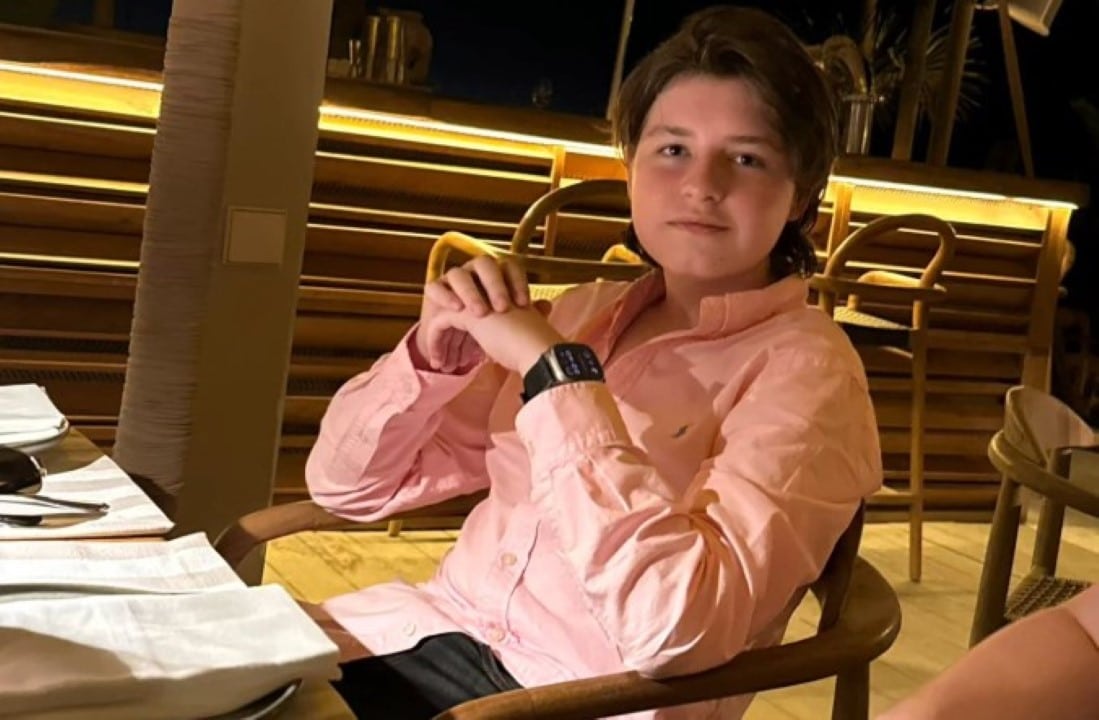 |
Laurent Simons established his name in recent academic history by defending his doctoral thesis at Universidade of Antuérpia, at The young researcher, known for his exceptional intellectual capacity, completed the cycle of advanced studies addressing complex physics topics, specifically on Bose polarons in superfluid and supersolid environments. The defense took place in November 2025, marking the end of a stage focused on extreme states of matter.
With an intelligence coefficient estimated at 145 and a photographic memory, the 15-year-old Belgian now redirects his efforts towards a new frontier of knowledge. The declared objective is the application of concepts from theoretical physics and computing in medicine, aiming to prolong human life.
See this photo on Instagram
The career transition involves starting a second doctorate, this time at Alemanha, focused on medical sciences. Simons plans to use artificial intelligence tools to map biological processes and develop therapies against cellular aging.
Academic acceleration trajectory
Simons’s educational path challenges conventional teaching standards. Ele completed elementary school in just two years, between the ages of four and six, demonstrating from an early age a rare aptitude for absorbing complex content. Secondary education was completed at the age of eight, paving the way for entry into higher education.
At graduation, the student obtained a diploma in physics from Universidade to Antuérpia at the age of 12. The course, which traditionally requires three years of dedication, was completed in 18 months. Todo the process was accompanied by rigorous supervision, ensuring that acceleration did not compromise the depth of learning.
The subsequent master’s degree deepened his knowledge in elementary particles. Initial research covered black holes and Bose-Einstein condensates, preparing the ground for the doctoral thesis that would follow, always under the same evaluation criteria applied to other academics at the institution.
Physics Research Details
The recently defended thesis explored the behavior of Bose polarons, which are described as impurities in collective quantum systems. The study investigated how these particles interact at temperatures close to absolute zero, offering new insights into superfluid mechanics.
Esses exotic states of matter are fundamental to the development of future technologies. Improved understanding of quantum interactions could influence everything from the creation of new materials to the improvement of quantum computing.
The examining board validated the work as innovative and technically robust. Universidade of Antuérpia reiterated that, despite the author’s age, scientific rigor and methodological requirements were maintained at a level of excellence throughout the development of the project.
New horizons in medicine
Após achievement in physics, Simons moved to Alemanha to join a doctoral program in medical sciences. The new phase seeks to connect advanced computational modeling with molecular biology. The motivation for this change of area came after personal experiences of family loss, sparking interest in health solutions.
The interdisciplinary approach proposed by the researcher aims to use machine learning algorithms to analyze large volumes of genetic data. The focus is on identifying patterns that lead to organic deterioration and creating precise interventions.
Instituições German research teams provided the necessary infrastructure for these studies. Collaboration between physicists, biologists and computer scientists is seen as essential for the intended advances in the area of longevity.
Career management and privacy
International visibility attracted the attention of large technology companies from the Estados Unidos and China. Diversas proposals were sent to integrate Simons into corporate research centers, but the family chose to decline the commercial offers at this time.
Alexander Simons, the young doctor’s father, emphasizes the need to maintain his son’s emotional balance. The family strategy prioritizes intellectual development within the university environment, avoiding the pressure of the early job market.
- The preservation of childhood and adolescence occurs in parallel with studies.
- The focus remains on long-term scientific contributions rather than immediate gains.
- Refusal of excessive exposure aims to protect the privacy of the researcher.
Impact and future of science
The case of Laurent Simons exemplifies the potential of prodigious minds when supported by flexible and solid educational structures. The ability to transition between quantum physics and regenerative medicine suggests a future where the barriers between scientific disciplines will become increasingly smaller.
Ongoing AI-assisted longevity research represents a global trend. The entry of new talent with a background in exact sciences into this field can accelerate the discovery of innovative therapies for degenerative diseases and the aging process.
Enquanto the scientific community awaits the next results, the young Belgian continues his study routine. The combination of high cognitive ability and humanitarian purpose puts your work in the spotlight for the next decade.


