

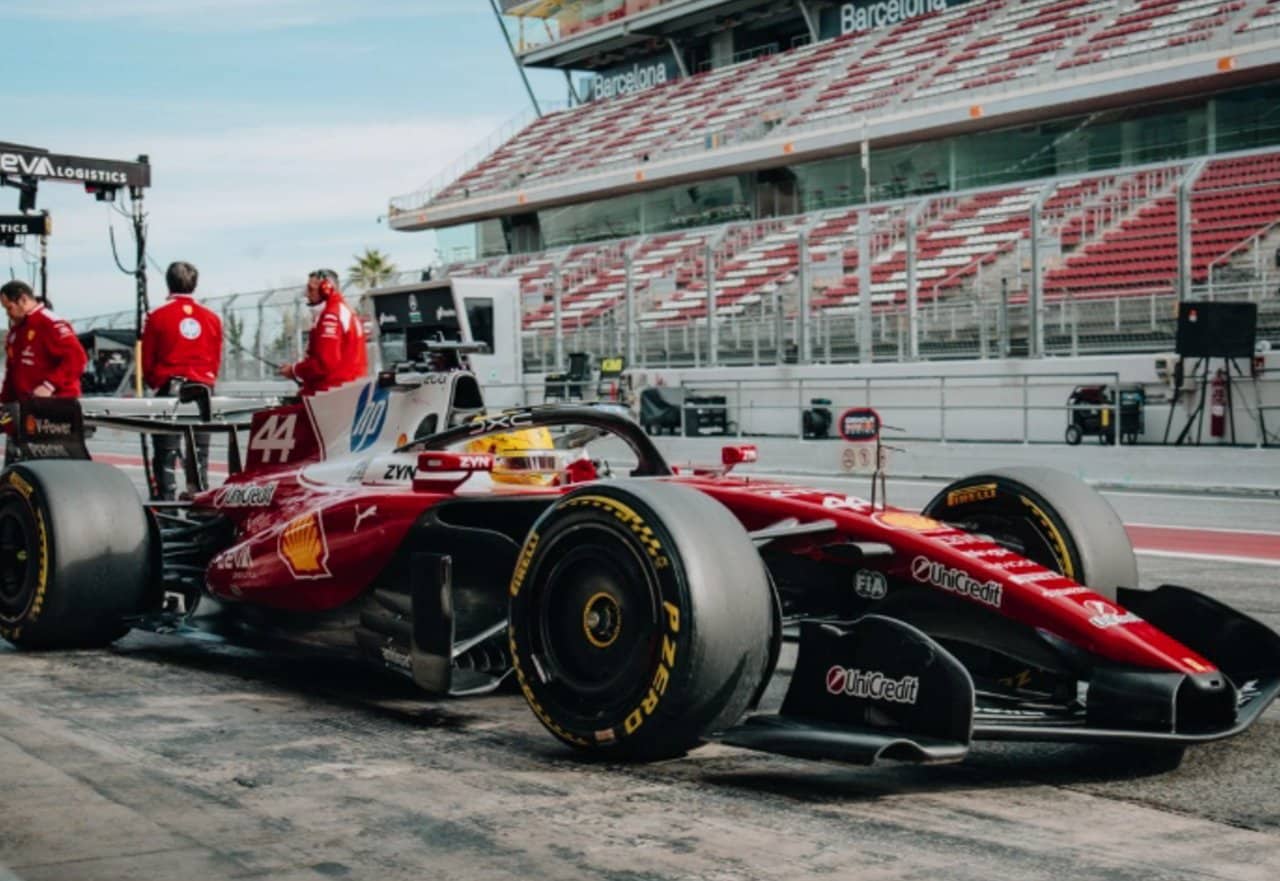
The activities at Circuito Internacional of Sakhir came to an abrupt end this Friday, generating moments of apprehension followed by fundamental technical clarifications for the season. The SF-26 model, driven by the seven-time world champion, stalled at Curva 8, forcing the race management to raise the red flag and end track activities ten minutes before the official schedule. The incident, which initially suggested a serious mechanical failure in the Italian team’s new equipment, prevented the other drivers from completing their final fast laps of the day.
Images of the car being towed quickly circulated, raising questions about the reliability of the new engine. However, the Maranello team acted promptly to dispel rumors of structural breaks, confirming that the shutdown was intentional and part of the development program. The objective was to test the physical limits of the power system until the tank was completely exhausted, a risky but necessary procedure in this testing phase.

Systems validation and telemetry
Ferrari engineering detailed that the procedure aimed to calibrate the car’s fuel sensors with absolute precision. In a regulation where energy efficiency is decisive for performance, knowing the exact amount of fluid remaining in the tank and how the engine behaves in the final moments of consumption is a vital strategic advantage. The induced “dry breakdown” allowed technicians to correlate real-time telemetry data with the physical reality of consumption on the track.
This type of extreme testing is common in early phases of development, although it rarely results in a public red flag. The decision to carry out the exhaustion at the end of the session minimized the impact on the schedule of Ferrari itself, which had already met its primary shooting objectives. Validation ensures that, during races, the on-board computer provides the pilot with reliable information about autonomy, avoiding unpleasant surprises in decisive moments of a Grande Prêmio.
The focus on sensor accuracy reflects the teams’ concern about the new 2026 guidelines, which require even more rigorous energy management. The power unit needs to operate in harmony with the chassis, and any discrepancy between actual and projected consumption can cost positions on the grid.
Physical resistance and consistency of equipment
Before the final episode, Lewis Hamilton’s performance was the positive highlight of the day on Bahrein. Aos 41 years old, the Brit demonstrated an enviable physical shape by completing a marathon of 150 laps, covering the distance of two complete Grandes Prêmios in a single day. The consistency shown by the SF-26 during race simulations indicated that the Ferrari built a solid foundation, with the car responding well to tire wear and maintaining competitive lap times even with high fuel loads.
Accumulated mileage is crucial for collecting aerodynamic and mechanical data. The fact that the car ran without unplanned mechanical interruptions until the final fuel test suggests that reliability, a critical issue in previous seasons, was addressed as a priority in the 2026 project.
Adapting to the new work environment
The integration of the British pilot into the Ferrari structure appears to be progressing as planned. The Mercedes’s decade-long transition to Italian culture involves adaptations that go beyond driving, including the ergonomics of the cockpit and the complex control systems on the steering wheel. The productive day at Sakhir served to refine this man-machine relationship, with Hamilton adjusting his setup preferences and communication with the pit wall.
The atmosphere in the garage, despite closing with the car at the tow truck, remained optimistic. The ability to stick to the extensive running plan and confirmation that the stop was a controlled test kept morale high. The team now turns to analyzing the terabytes of data generated, preparing for fine-tuning before the official opening of the championship.