
Gabriel Bortoleto prioritizes car development and preaches caution in Audi’s debut year By Luís Henrique Costa
6 min read
 |
Brazilian driver Gabriel Bortoleto began pre-season activities at the Sakhir circuit immersed in a complex process of integration between chassis, engine and transmission system. The official entry of Audi into the Fórmula 1 grid brings with it significant technological challenges that, according to the competitor, require a long-term mindset. Building a winning team from scratch takes time, and the consistency needed to be among the top will not come immediately, but rather through meticulous groundwork.
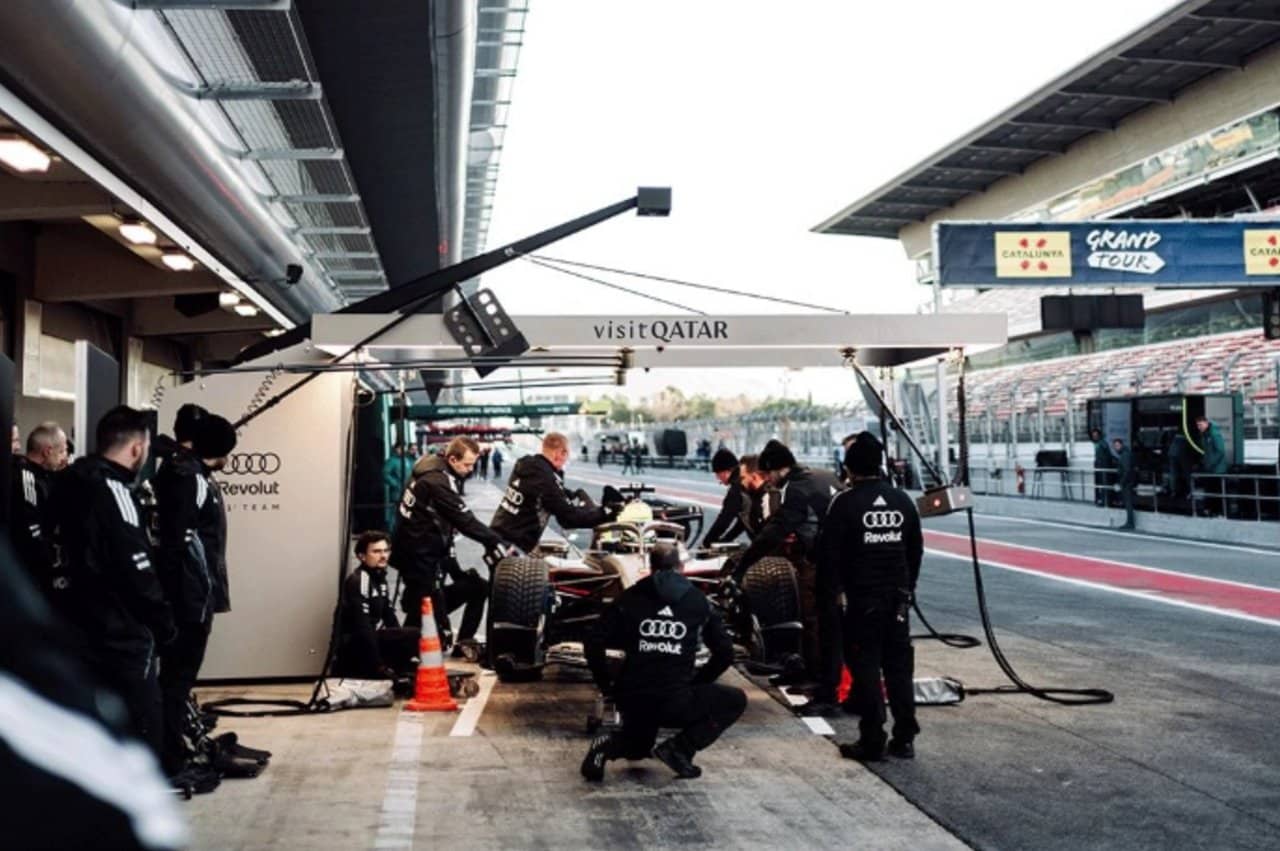
The routine in the pits has been marked by an exhaustive effort by engineers and mechanics, who seek to optimize the performance of the new car under the current rules of Federação Internacional of Automobilismo. Bortoleto highlighted the exemplary commitment of the entire team, who are often the first to arrive at the racetrack and the last to finish their daily activities. Esse collective effort is seen as the only possible way to shorten the learning curve in a category where the fight for milliseconds defines positions on the grid.
Day 3 test summary#audif1 pic.twitter.com/XKbf9XUVir
—Audi F1 Racing Team (@audi_f1stars)February 14, 2026
The main focus is on the complete development of the power unit and aerodynamic structure by the German manufacturer, in addition to the incessant search for mechanical reliability during tests on the Bahrein. Adapting to new energy recovery systems and improving technical feedback between the pilot and engineering are fundamental pillars in this initial phase. Cada completed lap of the circuit represents valuable data collection that will be used to adjust the equipment before the official debut.
Expectation management of Brazilian fans
The Brazilian fans maintain constant vigilance over the performance of their representatives, driven by a glorious history of champions who shaped the culture of motorsport in the country. Gabriel Bortoleto reconhece que o público está habituado a ver o pavilhão nacional no lugar mais alto do pódio, mas ressalta que o cenário atual da categoria exige uma transição gradual e muito estudo técnico. Ele argues that patience will be the most important tool in dealing with the natural fluctuations that a debuting team faces when challenging structures already consolidated in the sport.
The level of demand in modern Fórmula 1 is proportional to the technological investment made by automakers, which makes the victory process a construction of successive stages. Para the Brazilian, it is essential that there is a synergy between the work carried out on the track and the external understanding of the momentary limitations of the equipment under development. Transparency about the current stage of the project will help align Audi’s goals with support from the stands and social media, creating a healthy supportive environment for the team’s growth.
Professional achievement and partnership with Hülkenberg
Living the daily life of the main category of world motorsport is described by Bortoleto as the fulfillment of a desire cherished since the beginning of his karting career. The competitor defines himself as someone lucky enough to occupy one of the twenty available seats on the grid, seeing each lap on the circuit as an opportunity for learning and professional affirmation. Apesar Despite his gratitude for the current moment, the driver’s ambitions remain high, with the latent desire to rediscover the feeling of victory he experienced in the youth categories.
The 2026 journey is seen as a chapter of growth, where the main goal is to demonstrate a clear evolution from the opening in Melbourne to the end of the season. Gabriel believes that success will not only be measured by immediate points, but by the team’s ability to solve complex problems and gain operational efficiency. The mutual trust between the cockpit and the factory in Neuburg is the foundation for the Audi project to become competitive in subsequent Fórmula 1 seasons.
Bortoleto’s trajectory in the elite had a positive prelude the previous year, when he managed to record frequent scores in a transition phase of the Sauber team. The ability to extract performance from a car that faced technical limitations caught the attention of managers and paved the way for the German automaker’s official structure. Seu teammate, Nico Hülkenberg, also contributed to this climate of optimism by achieving impressive results, reinforcing that the duo has the necessary experience to guide the development of the new engine.
Complexity of new systems and regulation
Even with a successful past in lower divisions, the pilot keeps his feet on the ground when analyzing the gap in Brazilian achievements in the top category, which has lasted decades. Ele highlights that the role of new talents is to raise this performance bar, but with the awareness that the sport has evolved drastically in terms of technological and financial dependence. The focus on progressing race after race is what will guarantee, according to him, the necessary basis for the Brasil to once again be among the protagonists in disputes for trophies.
The recently introduced technical regulations have brought significant changes to the way drivers interact with the car’s electronic systems, especially at the start. Bortoleto revealed that the starting procedures have become considerably more complex, requiring precise coordination to avoid losing positions in the initial meters of the race. The Esse aspect will be a major focus of attention during the Grande Prêmio of the Austrália, where all competitors will be testing their reactions under real racing pressure for the first time this year.
Another point of attention highlighted by the Brazilian refers to the management of electrical energy available in hybrid power units, which now play an even more central role in performance. The strategic use of this extra power can define the possibilities for overtaking, but it also carries the risk of rapid exhaustion if not managed with tactical intelligence. Efficiency in this sector is still being mapped, and learning about energy consumption will be a constant throughout all stages of the global calendar.
Attitude towards controversies and focus on Austrália
Amid testing on the Bahrein, behind-the-scenes debates arose about possible regulatory interpretations involving the compression ratio of competing teams’ engines. Gabriel Bortoleto opted for a diplomatic stance and focused exclusively on his duties inside the cockpit, leaving political disputes to the team’s high command. Ele reiterated that its trust in Audi is total and that the automaker’s legal and technical staff is prepared to defend the team’s interests before international sports authorities.
The driver’s role, as defined by the Brazilian himself, is to provide the most accurate feedback possible so that engineers can improve the car’s behavior on the track. Ele believes that getting involved in external controversies would only divert the focus from the primary work of accelerating and pushing the limits of the equipment during training sessions. Essa professional mentality is seen as essential to maintain internal harmony in a year of building the German brand’s identity within the Fórmula 1 ecosystem.
The first race of the year is traditionally an event surrounded by uncertainty and high expectations from the media, teams and fans around the globe. Gabriel Bortoleto envisions that the Austrália GP will serve as a real-time laboratory, where grid hierarchies will begin to be drawn more clearly. The aim of the Audi is to establish a solid foundation in the Oceania to then implement the planned updates expected to reach the car throughout the European leg of the championship.