Red Bull tests expose flaws in hybrids and generate harsh criticism about battery management


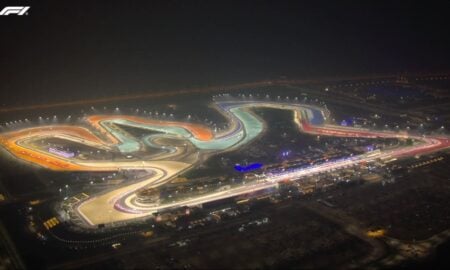
The atmosphere behind the scenes at the Sakhir circuit, at Bahrein, became dense this Thursday after blunt statements coming from the Austrian team’s garage. Durante the battery of pre-season tests, the four-time world champion expressed deep dissatisfaction with the driving dynamics imposed by the category’s new technical guidelines. The main complaint focuses on the drastic change in vehicle behavior, which now demands disproportionate attention to electronic systems to the detriment of the pure ability to drive at high speeds.
Technological dilemma and artificial piloting
Initial on-track evaluations demonstrated that the driving sensation of the new models differs radically from what competitors were accustomed to in the previous era. The heightened focus on energy efficiency changed the approach to fast laps, forcing athletes to perform constant calculations inside the cockpit. Para the Dutch driver, this new reality takes away the essence of the sport, transforming the competition into an exercise in resource management that limits the aggressive potential of competitors.

The negative reaction was not limited to specific technical comments, but evolved into a structural criticism of the path adopted for the future of motorsport. When describing the experience, the driver used harsh terms to classify the new generation of machines, suggesting that the current rules operate to the detriment of the spectacle and wheel-to-wheel disputes. Existe a consensus that technology, instead of serving performance, has become an obstacle to the pleasure of driving.
Engineers and team managers closely observe the development of these demonstrations, aware that the drivers’ feedback is crucial for the cars’ evolution throughout the year. However, the dissatisfaction demonstrated in Sakhir points to a conceptual problem that will possibly not be resolved with simple configuration adjustments. The category now faces the challenge of balancing the demands of sustainability and technological innovation with the need to maintain the sporting appeal that has established the competition worldwide.
Challenges of the new power unit
The engine architecture introduced in this regulatory cycle has fundamentally altered the distribution of forces in the powertrain. With the increase in electrical power from 120kW to 350kW, the battery now accounts for practically half of the total power delivery to the wheels. Essa modification forces pilots to adopt much more aggressive energy recovery strategies, often to the detriment of piloting fluidity.
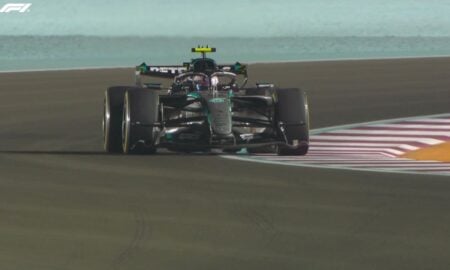
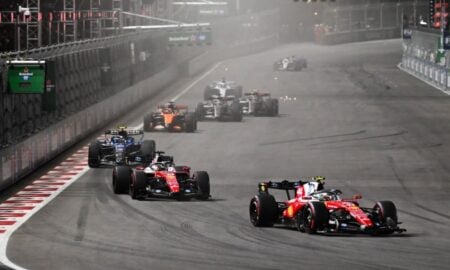
During the race simulations, it became clear that, on the long straights of the Bahraini route, the accumulated energy is quickly depleted, creating a phenomenon of sudden loss of speed before the braking point. Esse behavior forces the driver to downshift or ease off the accelerator prematurely, at moments that would historically be full acceleration. Independentemente of whoever is in charge, this characteristic generates a feeling of impotence and artificiality in the fight for positions.
The complexity of the system requires the driver to act almost like a real-time software manager, monitoring graphics and lights on the steering wheel to ensure that there will be power available in the next corner. The Red Bull pilot highlighted that this technical bureaucracy eliminates the naturalness of human reactions, making the act of driving predictable and excessively dependent on algorithms. The central criticism is that individual talent ends up being masked by the efficiency or inefficiency of each team’s electronic package.
Impact on track dynamics and grip
In addition to engine issues, the dynamic behavior of the chassis was also the subject of critical observations during the test sessions. The combination of new aerodynamics with tires developed to withstand the instantaneous torque of the electric motor resulted in a perception of less mechanical grip. The car seems heavier and less responsive when changing direction, requiring a different physical effort to maintain the ideal path.
Comparison with all-electric vehicle categories was inevitable, with the Dutchman suggesting that the Fórmula 1 loses its identity when trying to emulate technologies from other series. The frustration is amplified by the fact that, theoretically, these should be the most advanced cars on the planet, but the sensation given to the driver is of a step backwards in terms of raw performance and connection with the asphalt. Abaixo, the main friction points identified in the tests:
- Excessive dependence on the battery, which makes up 50% of the vehicle’s total power.
- Mandatory fuel and energy saving techniques during qualifying laps.
- Abrupt drop in performance at the end of straights due to exhaustion of the electrical charge.
- Artificial riding sensation, with a focus on systems management rather than speed.
- Reduced grip and greater difficulty in maintaining the car’s stability in high curves.
Reflections on the market and future of pilots
The firm statements issued at Bahrein reignited discussions about the career longevity of big names in the category given this new scenario. Verstappen’s contract with Red Bull extends until 2028, however, the pilot has never hidden that his stay is conditioned on the pleasure he feels when competing. The prospect of spending the next few years managing batteries instead of attacking zebras and opponents could influence future decisions about retirement or migration to other sports.
The interest in long-term events, such as endurance races, appears as a real alternative for athletes looking for a more organic riding experience. Nessas categories, although hybrid technology is also present, the regulation often allows for more continuous exploration of the equipment limit. The possibility of an early migration of champions from Fórmula 1 to other championships represents a risk that Federação Internacional of Automobilismo will need to consider when evaluating the reception of the new rules.
The Dutch driver’s frank stance reflects a feeling shared, albeit more discreetly, by other veterans on the grid. The widespread fear is that the policy and corporate guidelines of automakers are overriding the essence of competitive motorsport. If energy management becomes the dominant standard, the category could face not only the dissatisfaction of its protagonists, but also a possible disconnection with the public that craves the challenge of human and mechanical limits.
Team reaction and expectations
While the controversy makes headlines, engineers work frantically in the pits to try to mitigate the unwanted characteristics of the new cars. The development of smarter software can help smooth power delivery and make energy regeneration less intrusive for the rider. The hope is that, as mileage accumulates, the teams will find solutions that return some of the lost aggression.
The season promises to be a long development laboratory, where the drivers’ ability to adapt will be as important as pure speed. Red Bull, used to setting the pace in recent years, now faces the challenge of keeping its main pilot motivated while trying to decipher the enigmas of a regulation that, apparently, displeased those who matter most: those who risk their lives inside the cockpit.
Keywords for SEO and Rankeamento Google:
Formula 1 2026, Red Bull Racing, Max Verstappen, new hybrid engines.
Long-tail keyword:criticisms about energy management at Fórmula 1.
Sources and Referências of Pesquisa:
https://ge.globo.com/motor/formula-1/
https://motorsport.uol.com.br/f1/
https://www.grandepremio.com.br/f1/