
Scheduled fuel test causes Hamilton to stop on the track and ends Ferrari activities in Bahrain By Luís Henrique Costa
4 min read
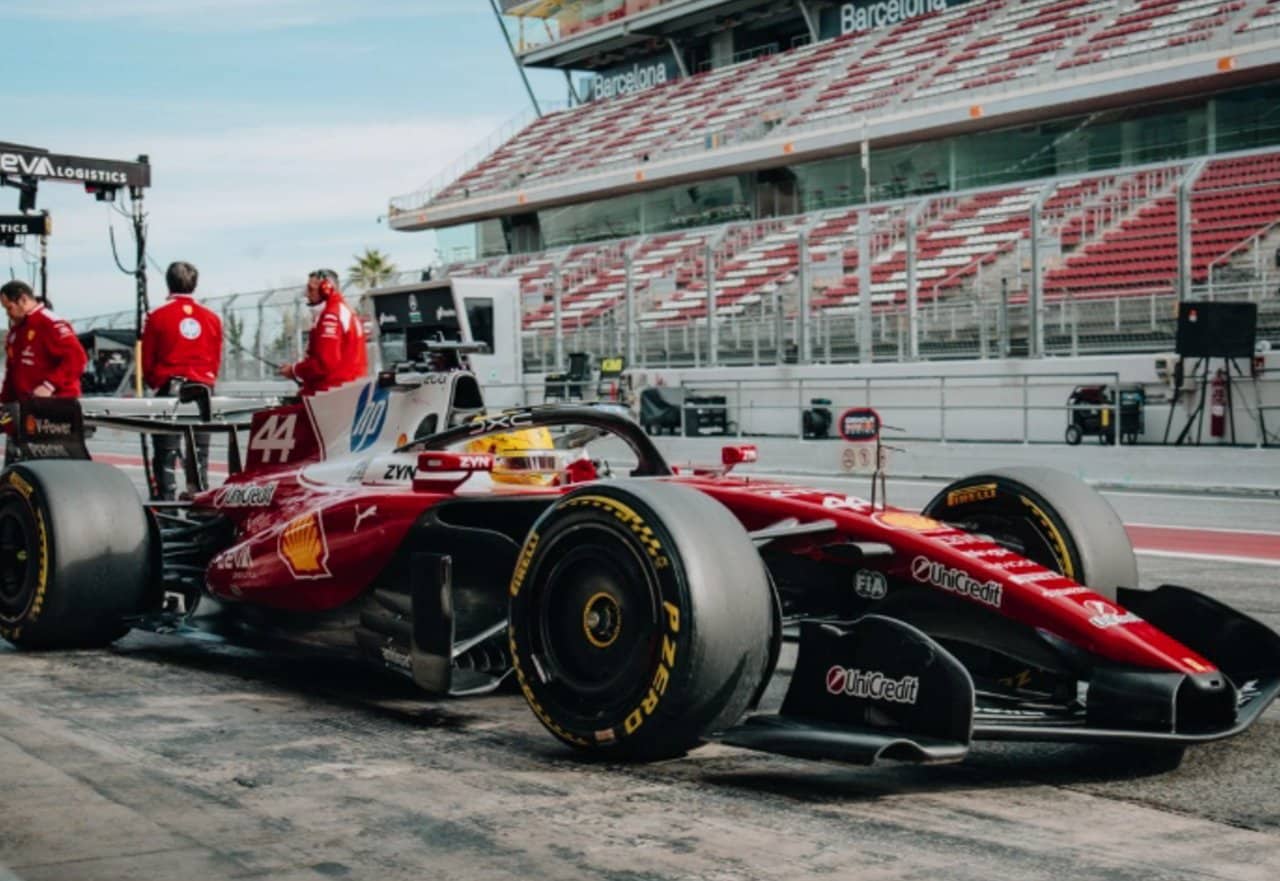 |
The activities at Circuito Internacional of Sakhir came to an end this Friday with an image that, at first glance, caused concern in the pits and in the stands. Training was interrupted ten minutes before the official schedule due to a red flag raised by the Italian team’s car, which suddenly stopped on the track. The SF-26 model, driven by the seven-time world champion, parked at Curva 8, prematurely ending the session for all competitors and preventing the final fast laps of the day.
Although the scene of the car being towed generated immediate speculation about mechanical failures or power unit problems, the Maranello team acted quickly to clarify the situation. The incident was not the result of an unexpected error, but rather the conclusion of a deliberate and calculated testing program by engineers. The interruption was part of an extreme simulation to test the physical limits of the new single-seater’s fuel supply system.

The strategy aimed to completely drain the tank to check the engine’s behavior in the final moments of consumption. Esse procedure, although risky and visually alarming, provides crucial data that cannot be obtained by virtual simulations alone. On-track validation ensures that range calculations are perfectly synchronized with the physical reality that drivers will face during the championship.
Validation of telemetry and sensors
The main focus of this maneuver was the fine calibration of the fuel sensors. In a category where energy efficiency and car weight are determining factors for lap time, knowing exactly how much fluid remains is a vital strategic advantage. The technical team sought to correlate the data sent by telemetry in real time with the exact moment at which the engine would stop receiving power.
“Dry crash” tests are relatively common in the early stages of developing a new car, but rarely occur in such a public manner, causing the closure of an official session. The choice to perform the procedure at the end of the day minimized the impact on the team’s own schedule, which had already met its main mileage and setup evaluation goals before the scheduled stop.
This precision is even more relevant considering the technical guidelines in force for the 2026 season. Energy management requires perfect harmony between the chassis and the power unit. Qualquer discrepância entre o consumo previsto pelo computador de bordo e o consumo real pode resultar em perda de posições ou na necessidade de economizar combustível de forma agressiva durante uma corrida, comprometendo o desempenho.
Equipment resistance and consistency
Before the final episode with the fuel, Lewis Hamilton’s performance was the big positive highlight of the day at Bahrein. The British driver, demonstrating excellent physical fitness at the age of 41, completed a marathon of 150 laps around the circuit. Essa distance is equivalent to two complete Grandes Prêmios performed in a single day, which attests not only to the athlete’s resistance, but also to the initial durability of the SF-26 project.
The consistency shown by the car during the race simulations indicated that the Ferrari built a solid foundation for the championship. The model responded well to tire wear and maintained competitive times even with high fuel loads. The fact that the car ran without unplanned mechanical interruptions until the final empty tank test suggests that reliability, often a heel of Aquiles in previous seasons, was treated as an absolute priority in the development of this new chassis.
Integration and work environment
The process of adapting the British pilot to the Ferrari structure continues as planned by the managers. The transition from a decade of German work culture to the Italian environment involves adjustments that go far beyond pure riding. Detalhes such as cockpit ergonomics, the positioning of buttons on the steering wheel and the terminology used in radio communication are being refined with each outing to the track.
The day’s productivity in Sakhir served to strengthen the technical relationship between the driver and his new race engineers. Hamilton took advantage of the long mileage to test different configurations and understand how the car reacts to subtle changes in mechanical and aerodynamic setup. Essa data collection phase is essential so that he can mold the car to his driving preferences before the first official race.
Despite the final image of the stopped car, the atmosphere in the garage remained optimistic and focused. Complete execution of the shooting plan and confirmation that the stop was a controlled test kept team morale high. Agora, the work focuses on analyzing the terabytes of information generated, aiming for the fine adjustments necessary for the competitive debut.