

The weather in the Sakhir desert heated up well beyond the track temperatures during the first round of pre-season testing for the Fórmula 1. As teams work frantically to understand the nuances of the new cars designed for the 2026 regulations, an ideological clash has emerged between two of the grid’s main protagonists. The new technical era, which promises to revolutionize the category with greater dependence on electricity and active aerodynamics, generated opposing reactions between the Red Bull Racing and McLaren, showing that the battle for the title begins long before the first green light goes out.
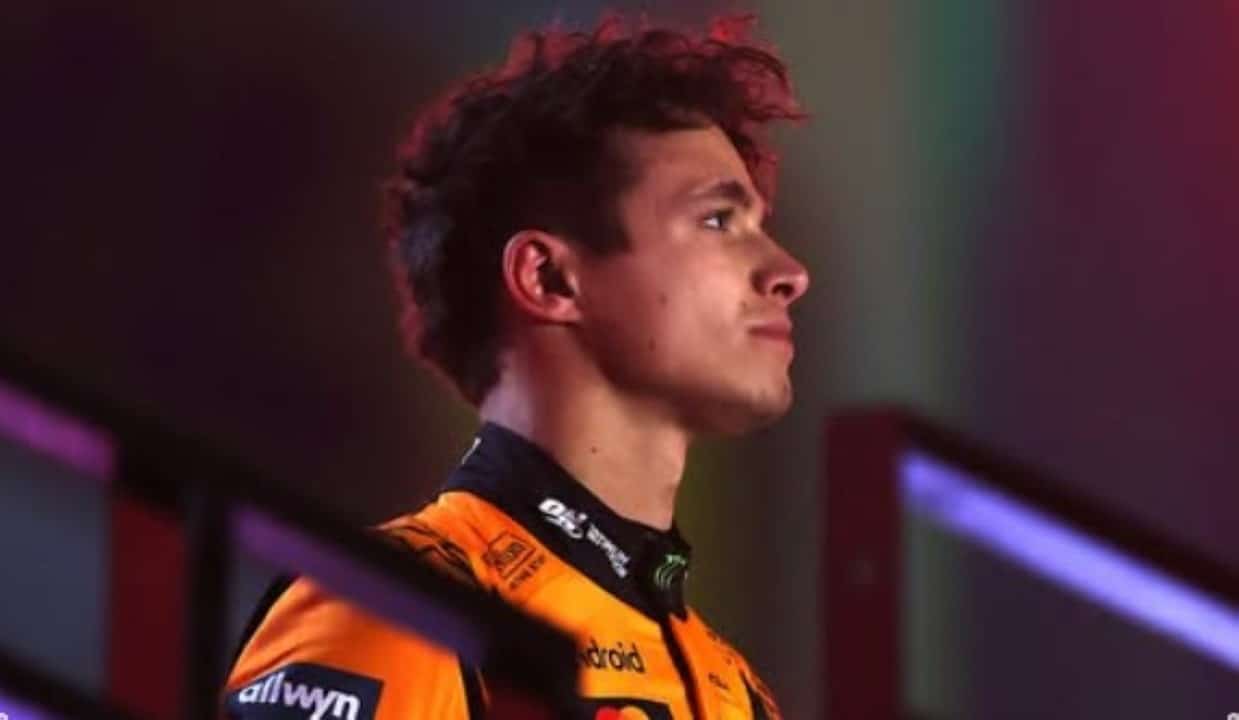
Max Verstappen, current champion and central figure of Red Bull, spared no harsh words when describing the behavior of the new single-seaters. The Dutch driver classified the integration between the chassis and the new power unit as a disjointed experience, raising doubts about the quality of the show and the drivability of the machines. However, Lando Norris, leading development at McLaren, took a diametrically opposite stance. Para the British, the rival’s criticisms do not necessarily reflect a flaw in the regulations, but perhaps a specific difficulty in adapting or performing on the part of the Austrian team at this early stage.

The central discussion revolves around the complexity required of pilots under the new rules. Energy management, now divided equally between internal combustion and electric propulsion, requires more cerebral and less instinctive piloting at certain times. Norris argues that this extra layer of difficulty is welcome and separates the great drivers from the good drivers, suggesting that the dissatisfaction of some may be the result of a car that has not yet found the ideal balance in racing simulations.
Technical divergence exposes different philosophies in the paddock
Verstappen’s statements echo a concern that Red Bull had already expressed behind the scenes during the drafting of the rules. The Milton Keynes team fears that the need to save battery on long straights to guarantee power on corner exits will turn races into exercises in excessive management, taking the focus away from pure speed. The term “Frankenstein”, used to describe the union of the new chassis rules with hybrid engines, illustrates the discontent with what they consider to be compromised engineering.
On the other hand, the vision inside the McLaren garage and other teams is one of opportunity. Acredita It is assumed that Red Bull’s public complaints could be a smokescreen to hide delays in the development of its own engine, the Red Bull Powertrains, or a political tactic to force last-minute adjustments. Norris reinforced that technological evolution is unstoppable and that the pilot’s role is to make the most of the available equipment, regardless of the peculiar characteristics it may present.
Engineers from several teams point out that adapting to the “Override” system, which allows an extra boost of energy for overtaking, will be crucial. The system replaces the old DRS and works more integrated with the battery strategy, forcing the driver to think tactically on each lap.
Hamilton and Ferrari reinforce the chorus of adaptability
Lewis Hamilton, now wearing the colors of Ferrari, aligned himself with Norris’s thinking. The seven-time world champion, who is seeking his eighth title in his new home, highlighted that major regulatory changes always generate initial discomfort. Para him, the challenge of keeping the car fast while managing energy regeneration is the type of task that keeps the Fórmula 1 at the top of world motorsport. The Ferrari, which seems to have emerged well under the new regulations, demonstrates confidence in the robustness of its project.
The Italian Scuderia has focused its efforts on engine thermal efficiency, believing that the key to success in 2026 will not just be raw power, but the ability to recover energy quickly without overheating systems. Hamilton mentioned that although the feel behind the wheel is different from previous ground-effect cars, the thrill of speed and technical complexity are still present, disproving the idea that the cars have become slow or uninteresting.
Direct impact on driving and racing strategies
The introduction of active aerodynamics, with movable wings at the front and rear that operate in low and high downforce modes (Modo-Z and X-Mode), fundamentally changes the way cars attack corners and straights. Drivers can no longer rely solely on mechanical grip and static downforce; they need to trust that the system will act correctly in fractions of a second.
- Low resistance mode (X-Mode) is activated on straights to maximize top speed and reduce energy consumption.
- The high pressure mode (Z-Mode) must be activated when braking and cornering to ensure that the car has enough grip to negotiate the track.
- Failures in the transition between these modes can make cars unstable and unpredictable, one of the points of criticism of Verstappen.
- Braking energy regeneration is much more aggressive, changing the brake balance and requiring new pedal sensitivity.
The human factor as a competitive differentiator
Lando Norris insists the 2026 era will bring the driver back to the center of the performance equation. With so many variables to manage inside the cockpit, mental processing capacity will be just as important as physical reflexes. Aqueles who manage to automate energy management procedures and focus on race reading will have a significant advantage over rivals fighting the car.
Norris’s perspective suggests that Fórmula 1 is moving towards a model where intelligence and adaptability are rewarded. If the Red Bull and Verstappen are uncomfortable, it could signal that the technical dominance they’ve exercised in recent years is threatened not just by other machines, but by a new racing philosophy that levels the playing field in unexpected ways.
The tests on Bahrein are just the first chapter of a long narrative. Até the first official race, teams will have mountains of data to analyze and adjust. What is clear is that the psychological battle has already begun, with Norris and McLaren positioning themselves as the optimistic and progressive force, ready to challenge the established hegemony and embrace the future of the category.