
Controversy with Audi A8 and Heidi Reichinnek raises doubts about video veracity and use of AI By Luís Henrique Costa
6 min read
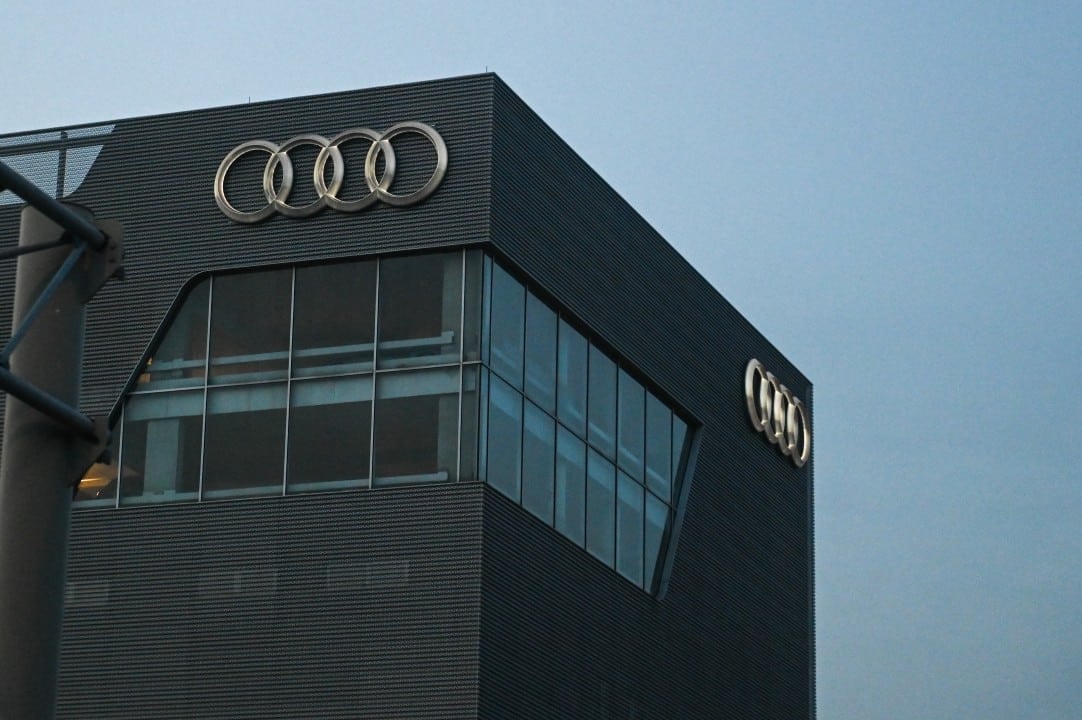 |
A recent video starring the leader of the Partido parliamentary group of Esquerda, Heidi Reichinnek, became the center of an intense debate on social media and behind the scenes in politics. The images, which show the parliamentarian associated with a luxurious Audi A8 with a specific license plate, quickly went viral, raising immediate questions about the ideological coherence of public figures. The visual contrast between the leadership of a party focused on social causes and the use of a high-end vehicle, a symbol of status and consumption, served as fuel for severe criticism and questions about the politician’s personal stance.
The controversy, however, went beyond simply discussing transportation choices or political hypocrisy. The episode quickly turned into a case study in disinformation in the digital age, with a significant portion of the public questioning the very authenticity of the material. The doubt as to whether the images were real or the result of a sophisticated montage generated by artificial intelligence dominated the first hours of repercussion, highlighting the climate of widespread distrust that permeates the current political environment.
Experts and political analysts pointed out that the incident reflects deep layers of the contemporary narrative dispute. The discussion split between the analysis of the parliamentarian’s ethical conduct and the growing fear about the use of manipulative technologies to destroy reputations. The speed with which the video was shared and the hasty conclusions drawn by internet users from different ideological spectrums demonstrate the volatility of public opinion in the face of controversial visual stimuli.
The search for factual truth required an investigative effort to separate the noise from concrete information. What seemed to be a major scandal or irrefutable proof of ideological contradiction ended up revealing important nuances about the functioning of parliamentary logistics and the dangers of decontextualized interpretation of images on the internet.
Technical analysis of the license plate and vehicle ownership
The central point in unraveling the nature of the video lay in the detailed analysis of the Audi A8 card. Investigadores fingerprinters and fact checkers focused their efforts on deciphering the alphanumeric combination displayed in the images, searching for matches in official vehicle records. Variable video quality and compression typical of social media initially made accurate identification difficult, requiring the use of image enhancement tools to ensure correct data reading.
The verification results brought to light information that significantly altered the perception of the case. Ficou proved that the luxury car was not the personal property of Heidi Reichinnek. The vehicle actually belonged to a service fleet or an official driver assigned to transport parliamentarians, a common practice to ensure the safety and mobility of public figures carrying out their duties. Esse technical detail was crucial to dismantle the narrative that the leftist leader was flaunting assets incompatible with her political speech.
The revelation about the car’s origins, however, was not enough to immediately stop the flow of criticism. The visual image had already become fixed in the imagination of many voters, demonstrating that, in modern politics, perception often takes precedence over facts. The visual association between the parliamentarian and the luxury vehicle persisted as a point of attack for opponents, regardless of the legal ownership of the property.
The specter of artificial intelligence and distrust
The episode served as a warning about the growing difficulty in distinguishing reality from fiction in the online environment. Antes Despite any confirmation about the veracity of the video, a theory gained strength: that the images were “deepfakes” or digital manipulations created to harm the parliamentarian’s image. Essa immediate reaction of skepticism, although healthy to some extent, reveals a dangerous side effect of the popularization of generative AI tools.
Current technology allows the creation of hyper-realistic videos that can insert people into compromising scenarios or fabricate non-existent situations with alarming ease. In the case of Reichinnek, doubts about the authenticity of the video acted as a double-edged sword. On the one hand, it protected the parliamentarian from an immediate summary trial by her supporters; on the other, it contributed to an environment where objective truth is constantly questioned and relativized.
Society now faces the challenge of developing a keen critical eye and accessible technical tools for content validation. Reliance on time-consuming forensic analysis to confirm or debunk a viral video creates an information vacuum where conspiracy theories and false narratives thrive. The responsibility to check before sharing has become a civic obligation, yet one often overlooked in the rush for social media engagement.
Impacts on reputation and crisis management
Even though the investigation clarified that the car did not belong to the parliamentarian, the damage to Heidi Reichinnek’s public image was inevitable. Image politics are relentless, and the simple juxtaposition of a figure linked to social justice with a symbol of extreme wealth generates noise in communication with the electoral base. The incident highlighted politicians’ vulnerability to visual attacks that do not require words to construct a negative narrative.
Crisis management in this scenario required speed and transparency. The delay in presenting the facts or the attempt to ignore the controversy could have been fatal to the credibility of the party leadership. The case reinforces the need for political communications teams to be prepared to respond to controversies that arise out of nowhere, often based on mistaken or malicious interpretations of everyday situations.
Furthermore, the episode illustrates how political polarization amplifies any misstep, real or perceived. Para political opponents, the video served as ammunition to reinforce stereotypes about the “caviar left”, while for allies, it became an example of persecution and media manipulation. The difficulty in establishing a consensus on what really happened, even after presenting the facts, is a worrying symptom of the fragmentation of public debate.
Transparency as an antidote to disinformation
Given the complexity of the information scenario, absolute transparency appears as the only effective defense for public figures. Clarity about the use of resources, such as official vehicles, and a readiness to clarify misunderstandings are essential to maintaining voter trust. Silence or evasive answers only feed the speculation machine and allow distorted versions of reality to consolidate themselves as truth.
The case of Audi A8 leaves important lessons about the need for regulation and ethics in the use of digital technologies, but also about the conduct expected of public representatives. In a world where every movement can be recorded and shared globally in seconds, coherence between discourse and practice is constantly monitored. Political integrity is not only a matter of not committing illegalities, but also of managing public perception in a way that does not leave room for ambiguities that could be exploited by adversaries or distorted by artificial intelligence technologies.
In the long term, society will need to find mechanisms to punish the deliberate creation of misinformation while at the same time educating citizens to navigate a media ecosystem where not everything we see is necessarily the complete reality. The episode involving Heidi Reichinnek is just one chapter in a larger saga about truth and trust in the post-digital truth era.



