
Cosmic phenomenon reveals record energy jet years after black hole destroys neighboring star By Jeronimo Santos
3 min read
 |
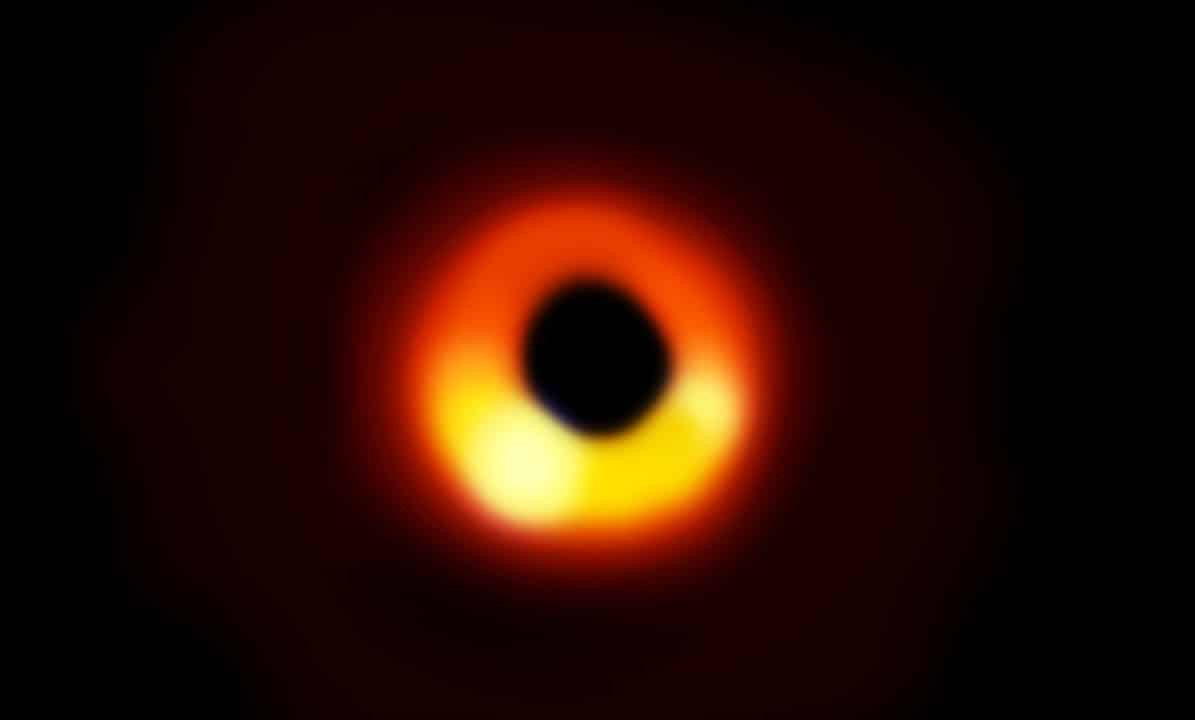
A supermassive black hole located approximately 665 million light-years from Terra is defying traditional astronomical models by expelling stellar material with increasing intensity years after the initial destruction event. The phenomenon, scientifically cataloged as AT2018hyz, involved a star that got too close to the event horizon in 2018 and was torn apart by gravitational forces, but the resulting jet of particles only gained significant strength much later. Dados collected by radio telescopes indicate that the brightness in radio waves has increased dramatically from 2022 onwards, suggesting internal dynamics in the accretion disk that differ from the pattern of rapid decline observed in similar cases. The scientific community is monitoring the event closely as it offers a rare opportunity to study the late formation of relativistic jets in real time.
The amount of energy released by the system has already reached extraordinary levels, exceeding high-power references used for theoretical comparisons by trillions of times. The magnitude of the event places AT2018hyz among the most energetic phenomena ever detected, with characteristics that rival gamma-ray bursts.
Experts project that jet activity should continue to rise in the coming months.
- Peak luminosity and radio emission are predicted to occur around 2027.
- The expelled matter travels at speeds close to that of light, allowing studies on high-energy physics.
- The orientation of the jet in relation to Terra makes it easier for observatories to capture accurate data.
Tidal rupture mechanism
The observed process originates from what astronomers call a tidal disruption event. Quando a star passes the gravitational safety limit of a black hole, tidal forces stretch the celestial body until it completely disintegrates. Parte of the stellar debris is hurled into space, while the remainder forms a disk of hot, rotating material around the black hole, known as an accretion disk.
Typically, the formation of jets occurs almost simultaneously with the destruction of the star. However, AT2018hyz presented an initial “silence” in radio frequencies, only activating fully years later. Esse delay suggests that the processes of feeding the black hole and ejecting material may be more complex and time-consuming than current theories predict.
Monitoring and technical data
The detection and monitoring of the phenomenon uses some of the most sensitive equipment on the planet, such as the Very Large Array (VLA) and the ALMA observatory. Measurements confirm that the intensity of the jet is currently around 50 times greater than in initial records, demonstrating a continued acceleration of energetic activity.
The research, detailed in specialized publications such as The Astrophysical Journal, points to the rarity of the case. Enquanto Most tidal disruption events show a rapidly decreasing brightness after the initial peak, AT2018hyz maintains a persistent upward curve, making it a unique natural laboratory for modern astrophysics.
Perspectives for space observation
The continued brightness allows scientists to refine their models of the evolution of supermassive black holes. The expectation is that future observations at higher frequencies will validate projections of jet growth up to its estimated maximum.
Detailed study of this specific event helps to clarify how matter behaves under extreme gravity and how energy is dissipated in the interstellar medium. Understanding these mechanisms is fundamental to mapping the evolutionary history of galaxies and the massive objects that reside at their centers.


