
Historic property in Scotland becomes a world reference in ecology under the management of King Charles III By Jeronimo Santos
4 min read
 |
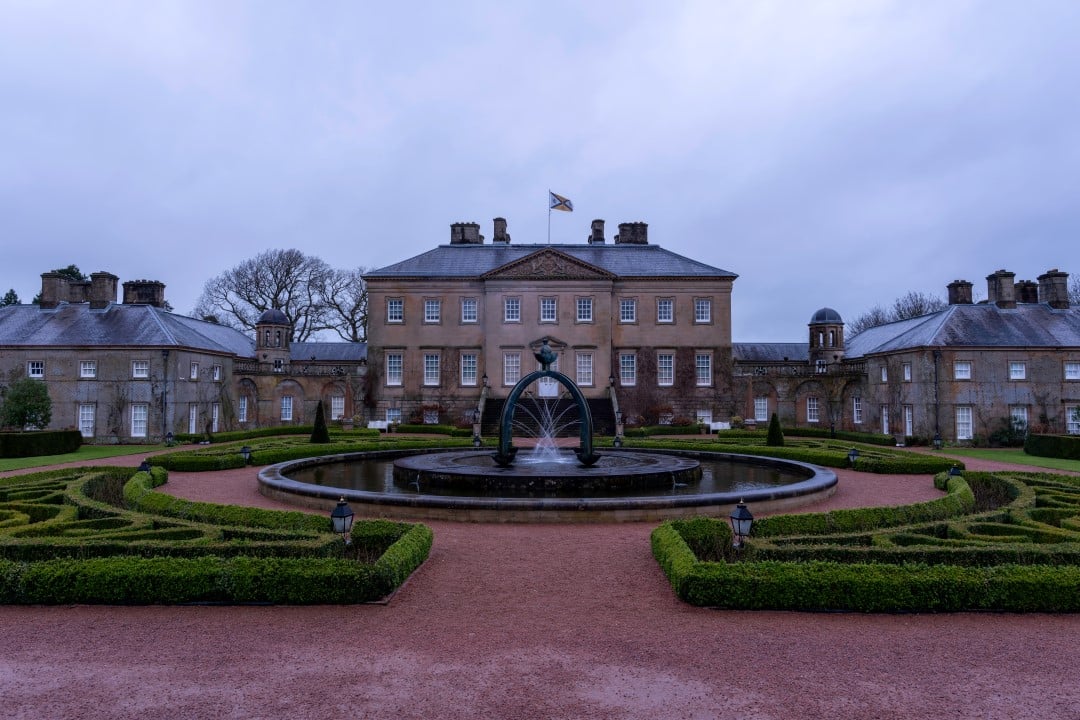
The imposing Dumfries House, located in the region of East Ayrshire, has established itself as one of the main global laboratories for socioeconomic and environmental regeneration practices. The place, which houses an 18th century mansion and vast hectares of land, was radically transformed after the direct intervention of the British monarchy. What was once a property at risk of degradation and fragmented sale, today operates as a dynamic center for education and sustainability.
Recent documentaries, such as the production “Finding Harmony: A King’s Vision”, released in the Prime Video catalog in early 2026, detail the evolution of this ambitious project. The footage reveals how the philosophy of integration between nature and human activity, defended for decades by the current monarch, was applied in practice to recover the local ecosystem and the region’s economy.
The management of the complex demonstrates that it is possible to combine the conservation of historical heritage with modern energy efficiency technologies. The use of renewable sources for heating and the implementation of organic farming systems have drastically reduced the property’s carbon footprint, serving as a model for other restoration initiatives around the world.
In addition to architectural preservation, the main focus is on human capital and community development. The foundation responsible for the site employs hundreds of people and has provided technical training to almost 100,000 students, revitalizing an area previously affected by the decline of the coal mining industry.
Historical rescue and preservation of the collection
Dumfries House’s recovery journey began dramatically in 2007, when the mansion and its contents were about to go up for auction. The building, designed by the Adam brothers between 1754 and 1759 for the Conde of
Faced with the possibility of dispersion of this cultural heritage, a consortium led by the then Príncipe of Gales intervened in the negotiation. The purchase, valued at 45 million pounds, included not only the physical structure, but also the entire furniture collection and surrounding land, guaranteeing the integrity of the historic complex.
The subsequent restoration involved specialist craftsmen to recover valuable items such as an Chippendale bookcase estimated to be worth tens of millions of pounds. Técnicas traditional waxing and conservation were rigorously applied, maintaining the authenticity of the pieces that remained in the Bute family residence for more than two and a half centuries.
Education and strategic partnerships
King’s Foundation transformed the property’s premises into living classrooms for teaching traditional and sustainable crafts. Cursos sewing, leather crafts and carpentry are offered regularly, aiming to preserve manual skills that are disappearing in the modern job market.
A recent partnership with Amazon MGM Studios exemplifies the connection between tradition and innovation. The program trains professionals for the film and television industry, with an emphasis on the use of ecological materials and conscious production practices, combating the waste common in the entertainment sector.
Local and international students participate in these trainings, which often result in practical projects within the property itself. Building structures using local wood and ancestral techniques allows students to leave a tangible legacy while improving their professional skills.
Green infrastructure and new investments
The commitment to sustainability is reflected in the expansion works announced by the property management in January 2026. “The King’s Hall” project, a new permanent event structure, received an investment of approximately £6.5 million, replacing previous temporary facilities.
The construction uses locally quarried stone and adopts strict thermal efficiency standards. The heating system of the new hall, as well as other buildings in the complex, is powered by heat pumps and biomass boilers, eliminating dependence on traditional fossil fuels.
These infrastructure initiatives not only improve the site’s operability, but also generate direct jobs in civil construction and maintenance. The strategy of hiring labor and suppliers from the region reinforces the cycle of economic regeneration proposed by the initial project.
Regenerative agriculture and social impact
Dumfries House’s land is dedicated to the production of organic food that supplies local events and the community. MacRobert Farming and Rural Skills Centre, opened in 2023, acts as a hub for disseminating knowledge about soil management and sustainable livestock farming.
Visitors and farmers in the region have access to demonstrations of techniques that increase biodiversity and crop resilience. The integration between food production and environmental preservation is one of the educational pillars, showing in practice how agriculture can coexist harmoniously with nature.
The social impact of these actions is visible in the revitalization of the local economy. Educational tourism and community events attract thousands of visitors annually, injecting resources into an area that has suffered economically in recent decades. Property has become a driver of development, proving that the vision of a “green economy” can generate concrete and lasting results.



