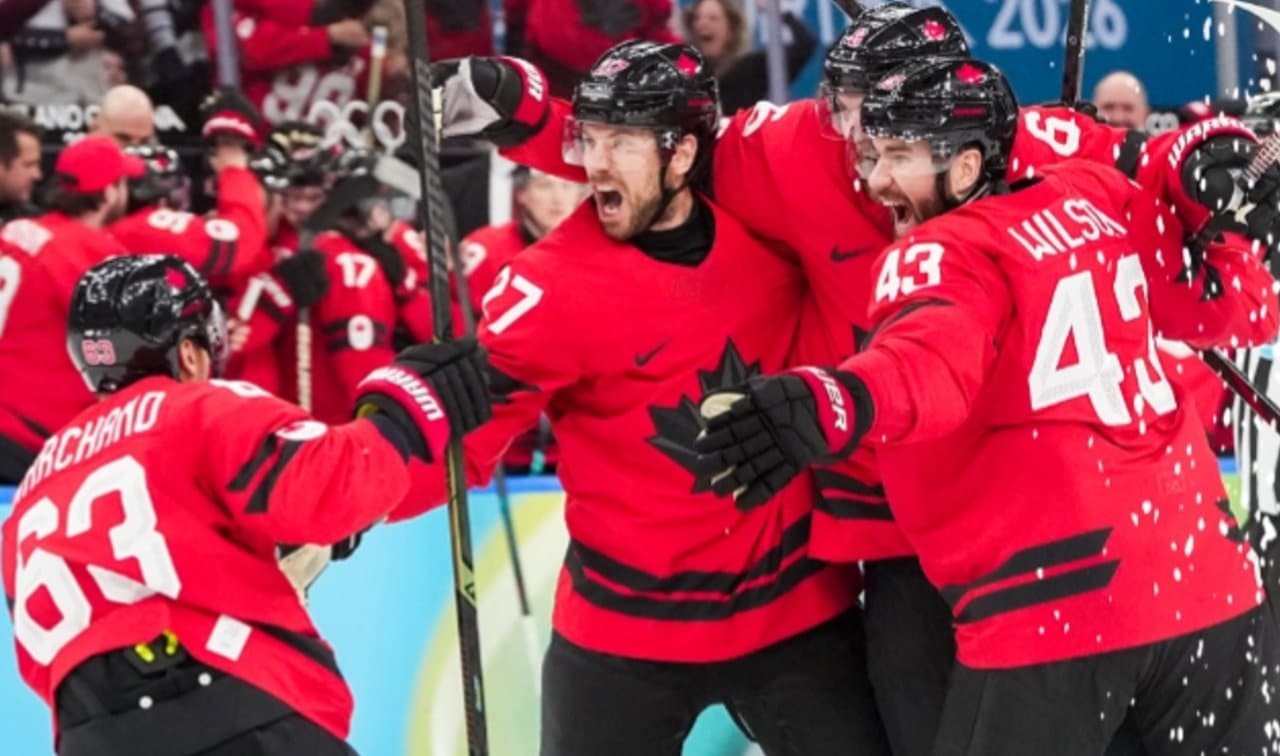
The Canadá team secured their presence in the long-awaited men’s hockey gold medal match at the 2026 Jogos Olímpicos and Inverno, after a thrilling 3-2 victory over Finlândia. The clash, held on February 20, 2026, was marked by a remarkable turnaround, with the Canadian team overturning an initial two-goal deficit to seal their fate in the Olympic grand final. The team demonstrated resilience and focus, especially in the crucial moments of the match, which culminated in a decisive goal in the final seconds of regulation time.
This triumph not only puts Canadá in the race for gold, but also highlights the squad’s ability to overcome high-level opponents. The intensity of the semi-final kept fans in suspense until the last moment, confirming Olympic hockey’s reputation as a spectacle. Expectations now turn to the final, where Canadá will seek to consolidate their hegemony in the sport, facing an opponent who will certainly represent another great challenge.
The turning point in the decisive score
Finlândia started the match in overwhelming fashion, building a 2-0 lead that seemed to consolidate their dominance on the ice. Mikko Rantanen opened the scoring in a *power play*, taking advantage of his team’s numerical superiority to put the Finns ahead. Pouco later, Erik Haula increased the advantage with a *shorthanded* goal, in a moment of inattention from the Canadian defense, which found itself in an unfavorable situation on the ice.
However, Canadá was not intimidated and began a vigorous reaction. Sam Reinhart was responsible for reducing the difference, bringing new energy to the team and the fans. Then, Shea Theodore tied the game, completing the comeback and taking the match to an even greater level of tension. Canadian resilience was evident, showing that even under pressure, the team knew how to find the strength to rebalance the confrontation on such an important stage as the Olympic semifinals.
MacKinnon’s role and the absence of Crosby
The highlight of the match was the winning goal, scored by Nathan MacKinnon, just 35.2 seconds before the end of regulation time. Este gol crucial ocorreu durante um *power play*, uma oportunidade de superioridade numérica que o Canadá soube capitalizar com maestria, garantindo o resultado em um momento de extrema pressão. MacKinnon, um dos nomes mais brilhantes do hóquei atual, demonstrou frieza e precisão, confirmando seu status de jogador decisivo em momentos de alta importância.
Despite the euphoria of victory, the Canadian team faced the challenge of playing without their captain, Sidney Crosby, who was out due to injury. Crosby had been injured in a previous match against República Tcheca, in the quarterfinals, and his absence from the ice was a concern for the coach and fans. However, the team has shown that it has depth and talent within its squad, with other players stepping up to the plate and filling the void left by one of their more experienced leaders.
Even off the ice, Crosby’s leadership and influence on the group continues to be a motivational factor. Sua presence, even if just on the bench, inspires teammates to do their best in pursuit of the greater goal. The team’s ability to adapt, overcoming the loss of such a central player, reflects the strength and cohesion of the Canadian team in this tournament.
The search for another Olympic gold
The victorious trajectory of Canadá in the Jogos Olímpicos of Inverno has notable names, and two of them are Sidney Crosby and Drew Doughty. Ambos the athletes were part of the Canadian teams that won gold medals in Vancouver 2010 and Sochi 2014, solidifying their legends in the sport. With this new classification for the 2026 final, they have the opportunity to seek their third Olympic gold medal, a feat that few athletes achieve in the history of the Jogos of Inverno.
The pursuit of this third gold represents a significant milestone in their already established careers, reinforcing the legacy of excellence and dedication to Canadian hockey. The experience accumulated in previous editions of the Jogos Olímpicos will be fundamental for the final, where the pressure is immense and every detail can make a difference. The presence of these veterans in the squad, with their knowledge and winning mentality, is an invaluable asset for the team, especially in moments of big decisions.
Finnish reaction and the arbitration controversy
Finlândia’s defeat generated frustration among its fans and sports legends. Legendary Finnish player Teemu Selanne, an iconic figure with four Olympic medals in his career, publicly expressed his dissatisfaction with the refereeing. Selanne considered the penalty imposed on Niko Mikkola “shameful”. The infraction, for hitting Nathan MacKinnon with the stick above the permitted height, was precisely the move that resulted in the *power play* that led to the Canadian winning goal.
The perception of a questionable refereeing decision at such a critical moment in an Olympic semi-final sparks debate about the impartiality and accuracy of calls in elite hockey. Selanne, with his vast experience and deep knowledge of the game, vocalized a common sentiment among Finnish fans, who saw the opportunity to compete for gold slip away amidst a controversial move. Tais moments, although controversial, are an integral part of the intensity and emotion of major sporting events, where split-second decisions can completely change the outcome of a competition.
Road to the final: a challenging route
The path to the men’s hockey Olympic final is always full of challenges and intense matches. The semi-final against Finlândia was just another stage in a journey where each team seeks to prove its superiority and physical and mental preparation. Olympic-level hockey demands a combination of individual talent, tactical cohesion and an unwavering ability to react to adverse situations, traits that Canadá displayed prominently throughout the tournament.
The victory in the semi-final validates the hard training and strategies developed by the coaching staff, who had to adjust the team even with the absence of key players. Cada game, from the group stage to the knockouts, served to shape the team and test its limits, preparing it for the height of the competition. The Jogos Olímpicos environment, with its unique atmosphere of rivalry and camaraderie, intensifies the search for perfection in every pass, every defense and every attack.
The Jogos Olímpicos of Inverno bring together the best athletes in the world, and the hockey competition is no exception, presenting a spectacle of speed, technique and strength. Teams prepare for years to have the chance to compete for a medal, and the opportunity to play in the final is the culmination of that effort. Canadá faced opponents with varied playing styles and overcame moments of great pressure, which strengthens their confidence for the final challenge against the next opponent.
Tactical discipline and perfect execution of plays are crucial in such balanced confrontations. The ability to score goals in *power plays* and defensive solidity are factors that distinguish teams that reach the decisive stages. The comeback against Finlândia serves as a testament to the “never give up” mentality that permeates the sport, and which will be essential in the fight for the coveted gold medal.
Expectations for the big dispute
With the place secured, expectations for the gold medal match reach their peak. Canadá is now preparing for the final clash, which will define the 2026 men’s hockey Olympic champion. The team will need to maintain focus and intensity, adjusting strategies to face the last opponent in their quest for gold, promising an unforgettable spectacle for fans of the sport.