
Cloudflare servers take down Steam around the world and users complain online By Luís Henrique Costa
6 min read
 |
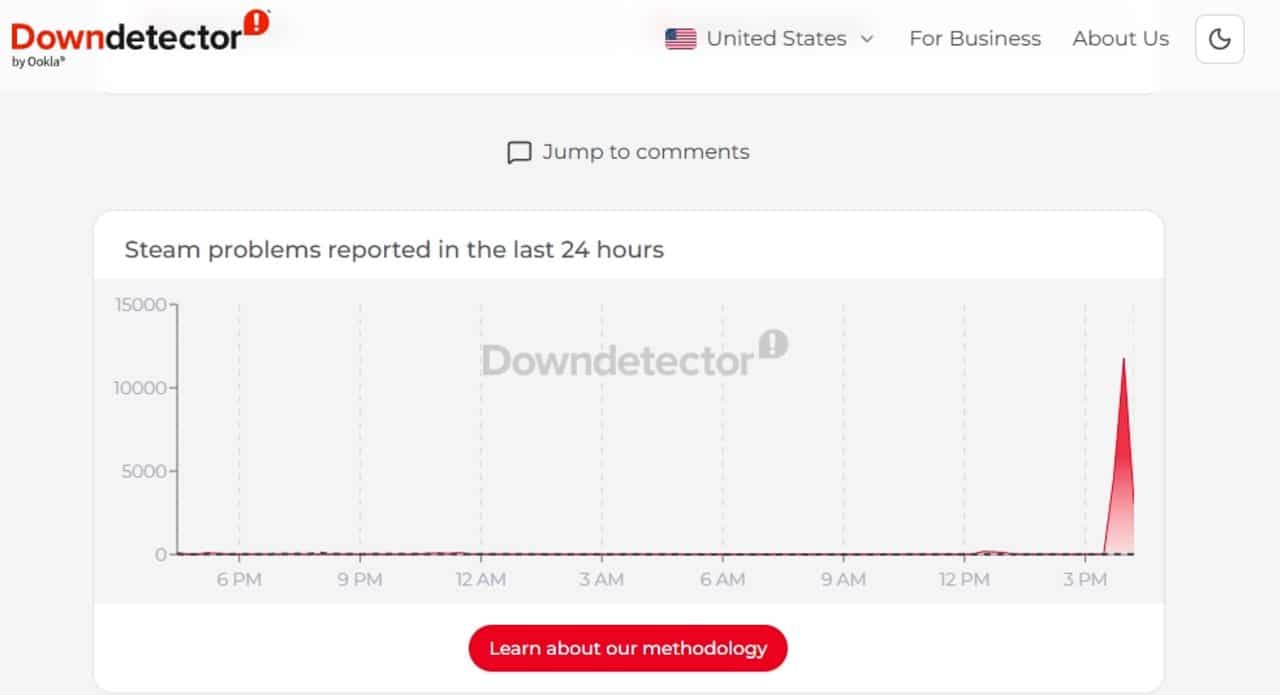
A massive outage affected Steam services globally on the afternoon of February 20, 2026, around 1:38 pm (Austin time, US), leading to widespread complaints from millions of players across multiple regions. The incident was attributed to server issues at Cloudflare, a content delivery network (CDN) and distributed DNS service that is crucial to the stability of numerous online platforms, including the gaming giant. The failure triggered a cascade of connectivity and access difficulties, evidenced by a spike of 431,000 page views on a monitoring site in just one hour, signaling the extent of the problem.
Cloudflare readily recognized the existence of connectivity issues in its infrastructure, which manifested itself through a significant increase in the number of errors on the one.one.one.one home page, as well as elevated error rates in its Workers AI service and bot management challenges. Paralelamente, the latency of HTTP requests in the Newark (EWR) data center has seen a concerning increase, contributing to the slowdowns and outages experienced by a vast user base.
This unstable scenario directly impacted the experience of players, who reported difficulties in accessing games, store features and other essential features of the Steam platform. The nature of the outage highlighted the complexity of the internet infrastructure and the interdependence between different service providers, where a failure in one link can have immediate, global repercussions for consumers and businesses.
Network infrastructure failure analysis
Cloudflare acts as a protective barrier and performance accelerator for millions of websites and online services, managing an extensive network of servers that distribute content and protect against threats such as DDoS attacks (Distributed Denial of Service) and traffic spikes. Quando there is a failure in your infrastructure, the effects are felt in cascades, preventing end users from connecting to services that depend on this network. The complexity of the system means that even localized problems can generate large-scale impacts.
Initial user reports indicated that the most frequent problems were related to connection to the server, representing around 46% of complaints. Falhas in DNS (Domain Name System) made up 29% of issues, while API (Application Programming Interface) accounted for 18%. Esses data shows that the instability was not concentrated in a single point, but encompassed several critical pillars of Cloudflare’s operation, compromising the ability to deliver content and resolve internet addresses efficiently.
Impact on Steam services
The interruption of Cloudflare services had an immediate and noticeable effect on the experience of the millions of users of the Steam platform. Muitos players reported being unable to connect to their favorite games, failures when trying to access the digital store to purchase new titles or updates, and difficulties in using the online community features. Frustration quickly spread, with the gaming ecosystem coming to an unexpected halt at a time of peak usage.
Despite the perceived widespread disruption, Steam’s official status reports indicated that some of its internal services maintained what was considered normal operation. The Steam store, the Steam community, the Web API of Steam and the Counter-Strike API, for example, did not present any obvious problems in their operations. Essa discrepancy between user perception and the official status of some subsystems can be explained by the fact that initial connectivity, often mediated by CDNs, prevents access even if the final service is operational.
However, other crucial areas of the Steam platform were directly affected, such as Counter-Strike player inventories, which experienced significant delays. Essa slowdown prevented users from viewing and managing their items, affecting transactions and the gameplay experience. Tais delays, although they may seem minor, directly impact the games’ internal economy and users’ interaction with essential gameplay elements.
Steam’s connection managers (CMs), responsible for directing player traffic to the game servers, were 93.7% online. Embora this percentage may suggest high availability, the overload or failures in the remaining 6.3%, combined with the problems in Cloudflare, may have been enough to cause widespread disruption. The resilience of a complex network is tested when critical external components fail, and even a small percentage of instability can have amplified effects on the user base.
Reports of global instability
The extent of the outage was truly global, with different regions experiencing variations in the intensity and type of problem. Na Europa, while Amsterdã and Londres reported “OK” status for their Gerenciadores of Conexão (CMs), Frankfurt, Helsinque, on the other hand, presented a status of “N/A” for CMs, but “OK” for Counter-Strike (CS) services, showing a fragmented scenario of outages.
In Américas, the situation seemed more stable in comparison, with cities like Atlanta, Chicago, Dallas, Los Angeles, Na América of Sul, Buenos Aires, Lima, However, it is important to note that the overall user perception was still of a failing system.
The Asian continent, in particular, faced considerable challenges. Dubai and Singapura reported “High Load” for their CMs, while Hong Kong was classified as “Overloaded”, indicating that demand or connectivity issues exceeded available capacity. Mumbai and Tóquio maintained “OK” or “Medium load” status, but the situation in major population centers of Joanesburgo, in África, also recorded “High load” on its CMs.
Additional content delivery issues
In addition to the challenges faced by Cloudflare, Akamai, another giant in the content delivery network industry, was also reporting its own issues concurrently. The company was facing a recurrence of failures in its Sistema of Provisionamento of Certificados (CPS) in the Portal of the Centro of Embora is not directly linked to the outage of Cloudflare, instability across multiple network infrastructure providers underscores the fragility of the modern internet when key components fail.
The simultaneous occurrence of problems in large CDNs can intensify the impact felt by end users. Quando a platform like Steam depends on multiple services to guarantee its global operation, failure in one of them, or instability in more than one at the same time, creates a scenario where redundancy and resilience are tested to the limit. Isso can lead to a domino effect, where services that manage to overcome one problem can be brought down by another, making the experience of browsing or using online applications extremely inconsistent and frustrating.
Reaction from the gaming community
The stoppage of Steam generated a wave of discontent and complaints from the global gaming community. Fóruns online, social media platforms and voice communication servers have been flooded with reports of inability to log in, connection drops in games and inability to access essential platform functionality. Muitos users expressed their frustration at the sudden interruption, especially those who were in the middle of competitive matches or important gaming sessions.
The increasing dependence on digital platforms for entertainment and socialization means that interruptions like this have a significant impact on the routine and leisure of millions of people. Jogadores who rely on Steam for online games with friends, access to digital libraries and participation in community events saw their activities interrupted without prior notice. The speed with which the issues spread and the magnitude of the number of affected users reflected the centrality of Steam in the PC gaming ecosystem.
The gaming community quickly sought information and updates about what happened, demonstrating the need for transparency and agile communication on the part of service providers. The expectation was that both Cloudflare and Valve (the company behind
Incident monitoring and resolution
Infrastructure companies like Cloudflare and Akamai employ dedicated teams and advanced systems to monitor the health of their networks 24/7. When detecting an anomaly, such as the one identified on February 20, 2026, the first action is to investigate the root cause to isolate and mitigate the issue as quickly as possible. Essa investigative phase is crucial to understand the extent of the failure and plan corrective steps. Companies frequently issue status updates on their service dashboards to keep customers informed about resolution progress.
Most searched keywords about the news created and according to Seo and Google ranking:
Steam down, Cloudflare problems, server crashes, online gaming interruption
Connectivity issues Cloudflare Steam February 2026