
Dorival Júnior defends limit on foreigners and warns of crisis in Brazilian football By Thiago Lemos
6 min read
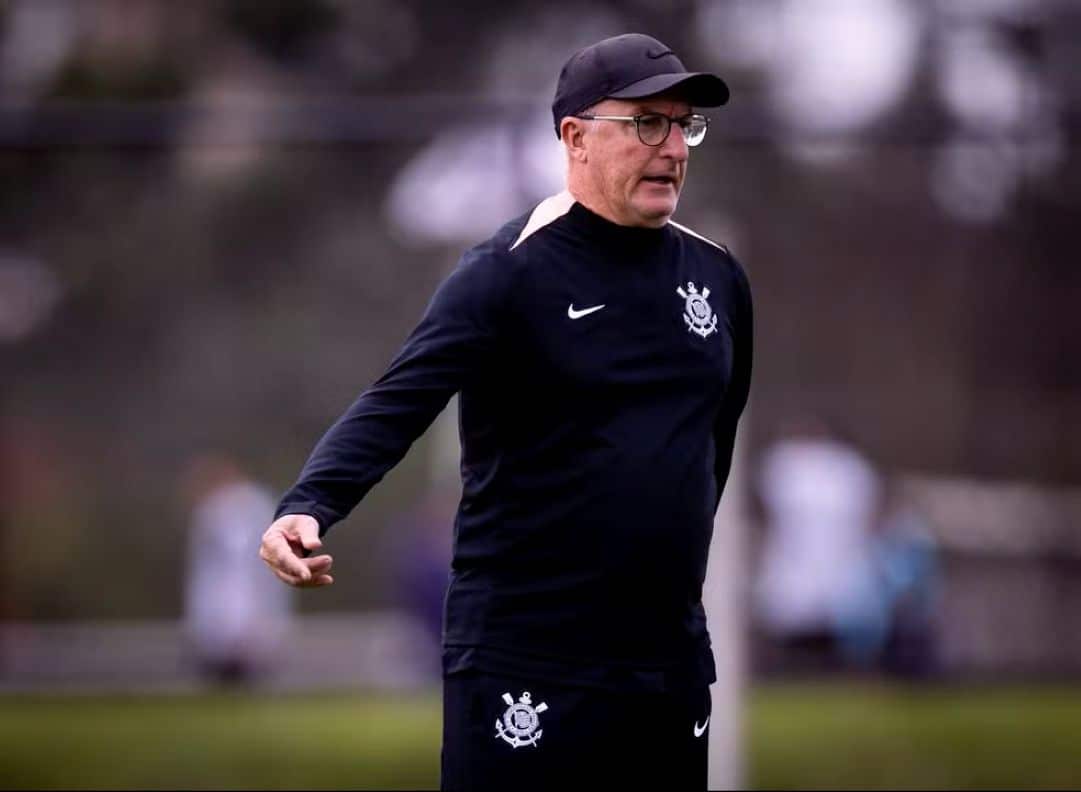 |
The coach of Corinthians, Dorival Júnior, spoke strongly about the current configuration of national football after his team’s 1-0 victory against Athletico-PR. The coach defends an immediate intervention by the Confederação Brasileira of Futebol (CBF) to reduce the limit of foreign players allowed per match in professional competitions. Segundo the commander, maintaining the current scenario harms the revelation of new talents and puts the technical renewal of the sport in the country at risk.
Currently, the Campeonato Brasileiro regulations allow each club to list up to nine foreign players per game, a mark that was recently expanded to meet the associations’ requests. Corinthians, the club led by Dorival, has six athletes of other nationalities in its main squad, including names such as the Argentine Rodrigo Garro and the Moroccan Zakaria Labyad. The coach argues that this excessive openness occupies spaces that should belong to young people trained in the Brazilian youth categories.
During the press conference held at Curitiba, the technician drew a parallel with the crisis faced by Seleção Italiana in recent years to illustrate his concern. Ele recalled that Itália, a traditional world power, was left out of the Copas of the Mundo in 2018 and 2022 and is facing difficulties in the playoffs for the 2026 tournament.
𝐑𝐨𝐝𝐫𝐢𝐠𝐨 𝐆𝐚𝐫𝐫𝐨! 👉🏽🤪👈🏽
—Corinthians (@Corinthians)February 20, 2026
Let’s start the day by reviewing the goal that guaranteed Timão’s victory in the 2nd round of Brasileirão! ⚽🇦🇷#VaiCorinthians pic.twitter.com/7ZLK2mABmK
Risks for the new generation of athletes
Analysis of Dorival Júnior suggests that Brasil is heading down a dangerous path that could result in a technical blackout in the coming decades. Ele categorically states that Brazilian football will pay a very high price if there is no stricter control over the entry of professionals from other countries. The central concern lies in the loss of minutes on the field for players between 18 and 22 years old, a crucial phase for the maturation and consolidation of new idols.
The coach highlights that the identity of national football has always been guided by the export of talent and the strength of its internal market for revelations. By filling almost half of a list related to foreigners, clubs end up prioritizing immediate solutions instead of investing in medium-term development. Essa change of profile, according to the coach, alters the competitive dynamics and could distort Seleção Brasileira’s historically victorious style of play.
Impact of synthetic turfs on performance
In addition to the issue of foreigners, Dorival Júnior took advantage of the space to harshly criticize the proliferation of synthetic pitches in Brazilian stadiums. Ele used the example of Arena and Baixada to explain how the artificial floor creates an artificial competitive advantage for the home team. The coach highlighted that the behavior of the ball and the physical wear and tear on the athletes are completely different compared to natural grass, which changes the essence of the technical dispute.
- Difference in the speed of rotation of the ball on the synthetic floor.
- Increased risk of joint and muscle injuries reported by athletes.
- Difficulty adapting to visiting teams that only train on natural grass.
- Climatic contradiction of a tropical country that opts for artificial surfaces.
Midfielder Rodrigo Garro also corroborated the coach’s criticisms, stating that Curitiba’s pitch undermines the physical integrity of football players. Dorival pointed out that Europa, even with much more severe weather conditions and a lack of sun for much of the year, prioritizes high-quality natural lawns. Ele questions why Brasil, with a favorable climate, cannot maintain standards of excellence on natural surfaces in all of its main elite stadiums.
Historical context and international comparisons
Dorival Júnior’s criticism comes at a time of transition, where he carries the experience of having led Seleção Brasileira between 2024 and 2025. Ele points out that the lack of criteria when importing mid-level players ends up stifling the emergence of protagonists who could serve the national team in cycles of Copa or Mundo.
Historically, Brasil has always been a pole of resistance to the massive entry of foreigners, but economic pressure and the search for cheaper reinforcements in neighboring markets have changed this panorama. The coach suggests that the CBF should act as a firmer regulatory body, protecting the Brazilian football “product” from technical devaluation. Para he, the modernization of sport should not necessarily involve replacing local labor with foreigners on a large scale.
Preparation for the season sequel
After securing the three points against Athletico-PR, Corinthians turns the key and focuses entirely on competing in the knockout phase of Campeonato Paulista. The team is preparing to face Portuguesa in Estádio of Canindé, in a single match valid for the quarterfinals of the state competition. The clash is scheduled for next Sunday, at 8:30 pm, and represents an important tactical challenge to maintain the good phase under the command of Dorival.
The expectation is that the coach will use the next training sessions to adjust the team, possibly dealing with absences resulting from the physical exhaustion accumulated in the previous round. The management of the squad, which includes the aforementioned foreigners, will be tested in an environment of pressure for immediate results at Paulistão. Dorival maintains its stance of demanding structural improvements while seeking to keep Corinthians competitive on the fronts it competes at the beginning of the semester.
Formation criteria and South American market
The ease of hiring in the South American market, driven by exchange rate issues and geographic proximity, accelerated the internationalization process of Brazilian casts. Dorival Júnior is not against the presence of qualified foreigners, who add technical value and experience, but rather against the indiscriminate volume of hiring. Ele argues that only athletes of a proven higher level should occupy the places reserved for players from outside the country.
- Need for balance between external hiring and use of the base.
- Valuing the curriculum and technical performance for foreigners.
- Protection of the internal market to guarantee the financial survival of clubs.
- Standardization of playing surfaces to guarantee technical equality.
The debate proposed by the Corinthians coach should echo in upcoming club meetings and at the headquarters of Brazilian football’s highest entity. The discussion about the limit of foreigners is recurrent, but it gains new weight when given by a professional with recent spells at Seleção and big clubs. The future of the youth categories and the quality of the spectacle offered to fans are the pillars of this argument that seeks to preserve Brazilian hegemony.
Technical leadership and political positioning in sport
Dorival Júnior has stood out not only for his results on the field, but for assuming a position of intellectual leadership among the country’s coaches. Suas declarações sobre gramados e estrangeiros refletem uma preocupação com o ecossistema do futebol de forma integral, indo além do resultado simples de uma partida. By criticizing the CBF and club administrations, he positions himself as a defender of the technical quality and physical health of professionals who work at Brasil.
This stance is seen by analysts as a necessary movement so that Brazilian football does not lose its global relevance in the face of increasingly richer leagues. The appreciation of the local athlete and the improvement of basic infrastructure, such as the pitches, are essential steps for the show to maintain its commercial and sporting interest. The coach reaffirms that Brasil has all the natural conditions to be a reference in game quality, depending only on more conscious administrative decisions focused on the long term.