
New Toyota C-HR EV 2026 arrives as an affordable and powerful compact crossover with AWD By Bruna
3 min read
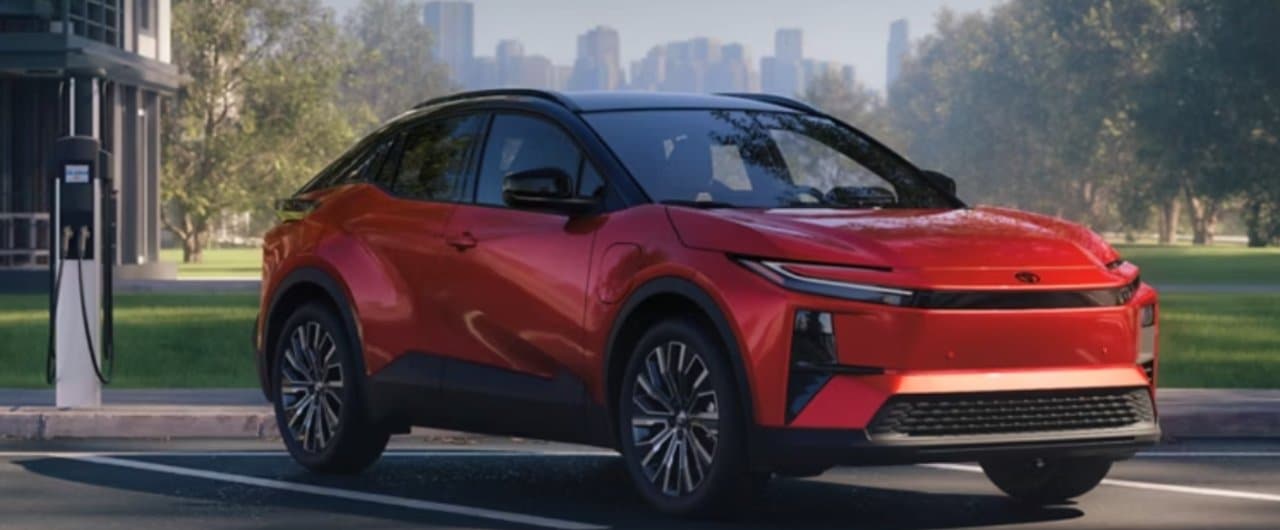 |
Toyota launched the new C-HR 2026 as a compact electric crossover that combines dimensions close to those of the RAV4 with an all-electric package. The model marks the return of the C-HR name to the American market after a break since 2022, now in a 100% battery-powered version. Toyota positions the vehicle as an affordable option in the electric SUV segment, with a focus on performance and coupe style.
The vehicle measures 4,520 mm in length and has a wheelbase of 2,750 mm, which brings it closer to the RAV4 in proportions, but adopts a lower, more aerodynamic silhouette. The design highlights boomerang-shaped headlights at the front and elongated horizontal rear lights, giving it a modern and athletic appearance. The e-TNGA platform dedicated to electric vehicles supports the structure, shared with the brand’s other BEV models.
The base SE version features front-wheel drive with a single 220 hp engine, while the most equipped configurations adopt standard all-wheel drive with two engines. The system delivers a combined 338 hp and 323 lb-ft of torque, allowing acceleration from 0 to 100 km/h in around 4.9 seconds estimated by the manufacturer. The 74.7 kWh battery (or 67 kWh by some estimates) provides EPA range of up to 287 miles in the SE version, dropping to 273 miles in the XSE with larger wheels.
Exterior design and dimensions
The C-HR 2026 adopts fluid lines that emphasize sportiness. The wide stance and descending roofline create a coupe-like profile without compromising interior space. The compact dimensions facilitate urban maneuvers, while the reduced height improves stability when cornering.
Slim LED headlights and a minimalist front grille reinforce the electric identity. Rodas of up to 20 inches in the XSE version completes the aggressive look. The model differentiates itself from other Toyota EVs by prioritizing dynamism over off-road robustness.
Performance and electrical assembly
Two electric motors distributed across the axles deliver permanent all-wheel drive. The combined power of 338 hp provides immediate responses typical of electric vehicles. The manufacturer highlights vigorous acceleration when exiting and overtaking safely on highways.
The battery supports DC fast charging of up to 150 kW, allowing recharge from 10% to 80% in around 30 minutes under ideal conditions. Carregador onboard 11 kW speeds recharges in Level 2 to approximately 7 hours on a compatible household outlet. The system includes NACS compatibility for use on networks such as Tesla Superchargers.

Autonomy and efficiency
Autonomy varies depending on configuration and wheels. The front-wheel-drive SE version achieves an EPA estimate of 287 miles on the combined cycle. Modelos AWD with larger wheels logs about 273 miles, balancing performance and range.
Factors such as ambient temperature and driving style influence actual consumption. Efficiency benefits from the aerodynamic design and dedicated platform, which optimizes weight distribution and reduces energy losses.
Prices and availability
The starting price in the Estados Unidos starts at US$37,000 for the SE version, excluding dealer fees. The XSE trim starts at around $39,000, with additional equipment like larger wheels and premium trim.
The model arrives at American dealerships in March 2026. Na Europa, the equivalent C-HR+ starts at €36,500, with similar specifications adapted to the local market. Toyota expands its BEV lineup with this affordable launch.
Interior and practicality
The cabin offers modern finishes and a central infotainment screen compatible with Apple CarPlay and Android Auto. The front Bancos supports electrical adjustments in higher versions, while the rear space accommodates five occupants in reasonable comfort.
The trunk has up to 25.3 cubic feet behind the rear seats, expandable by folding. The coupe configuration slightly limits the opening height, but maintains versatility for everyday use.
Market positioning
The 2026 C-HR competes in the compact electric crossover segment with affordable options. Seu focus on power and style sets it apart from more familiar rivals. Toyota bets on the combination of competitive price and performance to attract buyers transitioning to electric.
The model integrates the brand’s BEV expansion strategy, alongside bZ and bZ Woodland. Atualizações recent platforms and batteries improve competitiveness compared to established proposals.



