
James Webb data reveals how black holes stifle star birth in neighboring galaxies By Carolina Costa
3 min read
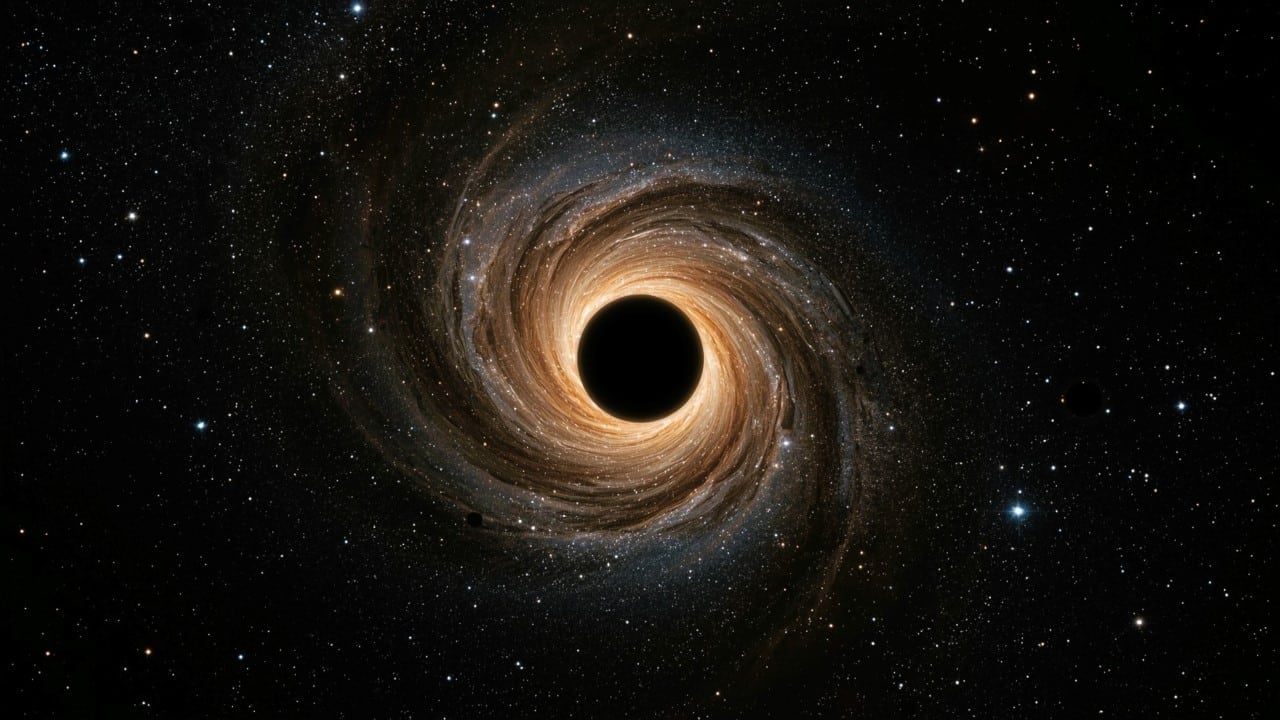 |
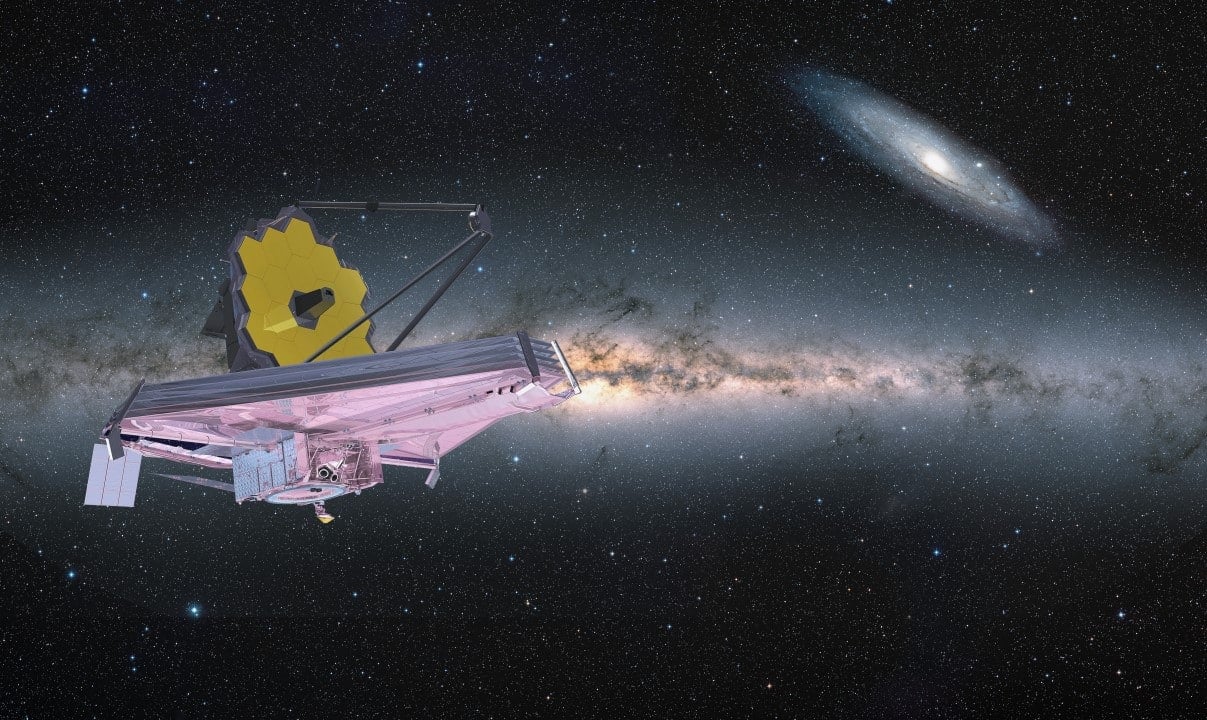
Recent observations carried out by Telescópio Espacial James Webb have brought new evidence about the destructive influence of supermassive black holes in the early universe. Cientistas identified that the radiation emitted by the quasar J0100+2802, one of the most luminous objects known with a redshift of approximately 6.3, has the ability to interrupt the process of new star formation in galaxies located millions of light years away. The phenomenon changes the understanding of how cosmic structures evolved and interact with each other on large scales.
Impact of radiation on the dynamics of interstellar clouds
The energy released during the accretion of matter by the black hole is so intense that it can heat and ionize the molecular gas present in neighboring interstellar clouds. Esse The heating process prevents the cooling necessary for the gas to enter into gravitational collapse, a fundamental step for the birth of new stellar bodies. Sem the condensation capacity, the material remains dispersed and sterile in terms of astronomical activity.
The scope of this disturbance surprised astronomers, as it affects regions that are far beyond the quasar’s host galaxy, exceeding the initial expectations of cosmological models. The radiation works to dissociate molecular hydrogen in dense clouds, which makes the hot gas unable to form protostars. Além Furthermore, suppression has been detected in galaxies with transverse distances of up to 7 megaparsecs, demonstrating the vastness of the impact.
Ionized oxygen detection and data validation
To confirm this suppression, the researchers used the infrared sensitivity of James Webb’s NIRCam instrument to map ionized oxygen emissions. The reduced presence of this chemical element in galaxies close to the quasar served as a direct indicator of recent low stellar activity over the last few million years.
When comparing these galaxies with others located in fields more distant from the influence of J0100+2802, a significant contrast in luminosity and star formation rate was noted. The data shows a clear spatial pattern where proximity to the central black hole results in a zone of low stellar fertility, reinforcing the hypothesis of radiative feedback at work.
Relevance to models of evolution of the universe
The discovery challenges traditional models that treated galaxies as relatively isolated systems in terms of stellar evolution due to the large distances between them. Fica It is evident that active black holes play a regulatory role that transcends their own galactic boundaries, establishing dynamic connections in larger networks and influencing the collective growth of entire neighborhoods in the cosmos.
During phases of high accretion, these central black holes release energy equivalent to billions of suns, affecting the thermal and chemical balance of gas in neighboring galaxies. Esse process contributes to the global regulation of star formation in forming structures, suggesting that the young universe was a much more interconnected and violent environment than previously assumed.



