
Fiat bets on new seven-seater SUV with hybrid engine to lead the family car segment By Jeronimo Santos
6 min read
 |
The European automotive industry is closely watching the strategic movements of Fiat, which is preparing to make a decisive launch in the family vehicle segment. The Italian automaker is in the advanced stages of developing a new SUV with capacity for seven passengers, designed to fill an important gap in the market: offering generous space combined with energy efficiency and financial accessibility. Este new model, which is part of the brand’s ambitious renewal schedule, promises to democratize access to larger vehicles, using shared technologies within the Stellantis group to optimize costs and deliver a robust product.
The project is based on the Stellantis “Smart Car” platform, a modular architecture that already serves as the basis for recent Citroën and Opel models. The choice for this technical basis is not random; it allows Fiat to maximize economies of scale by sharing vital components such as chassis, suspension and electrical architecture with sister brands. The central objective is to offer a rational and competitive alternative, focused on families who need versatility, but who are not willing to pay the high prices charged by SUVs from higher segments or premium brands.

With an estimated length of between 4.4 and 4.5 meters, the new vehicle is strategically positioned on the limit between segments B and C. It is precisely in the use of internal space that the great asset of this project lies: the engineering of the Fiat focused on creating a modular cabin, capable of comfortably accommodating five adults and two children, or folding down the seats to create an impressive cargo volume.
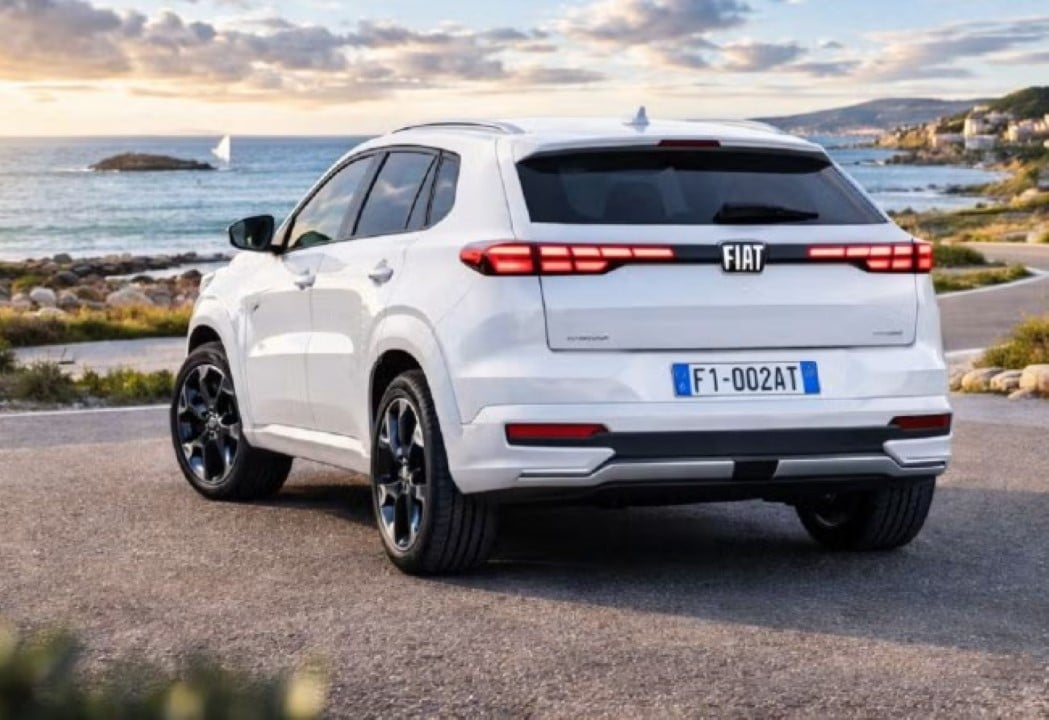
The adopted design philosophy refers to the concept of essential functionality. Inspirado In the pragmatic heritage of the Panda line, the new SUV must adopt straight lines and a “box” silhouette, an aesthetic decision that favors livability. By verticalizing the rear and raising the roof, designers are able to offer more head and leg room for third-row occupants, something often critical in vehicles of this size. The aesthetics must follow the visual language anticipated by the Centoventi concept, with pixelated elements and a robust appearance, conveying durability and simplicity.
Motorization and efficiency strategy
At the heart of this new family SUV will be mild hybridization (MHEV) technology, a solution that balances the need to reduce emissions with maintaining an affordable bottom line. The main system must use the renowned 1.2 Turbo engine from the PureTech family, coupled to an electrified dual-clutch transmission (e-DCT). Este assembly integrates a small 48-volt electric motor, capable of propelling the vehicle in low-speed maneuvers, such as parking or heavy stop-and-go traffic.
The advantage of this hybrid system lies in its ability to recover energy during deceleration and braking, storing it in a small lithium-ion battery. Esta energy is then reused to assist the combustion engine when starting and restarting, reducing mechanical effort and, consequently, fuel consumption. Estima This technology is expected to reduce consumption and CO2 emissions by around 15% to 20% compared to an equivalent traditional combustion engine, without requiring the complexity and weight of a plug-in hybrid system.
In addition to the hybrid version, Fiat plans to offer an all-electric variant of the model. Para To maintain a competitive price, the strategy involves the use of lithium iron phosphate (LFP) batteries. Embora have a slightly lower energy density than nickel-cobalt-manganese (NCM) batteries, LFP cells are significantly cheaper to produce, safer and have a longer useful life. Esta technical choice reflects the brand’s commitment to making electric mobility accessible, focusing on durability and total cost of ownership, rather than just performance numbers or extreme ranges.
Smart design and modular interior
The interior of the new Fiat SUV must break away from excess ornamentation, focusing on usability and design intelligence. The “less is more” approach will be applied to the panel and finishes, using durable and easy-to-clean materials, designed for real family life. Modularity will be a key point: seats that slide, fold and configure in different ways will allow the owner to adapt the car to transport everything from a children’s football team to furniture or leisure equipment.
In terms of embedded technology, an intuitive infotainment system is expected, focused on connectivity with smartphones. Instead of investing in expensive and complex native navigation systems, Fiat should prioritize high-quality wireless mirroring, recognizing that most drivers prefer to use their own devices and apps. The digital instrument panel should be simplified, providing essential driving and energy management information in a clear and direct way.
Security is also a fundamental pillar of the project. Using the Smart Car platform allows the integration of a robust suite of driving assistants (ADAS), including automatic emergency braking, lane keeping assistant and traffic sign recognition. Estes features, which have become mandatory or highly desirable in the European market, will be present to ensure that the low-cost proposal does not mean savings in occupant protection.
Market positioning and competition
The launch of this model represents a direct attack on competitors that dominate the low-cost family car niche, such as the Dacia. With an estimated starting price of around 20,000 euros for the hybrid version, the Fiat aims to attract consumers looking for a rational new car. The brand is betting on the strength of its dealership network and consumer trust in Italian engineering to gain market share.
The aggressive pricing strategy is made possible by production in locations with optimized industrial costs and the simplification of the version range. By offering closed equipment packages and reducing the number of loose options, Fiat is able to reduce complexity on the assembly line and speed up vehicle delivery. Este business model, already successfully tested in other markets, is essential to maintain profit margins in a segment where every penny counts.
For the global market, this SUV has the potential to become a “world car”. The demand for affordable seven-seater vehicles is not exclusive to Europa; Markets at América Latina, Ásia and África also show a growing appetite for this body type. The flexibility of the platform allows for local suspension and engine adaptations, which could transform this project into a pillar of export and international growth for Fiat in the coming years.
Impact on sustainable mobility
The introduction of this model aligns with the Stellantis decarbonization goals and demanding European environmental standards. By popularizing hybrid technology in a volume segment, the Fiat contributes to reducing your fleet’s average emissions. Mais than that, by offering an affordable electric version, the brand removes one of the main barriers to the adoption of EVs: the purchase price. Isso allows middle-class families to make the energy transition without compromising their household budget.
The use of LFP batteries and the energy optimization of the powertrain demonstrate a pragmatic vision of sustainability. Instead of chasing 800 km ranges that require heavy and expensive batteries, the Fiat focuses on an honest range, sufficient for weekly urban use and medium trips, supported by a quick recharge capability. Esta rational approach reduces the carbon footprint in vehicle production and makes the financial equation more favorable to the end consumer.
In short, the new seven-seater SUV from Fiat is not just another launch; it is a declaration of intent. The brand reaffirms its historical vocation of producing smart cars for the masses, adapting this philosophy to the challenges of the 21st century. Combinando space, hybrid technology and a fair price, the Fiat is preparing to redefine what is expected from a family car, proving that innovation and accessibility can, and should, go hand in hand.



