
Mystery of Maria Elizabeth: girl who anticipated death has captivated the faithful for 60 years in Passo Fundo

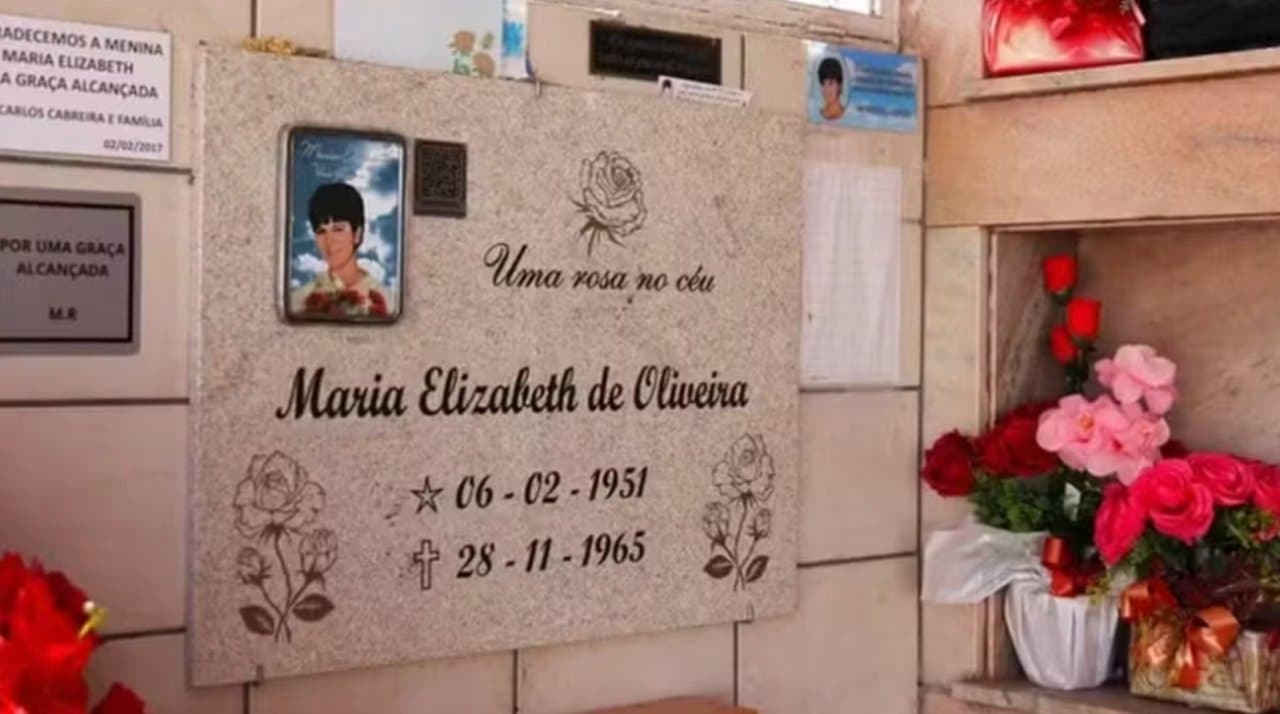
Maria Elizabeth of Conhecida as the “saint of Passo Fundo”, her story is marked by a tragic traffic accident and reports that she had predicted the details of her own death before it happened, a fact that amplified the mystique surrounding her figure. Over six decades, his tomb became a point of pilgrimage for countless devotees seeking grace and paying homage.
Every year, the Maria Elizabeth deposit at Cemitério Vera Cruz is visited by hundreds of people. Estes faithful flock to the site, especially on the anniversary of his death, in November, to deposit flowers, notes and other symbols of their unshakable faith. Popular fervor demonstrates the persistence of a belief that transcends generations and regional borders.
The accident that killed the teenager occurred when a runaway Volkswagen Kombi invaded the sidewalk and ran over a group of children. Maria Elizabeth was the only one to suffer serious injuries, passing away hours later in a local hospital, an event that shocked the community and marked the beginning of her legend.
The legend of childhood premonition
The narratives about Maria Elizabeth’s supposed ability to predict her own death are the core of her popularity as a “saint”. Amigos and family members close to the girl would have received direct warnings about the imminent accident. Tais reports are widely publicized, including in the book “Maria
The young woman’s desire to celebrate her 15 years “in heaven” is another recurring element in the stories that circulate among devotees. Este detail, together with the peculiar choice of a coffin in the window of a funeral home shortly before the accident, which was supposedly used for his own burial without his parents’ initial knowledge, fuels the belief in his premonition. The historian Gizele Zanotto, from Universidade from
Despite the intense devotion and testimonies of “graces achieved”, Igreja Católica does not officially recognize Maria Elizabeth as a saint. The absence of miracles attributed to her and a formal canonization process distinguishes her popular veneration from the rigorous steps required by the Vaticano for sainthood.
The tragic accident of 1965
The Sunday of November 28, 1965 was marked in the memory of Passo Fundo. Naquela afternoon, Maria Elizabeth was playing with some friends on the sidewalk of Avenida Presidente Vargas and Rua Padre Valentim. Era an ordinary day that would turn into tragedy.
An Kombi belonging to the urban transport company Vera Cruz, driven by Gentil Lima, lost control. The out-of-control vehicle climbed onto the sidewalk, hitting the group of children. The impact was devastating, leaving several of them injured, but only Maria Elizabeth was fatally hit.
The girl was promptly rescued and taken to the hospital, where she fought for her life for a few hours before passing away. The news of the accident and the teenager’s death spread quickly, causing great commotion and leading many residents to gather in front of the nursing home in search of information. The repercussion on the radio at the time contributed to the magnitude of mourning in the city.
Symbols and rituals of popular devotion
Devotion to Maria Elizabeth is full of symbolic gestures that have been perpetuated for decades. The most prominent of these is the offering of red roses at her tomb. Esta tradition dates back to the last moments of the girl’s life, when a flower was given to her at the hospital bed after the accident.
In addition to the flowers, the tomb of Maria Elizabeth of Oliveira in Esses items are left by believers who believe they have received “graces achieved” through the saint’s intercession. The diversity of these objects reflects the breadth of supplications and thanks.
Devotees leave at the site:
– Rosas red as a symbol of faith and affection;
– Placas and banners with messages of gratitude for fulfilled orders;
– Bilhetes and letters expressing personal requests or thanks;
– Bonecas and other toys, representing miracles received by children;
– Fotografias, recording important moments or people who benefited.
Maria Elizabeth’s life in detail
Maria Elizabeth was born in the city of Passo Fundo on February 6, 1951, starting her life in a family environment that would soon move to Lagoa Vermelha. Aos Five years old, the girl returned to her hometown to live with her grandparents, establishing deep roots in the local community from an early age. Sua religious and educational training was an integral part of his youth.
Dom Rodolfo Luís Weber, archbishop of Passo Fundo, recalls that Maria Elizabeth was baptized at
In terms of education, the young woman attended kindergarten at Colégio Notre Dame, one of the most traditional educational establishments in the region. Posteriormente, continued his studies at Ginásio Menino Jesus and, from 1963, he entered Grupo Escolar Protásio Alves, where he continued with his education until the tragic incident. Meses before the fatal accident, his parents, Leda Morandi from Oliveira and Alcides from Oliveira, returned to
Difference between popular faith and official canonization
The figure of Maria Elizabeth exemplifies the complex relationship between popular faith and Igreja Católica’s formal criteria for sainthood. Embora brings together thousands of devotees in Passo Fundo and attracts visitors from other states and even neighboring countries, she is not officially recognized as a saint by the institution. Essa distinction is crucial to understanding the nature of their veneration.
For someone to be canonized, Igreja Católica requires proof of miracles, which are extraordinary events attributed to the candidate’s intercession after their death, and a rigorous investigation process. In the case of Maria Elizabeth, as the historian Gizele Zanotto highlights, there are no miracles formally attributed to her, but rather “graces achieved”. Tais graces, although significant for devotees, do not meet the requirements of scientific and theological proof that Igreja demands. The Archbishop of Passo Fundo, Dom Rodolfo Luís Weber, has confirmed that there is currently no official canonization process underway for Maria Elizabeth, maintaining her status as a figure of local devotion.
A legacy of faith that transcends generations
The story of Maria Elizabeth, rooted in tragedy and the belief in a premonition, forged a legacy that has persisted for more than six decades, demonstrating the strength of faith and popular memory. Sua figure, which mixes elements of childhood innocence and a tragic destiny, has established itself as a cultural and spiritual icon in Passo Fundo and surrounding areas. Devotion to her transcends generations, annually attracting a significant number of people who find in her story a point of connection for their own hopes and challenges.
Even without the formal support of Igreja Católica, the “saint of Passo Fundo” fills a space of hope and consolation for those who seek it. The pilgrimages to his tomb and the profusion of offerings are living testimonies of how the community appropriates narratives of faith to give meaning to events and seek support. The permanence of this veneration highlights the deep human need for figures who inspire faith and solidarity, regardless of institutional recognition.
The Vera Cruz cemetery as a place of pilgrimage
The Cemitério Vera Cruz, in Passo Fundo, became a focal point of devotion to Maria Elizabeth of The constant presence of visitors, especially on November 28th, the anniversary of the young woman’s death, reaffirms the cemetery’s role as a space of memory and pilgrimage.



