


The new Fórmula 1 technical guidelines for the 2026 season began to present the first practical challenges during pre-season sessions, generating significant alerts within McLaren. Australian driver Oscar Piastri expressed concern about the energy recovery system, predicting that the grid will encounter several operational anomalies throughout the debut year of the new regulation. Estas variations must occur primarily on circuits that do not offer heavy braking zones, making it difficult to recharge the batteries that now play a much more prominent role in the overall performance of single-seaters.
The current technical scenario requires profound adaptation from competitors, since the electrical part now represents approximately 50% of the total power of the power unit. With the increase in electrical capacity from 120kW to 350kW, dependence on hybrid efficiency became the determining factor for competitiveness on straights and corner exits. Diante of this complexity, the teams closely monitor the behavior of the systems on different routes to avoid premature exhaustion of the available load.
- Increase in electrical power to 350kW in the new units.
- 50% balance between internal combustion and electrical supply.
- Need for “lift and coast” tactics to preserve cargo.
- Severe dependence on track layout for energy regeneration.
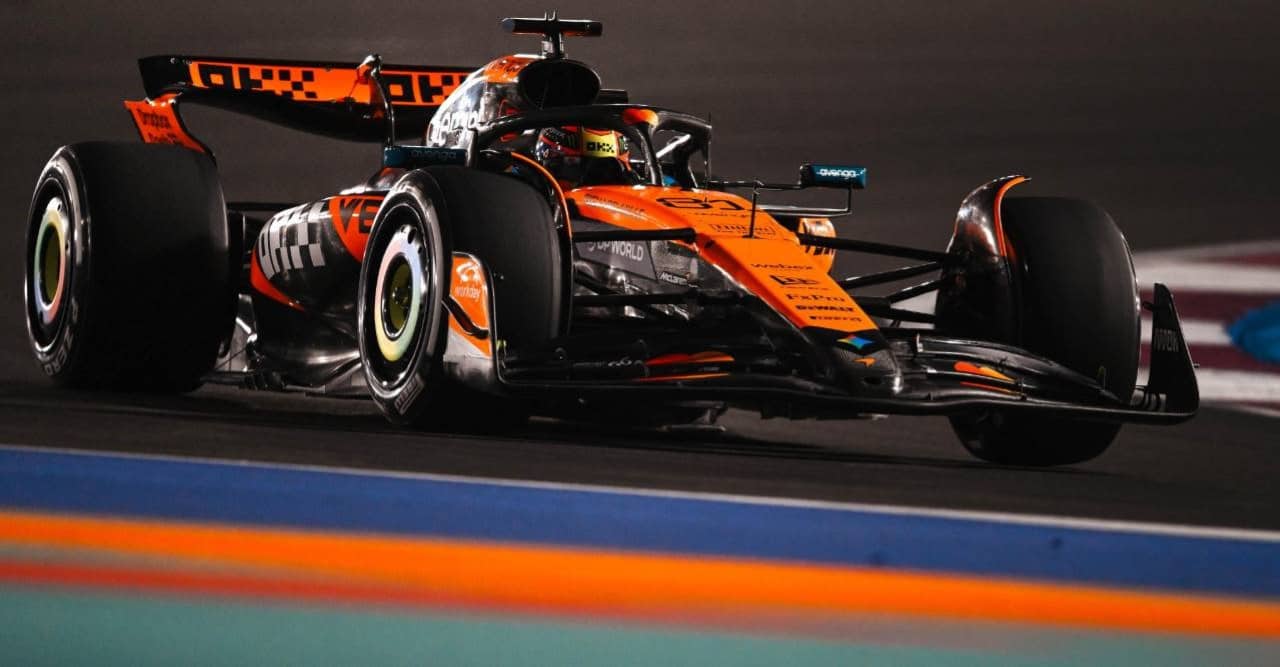
Management challenges in high-speed circuits
The disparity between the behavior of the cars in the simulator and on the real track has been one of the central points in Oscar Piastri’s statements after testing on the Bahrein. The pilot highlighted that tracks such as Melbourne and Jedá, characterized by sequences of fast curves and few sudden interruptions, will be the scene of the biggest performance irregularities. Nestes places, the absence of intense braking prevents the system from recovering energy passively, forcing the driver to intervene directly in the driving style to keep the system active.
Without the ideal adjustment for each specific track, cars run the risk of suffering from the phenomenon of superclipping, where electrical power is suddenly cut off at the end of straights due to a lack of battery. Piastri explained that the strategy of taking your foot off before cornering will be a constant tool to ensure that energy does not run out quickly on fluid circuits. Essa dynamics completely alters the aggressive approach that was common in previous years, transforming resource management into a tactical priority above the pure search for speed.
Technical management perspective on the order of forces
Andrea Stella, McLaren team principal, corroborates his driver’s vision and believes that the championship hierarchy may undergo frequent changes depending on the characteristics of each GP. The manager noted that the balance between use and recovery was much more demanding during the tests in Barcelona than in Bahrein, where constant braking made the hybrid system’s work easier. Essa performance fluctuation indicates that some teams can excel on technical tracks, while suffering considerably on street or high-average speed circuits.
The analysis of Stella points to a particularly complex GP of The engineer anticipates that pilots will be much busier inside the cockpit, switching power delivery maps and adjusting riding style in real time. The main objective will be to ensure that the power unit is exploited efficiently for long periods, avoiding sudden drops in performance during direct disputes for position.
Adaptation of drivers to the new behavior of single-seaters
Max Verstappen and Lewis Hamilton had already expressed dissatisfaction with the weight and power delivery of the new models, comparing the experience to all-electric categories. Essa perception gains strength with data collected by McLaren, which indicates a radical change in the way torque is distributed throughout racing laps. Pilots now need to calculate down to the millimeter where to spend the available kW, otherwise they risk becoming vulnerable at strategic overtaking points if the battery goes into conservation mode.
Piloting in 2026 requires greater sensitivity to the flow of energy, something that Piastri defines as a science distinct from traditional mechanics. On circuits where recovery is facilitated, such as Sakhir, the focus remains on the conventional aerodynamic and mechanical setup of the car. Entretanto, the transition to tracks that demand more from the electrical system without offering braking in return will require superior emotional and technical intelligence on the part of whoever is behind the wheel.
Constant monitoring by the international federation
Federação Internacional of Automobilismo is keeping a close watch on how these management difficulties will impact the show and safety on the tracks. Durante the conclusion of pre-season tests last Friday, the entity carried out several technical checks to validate the data provided by engine suppliers. Embora there are no plans for immediate changes to the rules, the possibility of future revisions remains open as the championship progresses and more anomalies are documented.
The FIA’s expectation is that the maturity of the teams’ software technologies will help mitigate power outage problems on critical tracks throughout the season. Contudo, the warning issued by McLaren serves as a reminder that the start of the 2026 era will be marked by technical unpredictability. Engineers work against time to refine the recovery algorithms before the official opening of the championship on Australian soil, where every joule of energy will have immense strategic value.
Impact on racing and overtaking strategies
The anomaly scenario predicted by Piastri suggests that racing strategies will be much more conservative with regards to the use of the electrical attack mode. Teams must prioritize battery consistency over isolated fast laps, especially on circuits where charging is deficient. Isso can result in trains of cars where no one wants to lead the energy expenditure, waiting for the opponent in front to make the overtaking maneuver at the right time.
Success in the first stages will directly depend on the engineering departments’ ability to predict the exact consumption in each sector of the track. McLaren, despite the warnings, demonstrates confidence in its ability to interpret data, seeking to transform these difficulties into a competitive advantage through more refined management software. Full focus now turns to final preparations in Woking, aiming to minimize energy losses and ensure that Piastri and Lando Norris have the necessary tools to face the challenges of Melbourne.