

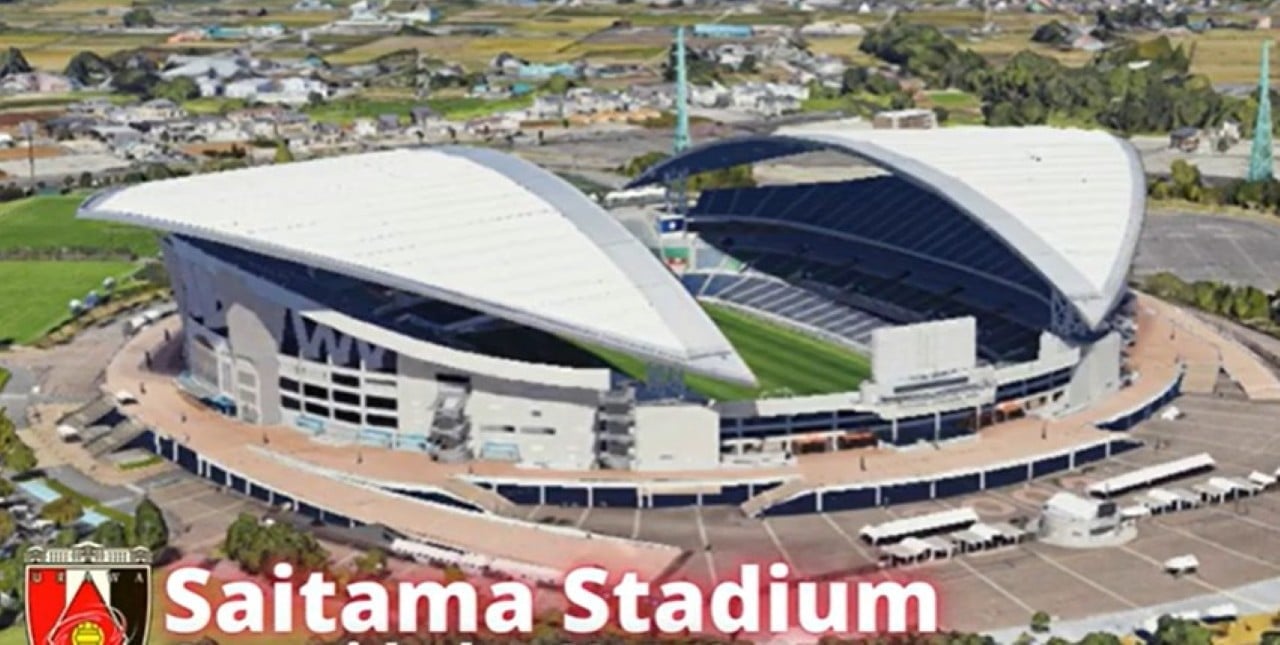
Local authorities in the province and city of Saitama have made significant progress official in the ambitious project to extend Linha 7 from The master plan aims to connect the current Urawa-Misono terminal station directly to a new station, tentatively named “Saitama Stadium Station”, located in the vicinity of the largest football-only stadium in Japão. The initiative emerges as a structural response to the urban mobility and logistics demands of large events, seeking to optimize the flow of tens of thousands of spectators who regularly attend the venue.
According to the technical feasibility studies presented, the new infrastructure has the potential to transform the experience of visitors and fans. Atualmente, the walking distance between the existing station and the stadium requires approximately 31 minutes of walking, a journey that will be drastically reduced to approximately 22 minutes with the new connection, resulting in a total time saving estimated at 15 minutes when considering crowd flows. The measure is seen as essential to modernize access to the stage that hosted games from Copa to Mundo in 2002 and which serves as home to the Urawa Reds club.
Schedule and technical details of the work
The extension project covers a 1.2 kilometer stretch and is part of long-term planning that prioritizes safety and financial sustainability. Official projections indicate that the process of requesting permission for railway construction should be completed by 2029, establishing the legal basis for the start of physical works. The schedule stipulated by the authorities foresees the official inauguration and the beginning of commercial operations for April 2041, marking a new era in public transport in the metropolitan region.
To make construction viable, an estimated budget of 14.4 billion yen was established. The cost-benefit analysis carried out by specialists in the transport sector indicated an index of 1.2, which classifies the project as economically viable and positive for society. The financing will be divided between the national government and local administrations, with the city of Saitama assuming the majority of local fiscal responsibility, reflecting the direct impact that the work will have on the municipality’s urban development.
Impact on sport and local community
The construction of the new station meets a historic demand from Urawa Reds fans and international event goers. The Saitama Stadium 2002, with a capacity for more than 63 thousand people, faces logistical bottlenecks on important game days, where crowd dispersion can be slow and complex. The new railway line will allow for a more efficient distribution of passengers, relieving pressure on bus services and reducing congestion on roads adjacent to the sports complex.
In addition to the immediate benefit for sport, the project is aligned with the urban development of the Misono area. The expectation is that the improvement in transport infrastructure will attract new residential and commercial developments, promoting population and economic growth in the district. The railway extension is not only seen as a transport project, but as a catalyst for urban revitalization, integrating residential areas with leisure and service centers.
Future expansion prospects
While the current focus is on connecting to the stadium, the master plan envisages a broader vision for the province’s rail network. Existe the technical possibility and political desire to extend the line even further north, towards Iwatsuki, totaling a length of 7.5 kilometers. Essa subsequent phase will depend on the success of the current stage and the demographic evolution of the region, but it already figures in the debates about the future of mobility in Saitama.
The consolidation of this project reinforces Japão’s commitment to the maintenance and expansion of its high-efficiency railway network. By prioritizing mass transport over individual transport, the region of