

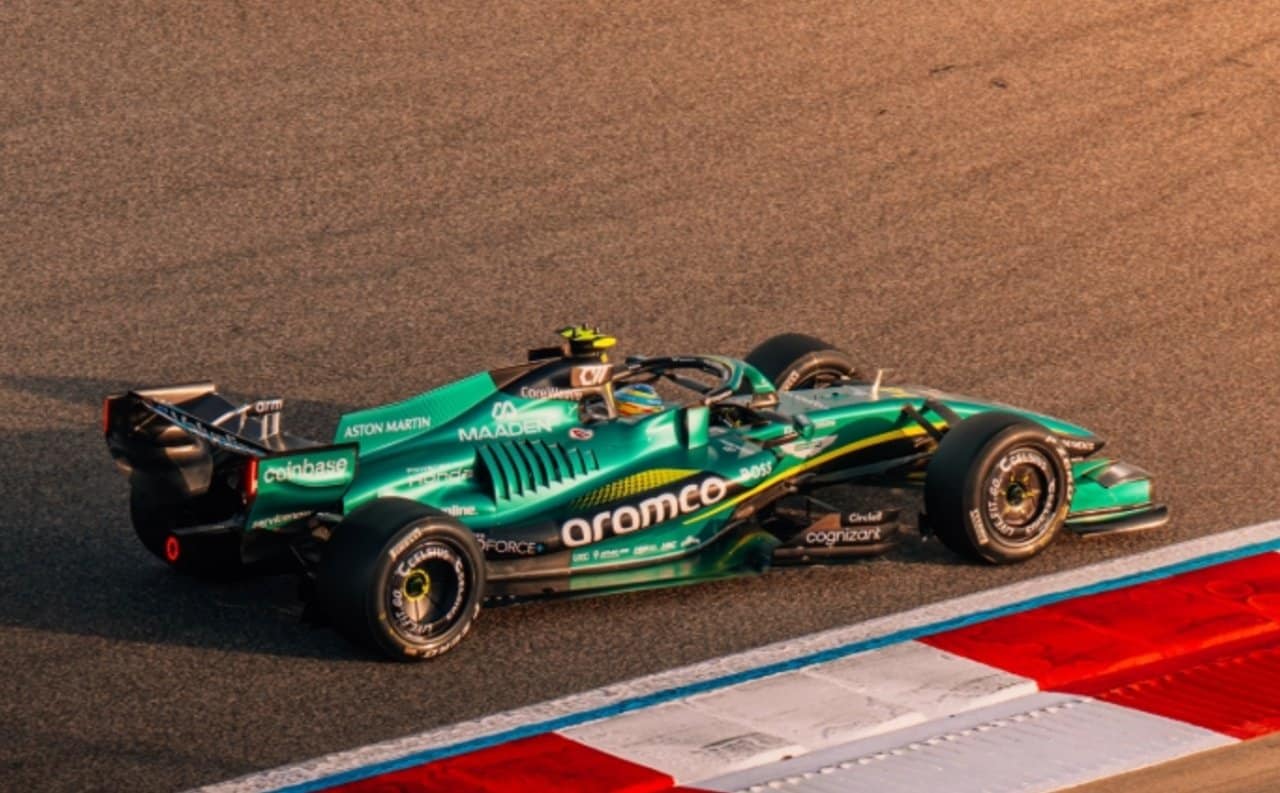
The Aston Martin team’s track activities on the Bahrein circuit were brought to an abrupt and premature end, marking a turbulent start to the new phase of the partnership with Honda. The British team, which takes on the role of official factory operation for the Japanese automaker, faced critical failures during validation tests of the power units. The incident compromised the development schedule and prevented the collection of essential data for the start of the season.
Engineers identified that the collapse did not occur due to a structural break in the V6 combustion engine, but rather due to a phenomenon of mechanical resonance. The harmonic vibrations generated by the thruster were transmitted with excessive intensity to the peripheral components, resulting in the destruction of the energy storage system. The severity of the damage to the battery pack made any immediate repairs in the pits impossible.
木曜日の最後から 2 日後の実行状況について報告する#F1テスト.
🔗https://t.co/p63ngKF58w pic.twitter.com/vorydDb9Wk
— アストンマーティン アラムコ F1 チーム (@AstonMartinF1)2026 年 2 月 19 日
The situation revealed a worrying weakness in the team’s logistics and planning for this regulatory cycle. The absence of replacement components at the racetrack, specifically for the damaged hybrid system, forced the cancellation of the remaining days of testing. Sem spare parts to replace the compromised unit, the team lost valuable running time, leaving them at a technical disadvantage compared to opponents who completed their full programs.
Technical origin of mechanical failure
The preliminary investigation conducted by Honda technicians pointed to an incompatibility in the physical interaction between the thermal engine block and the electrical system. The high-frequency oscillations, natural from high-rpm operation, were not properly isolated by the chassis supports. Essa unwanted kinetic energy traveled to the battery compartment, causing irreversible physical damage to the power cells.
Unlike electronic problems that can be corrected via software, the issue of vibrations requires hardware interventions. Será necessary to redesign engine mounts and damping systems to ensure that the operating frequency does not resonate with other vital components. The failure demonstrated that the bench simulations were unable to accurately replicate the real mechanical stress faced by the car on the asphalt.
The integrity of the energy recovery system is fundamental to the current regulation, which prioritizes electrification. Qualquer Instability in this area represents a high safety risk, due to the high voltages running through the chassis. The interruption of the tests was, therefore, a mandatory safety measure to protect pilots and mechanics from potential electrical discharges or fires.
Supply chain deficiencies
The episode at Bahrein exposed a severe gap in Aston Martin’s inventory management for the 2026 season. The team traveled to testing without an adequate contingency plan for catastrophic failures of large components. The lack of extra batteries on site turned a technical problem into a total stoppage of activities.
The manufacturing of new power units involves extremely complex and high-cost processes, which makes the production of spare parts a logistical challenge. However, the lack of readiness to replace the damaged equipment highlighted a miscalculation in operational planning. The time required to transport new parts from factories in Europa or Japão would exceed the duration of the testing window.
This scenario puts additional pressure on logistics departments, which need to review their transport and inventory protocols. In a championship where reliability is as important as speed, the ability to recover the car after serious failures is crucial. The team will need to ensure that parts shortages do not recur during the Grande Prêmio weekends.
Reliance on a just-in-time supply chain proved risky given the complexity of new cars. Reviewing internal material distribution processes became an immediate priority to prevent mechanical failures resulting in dropouts due to lack of equipment.
Impacts on car development
The cancellation of the tests created an information deficit that could be costly in the first stages of the championship. Enquanto to Aston Martin dealt with the disassembled car in the garage, rival teams accumulated significant mileage. The lack of practical data makes it difficult to correlate virtual simulations and the vehicle’s real behavior, delaying aerodynamic and mechanical evolution.
- The validation of the new tire compounds was hampered by the lack of fast laps.
- The cooling systems have not been tested in extreme heat conditions, creating uncertainty for races in hot climates.
- The power management software lacks refinement in simulated racing situations.
- The integration between the chassis and power unit remains an unknown in terms of long-term durability.
Disparity in relation to competitors
The comparison with the teams powered by Mercedes highlighted the size of the problem faced by the Japanese-British partnership. The German teams completed their test programs without serious complications, demonstrating a robustness that the Aston Martin has not yet achieved. Relatórios indicate that rivals covered a distance twelve times greater, guaranteeing a solid base of data for the beginning of the year.
The fact that Aston Martin is the only team to use Honda thrusters makes the situation worse, as it eliminates the possibility of data sharing. Diferente of suppliers that equip multiple teams and collect information from different sources simultaneously, Honda depends exclusively on a single chassis to evolve its product. With the car stationary, the flow of technical feedback for engine development was completely stopped.
Race against time for solutions
The automaker and team’s engineering team is now operating on an urgent basis to implement corrections before the official debut. The focus is on reinforcing acoustic and mechanical insulation between the thermal engine and sensitive systems. The aim is to introduce a revised specification that withstands vibrations without compromising performance, ensuring the car can complete the distance of one Grande Prêmio.
Immediate challenges for the season
Reliability has become the critical variable for Aston Martin’s aspirations in the world championship. The setback in pre-season testing requires a quick and effective response to prevent the year from being compromised right from the start. The pressure on Honda is immense, considering its history of excellence and the expectation generated by the official return to the top category of motorsport.
Engineers work to simulate failure conditions on dynamometers, seeking to replicate the exact frequencies that caused battery destruction. The definitive solution will need to be implemented and validated in record time, otherwise the team will risk starting the championship focused only on finishing the races, instead of competing for podium positions.