

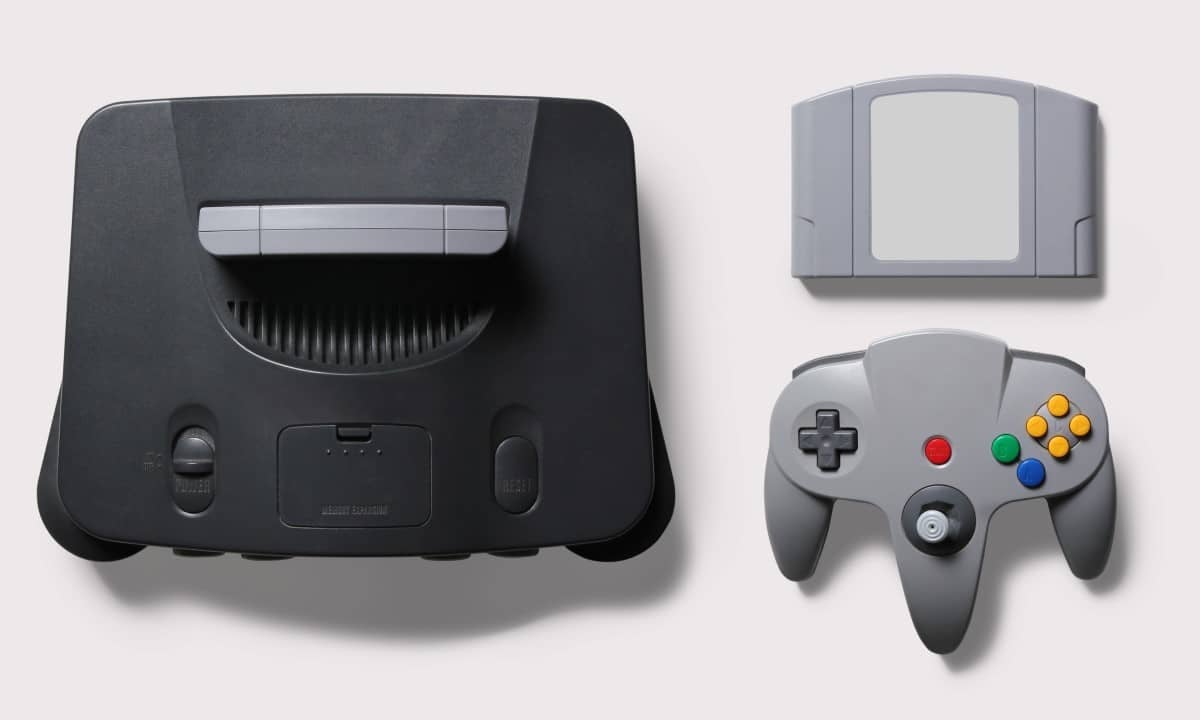
Owners of the Analogue 3D high-fidelity console received significant news this week with the release of firmware 1.2.0. The manufacturer made the official file available on its website, meeting one of the main demands of the community of enthusiasts and collectors looking for the most authentic experience possible outside of the original hardware from the 1990s.
The update focuses on expanding connectivity and improving the stability of the proprietary operating system, 3DOS. The main highlight is the native integration with modern Nintendo peripherals, eliminating hardware barriers that required third-party adapters for correct operation.
Relevant technical changes implemented in the system include:
– Conexão direct via Bluetooth with the N64 control of Nintendo Switch Online;
– Correção of HDMI signal failures on monitors with 4K resolution;
More on this story: New Analogue 3D update allows native use of Switch controls and fixes audio glitches
– Ajustes in audio processing to eliminate distortions in complex soundtracks.
The company’s move reinforces its commitment to continuous support for the product, which hit the market at the end of 2025. The strategy of releasing frequent updates follows the pattern established in the brand’s previous devices, such as the Analogue Pocket, keeping the hardware relevant and functional in the face of new accessories and modern displays.
Integration with the Nintendo ecosystem
The big attraction of version 1.2.0 is, without a doubt, the official support for wireless control of the Nintendo 64, marketed exclusively to subscribers of the Switch Online service. Este peripheral is widely considered to be the best modern reproduction of the original controller, maintaining the “trident” ergonomics and analog sensitivity, but with the convenience of the rechargeable battery and Bluetooth technology.
Before this update, users had to use USB dongles or signal adapters to pair the controller with the Analogue 3D. Agora, the process is carried out directly through the system menu, ensuring minimum latency and immediate response to commands, something crucial for platform and shooting games that require absolute precision.
Compatibility extends to all button functions, mapped correctly to replicate the original hardware experience. Isso allows classic titles like “GoldenEye 007” and “Star Fox 64” to be played exactly as the developers intended, without the need for button reconfiguration or sensitivity adjustments.
Improvements in image and sound quality
In addition to connectivity, Analogue engineering dedicated efforts to resolve visual compatibility issues reported by users on specialized forums. Alguns modelos específicos de televisores e monitores 4K apresentavam instabilidade no sinal HDMI, resultando em telas pretas momentâneas ou falhas na negociação da resolução (handshake).
New firmware adjusts video output parameters, ensuring a stable and seamless connection even on high-end displays. FPGA technology, which simulates the original hardware at the logic circuit level, allows for this type of granular refinement, something that software-based emulators often struggle to correct as effectively.
In the sound department, “clipping” problems were eliminated — distortion that occurs when the audio signal exceeds the amplitude limit. Jogos with orchestrated soundtracks or intense simultaneous sound effects immediately benefit from this correction, delivering clear and faithful audio to the 1996 console.
Learn more: Analogue 3D receives update that releases native use of NSO controls and fixes audio glitches
New 3DOS System Features
The console’s operating system has also received “quality of life” features that modernize the retro experience. The game library now has a usage time counter, recording the hours dedicated to each cartridge or rom played. Esse data remains saved in internal memory, allowing the player to track his history over the months.
Another important technical addition is the ability to update the firmware of 8BitDo brand controllers directly via the console’s USB port. Isso simplifies accessory maintenance, eliminating the need to connect the controls to a PC separately to download patches or new features.
Control options for the player
With the update, the Analogue 3D solidifies its status as a versatile “hub” for different control profiles. The console maintains the four original front ports, allowing the use of wired controls from 1996 for those who prefer total purism and have the old hardware preserved.
For those looking for wireless convenience, the options are now vast. Além of the newly supported official Nintendo model, the system natively accepts the 8BitDo 64 Bluetooth line and modification kits (mod kits) that transform original controls into wireless versions. Essa flexibility is essential in a market where original hardware becomes increasingly scarce and expensive.
Installation procedure
The Analogue 3D update is not done via the internet directly on the console (OTA), requiring a simple manual process. The user must download the firmware file from the manufacturer’s official website and copy it to the root of an SD card (formatted in FAT32 or exFAT). When turning on the console with the card inserted, the system detects the file and starts the installation automatically.
It is highly recommended that users back up their save files before carrying out the procedure. Embora the process is safe and quick, taking just a few minutes, the precaution avoids losing progress in RPG or adventure games that require dozens of hours of dedication.
On the same topic: Analogue 3D gains official support for Nintendo Switch Online’s N64 wireless controller with update
Context and FPGA technology
Unlike cheap clone consoles that run Android emulators, the Analogue 3D uses an FPGA (Field-Programmable Gate Array) chip. The Esse component is programmed to behave electrically like the original Nintendo 64 chips, ensuring full compatibility with the cartridge library of all regions (NTSC and PAL).
The precision of the FPGA eliminates the “input lag” often associated with software emulation. With 4K video output and high-quality upscaling, the device seeks to preserve the aesthetics of old polygonal graphics, offering filters that simulate the image of tube televisions (CRT) for those who prefer the nostalgic look.
The price of the console and accessories reflects this premium positioning. Enquanto the official control of Nintendo costs around US$55 (and requires a subscription to