
Crystal Palace defender silences Old Trafford with lightning goal against Manchester United By Luís Henrique Costa
5 min read
 |
The atmosphere of expectation at Old Trafford quickly turned into tension this Sunday, March 1, 2026, during the clash valid for the 28th round of Premier League. The visiting team imposed an aggressive pace in the opening moments, surprising the home team and their fans with an offensive posture that resulted in an early change in the score. Manchester United, under the tactical command of Michael Carrick, was forced to make up for the losses before even managing to establish its territorial dominance.
The match, which promised to be a duel of different strategies, had its script changed by a set piece play executed with precision by Crystal Palace. The Red Devils defense, which tried to adjust in the first movements, failed to contain the opponent’s momentum, allowing the visitors to capitalize on the momentary disorganization. The score of 0-1, created with less than five minutes of the ball rolling, reflects the efficiency of the London team in taking advantage of the opportunities created.
As the clock ticked towards the 26-minute mark of the opening half, the scenario on the field showed an Manchester United trying to break through the rival defensive block to equalize the actions. The pressure from the local fans increased with each possession, demanding an immediate response from the hosts against an opponent who, comfortably ahead, began to exploit counterattacks and the solidity of their defense line.
Referee The home team’s need to recover against the visitors’ strategy of containment and speed creates a confrontation of high tactical and emotional intensity in the Teatro of the Sonhos.
Header defines early lead
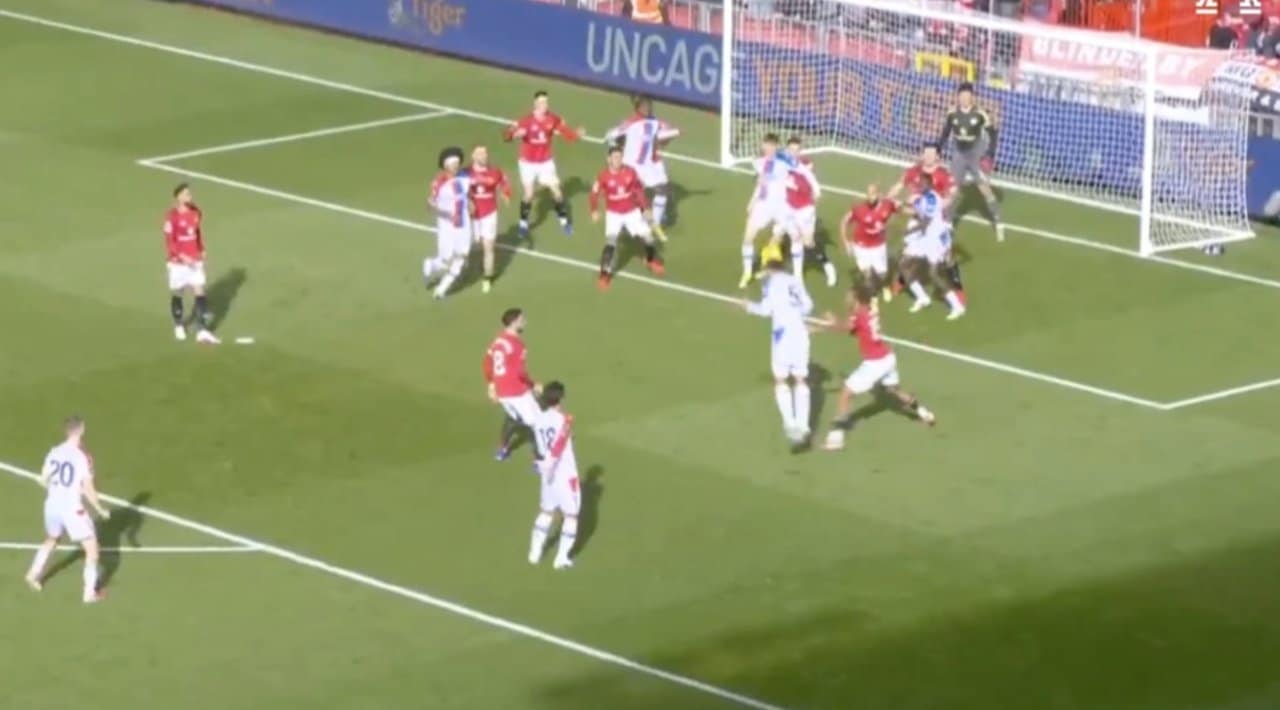
Four minutes into the first half, momentary silence took over the Old Trafford stands when Maxence Lacroix opened the scoring. The Crystal Palace defender rose higher than the opposing defense after a corner kick, connecting with a firm and undefendable header. The move, which caught Manchester United’s defensive system off guard, was the culmination of pressure exerted since the opening whistle.
The construction of the decisive play went through the feet of Brennan Johnson, responsible for the precise assistance that found Lacroix in the area. The perfect execution of the corner demonstrated the dead ball work developed by coach Oliver Glasner, who instructed his team to look for the goal in the first moves to destabilize the opponent’s game plan. The impact of the early goal forced United to abandon any initial caution and launch the attack in a disorderly manner.
After conceding the goal, the home team tried to reorganize their lines, but found a well-positioned and confident Crystal Palace. The advantage on the scoreboard allowed the visitors to withdraw their marking lines and compact the midfield, making it difficult for Bruno Fernandes and his teammates to create plays. The strategy of holding the lead while threatening in quick transitions became the keynote of Palace’s performance after the goal scored.
Tactical dynamics and formations on the field
The coaches’ choices were evident in the first minutes, with Michael Carrick setting up Manchester United in a 4-2-3-1 formation. The intention was to control possession of the ball through the midfielder duo formed by Casemiro and Kobbie Mainoo, freeing the wingers and the creative midfielder to provide the attack. However, the physical intensity imposed by the opponent nullified this initial proposal, forcing the midfielders to worry more about containment than distribution.
On the other side, Oliver Glasner opted for a 3-4-3 system, prioritizing width through the wingers and physical presence in the opponent’s area. Essa formation allowed Crystal Palace to pressure United’s ball exit and gain numerical superiority in crucial sectors of the field. The performance of Daniel Muñoz and Brennan Johnson himself has been fundamental in keeping the offensive gear working, exploiting the backs of Manchester’s full-backs.
The battle in midfield has been intense, with Daichi Kamada receiving a yellow card after just six minutes for a harsh tackle on Bryan Mbeumo. Esse play exemplifies the level of competitiveness and physical disposition of the two teams, which do not avoid contact when competing for possession. The refereeing has been rigorous to prevent tempers from rising, maintaining discipline in a duel marked by nervousness and urgency.
Key moments and missed opportunities
Even before the scoring opened, the game already showed signs that it would be busy, with clear chances for both sides. Jørgen Strand Larsen, Crystal Palace striker, had the first big opportunity when he finished with his left foot inside the area, frightening the home defense. United’s response came with Bruno Fernandes, who risked a dangerous shot from outside the area, requiring good intervention from the opposing goalkeeper.
- 1′Início aggressive with Bruno Fernandes fouling Tyrick Mitchell.
- 2′Jørgen Strand Larsen wastes a clear chance by shooting from inside the area.
- 3′Goleiro from Palace saves a long-range shot from Bruno Fernandes.
- 4′ GOAL!Maxence Lacroix scores a header after a corner taken by Brennan Johnson.
- 6′Cartão yellow for Daichi Kamada after a dangerous foul.
- 12′Ismaïla Sarr has a shot saved, keeping the visiting pressure on.
- 19′Harry Maguire suffers a defensive foul in a dispute with Larsen.
Crystal Palace’s insistence did not cease after the goal, with Ismaïla Sarr making dangerous moves that almost increased the advantage. In one of the descents, the attacker had his shot intercepted at the last moment, and in another, it ended up in the hands of the United goalkeeper. The Red Devils defense, led by Harry Maguire and Leny Yoro, has shown instability, conceding spaces and committing fouls in dangerous areas of the field.
Manchester United tries to respond mainly through set pieces and individual plays by its attackers, but is faced with a lack of precision in the final third. X__NM1____ The scenario so far favors the visitors’ reactive and lethal strategy.