Japan records total lunar eclipse during traditional festival and phenomenon only repeats in three years

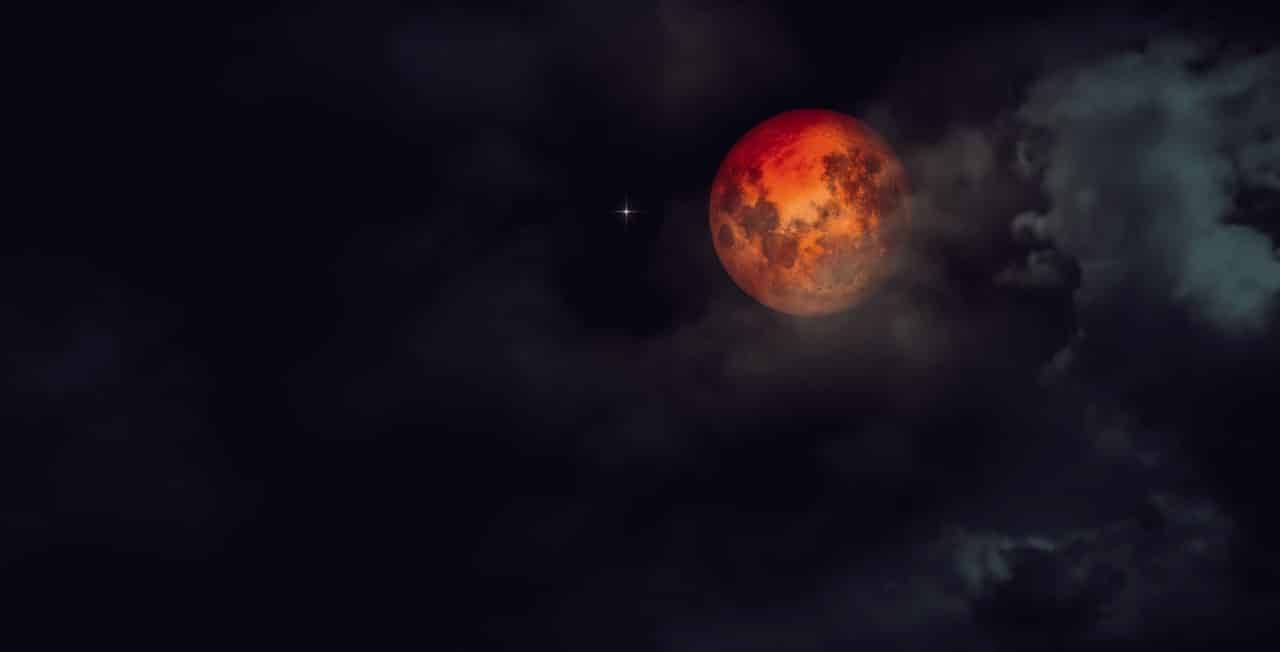
Skywatchers in several parts of the Japanese archipelago were treated to a stunning visual spectacle on the night of March 3, when Lua took on a characteristic reddish color during a total eclipse. The astronomical event mobilized enthusiasts, photographers and entire families who, despite the adverse weather conditions in some regions, looked for the best angle to record the moment when the natural satellite plunged into the shadow of Terra. The occurrence of this specific phenomenon generated great commotion not only due to its intrinsic beauty, but due to the coincidence of dates with one of the most important cultural celebrations in the country, creating an atmosphere of reverence and admiration. Enquanto large metropolises faced atmospheric instability, selected areas had clear skies that allowed complete visualization of all phases of the eclipse, from penumbra to totality. The rarity of such a perfect alignment, coupled with the copper hue that Lua acquired, turned Tuesday night into a milestone for amateur astronomy at Japão in this year 2026. Public interest was notable, with records of the event dominating conversations and social media the following morning.
Although a low pressure system brought rain and even snow to significant parts of the territory, the island geography of Japão allowed pockets of firm weather to form at specific latitudes. Luck played a key role for spectators, as visibility depended entirely on the movement of clouds during the critical hours of celestial alignment.
The regions that managed to monitor the phenomenon without obstruction included strategic areas from the north to the south of the country, providing a privileged experience for residents of these locations:
- Hokkaido (northern region);
- Chugoku (west of Honshu);
- Shikoku;
- Kyushu;
- Okinawa Archipelago.
The meteorological challenge and the luck of observers
Astronomical observation is an inherently weather-dependent activity, and the March 2026 event has proven to be a test of patience and persistence for many Japanese. A complex meteorological system, characterized by low atmospheric pressure, parked over the southern region of Honshu, the country’s main island. Essa configuration resulted in dense cloud cover and varying precipitation, obscuring the Lua for millions of residents in densely populated metropolitan areas.
However, Japão’s wind dynamics and mountainous topography created crucial windows of opportunity. Nas ends of the low pressure system, the sky opened up in a spectacular way. Moradores of Hokkaido in the far north and the tropical islands of Okinawa in the far south reported near-perfect visibility conditions. Essa climate disparity highlighted the unpredictable nature of eclipse hunting, where mobility and constant monitoring of the weather forecast are essential tools for successful observation.
Those who were able to view the event described the Lua transition as mesmerizing. The process, which involves the gradual darkening of the lunar disk followed by the emergence of the reddish color, could be seen with the naked eye, eliminating the need for sophisticated equipment. Ainda Thus, telescopes and binoculars were widely used to capture the details of the lunar surface bathed in refracted light, resulting in high-definition images that document the magnitude of the event.
The science behind the reddish color
The phenomenon visualized in Japão, popularly known as “Lua of Sangue”, is the direct result of physical principles that govern the interaction between sunlight and the Earth’s atmosphere. Durante is a total lunar eclipse, Terra is positioned exactly between Sol and Lua, blocking the direct incidence of light on the satellite. If Terra had no atmosphere, the Moon would disappear completely into darkness; however, the layer of gases that surrounds our planet acts as a refracting lens.
Earth’s atmosphere scatters the shorter wavelengths of sunlight, such as blue and violet, a process known as Rayleigh scattering. On the other hand, the longer wavelengths, corresponding to red and orange, can pass through the atmosphere more easily. Essa residual light is deflected into the shadow of Terra, projecting onto the lunar surface and giving it the characteristic copper or intense red hue.
The intensity and nuance of color can vary significantly from one eclipse to another, depending on the amount of particles suspended in the Earth’s atmosphere at the time of the event. Fatores such as recent volcanic activity, forest fires or dust storms can inject material into the upper atmosphere, darkening the eclipse or changing the hue of red. In the case of the March 2026 event, the observed color was described as a vivid copper-red, indicating a relatively clean atmosphere in the bands where sunlight touched the planet.
Cultural synchronicity with Hinamatsuri
Tuesday’s eclipse gained an additional layer of cultural significance by coinciding with Hinamatsuri, the traditional Dia of Meninas in Japão. Celebrado annually on March 3, the festival is marked by the display of ornamental dolls (hina-ningyo) representing the imperial court, mounted on stepped platforms covered with red fabric. Families pray for the health, happiness and prosperity of their daughters.
The convergence of a celestial phenomenon dominated by the color red with a festival where red also plays an important aesthetic and symbolic role created a unique narrative for the population. Para many, the “Moon of Sangue” served as a majestic backdrop to domestic celebrations, uniting centuries-old Japanese tradition with the modern fascination with science and astronomy.
Break until the next big event
With the end of the March eclipse, the Japanese astronomical community turns its eyes to the future, aware that events of this magnitude do not occur with trivial frequency. Celestial mechanics dictate that although lunar eclipses happen regularly, the visibility of a total eclipse in a specific geographic region is a rarer event. The perfect alignment necessary for totality requires that Lua’s orbit intersect the plane of Terra’s orbit at precise points, called nodes.
Astronomical calculations indicate that a hiatus of almost three years awaits observers at Japão. The next opportunity to witness a total lunar eclipse in the archipelago is only scheduled for January 1, 2029. The extended interval serves to increase the appreciation of the recently occurred event, consolidating the night of March 3, 2026 as a memorable date in astronomical records and in the collective memory of those who had the privilege of observing the sky.