USA: White House publicizes military build-up using Call of Duty and attacks on Iran
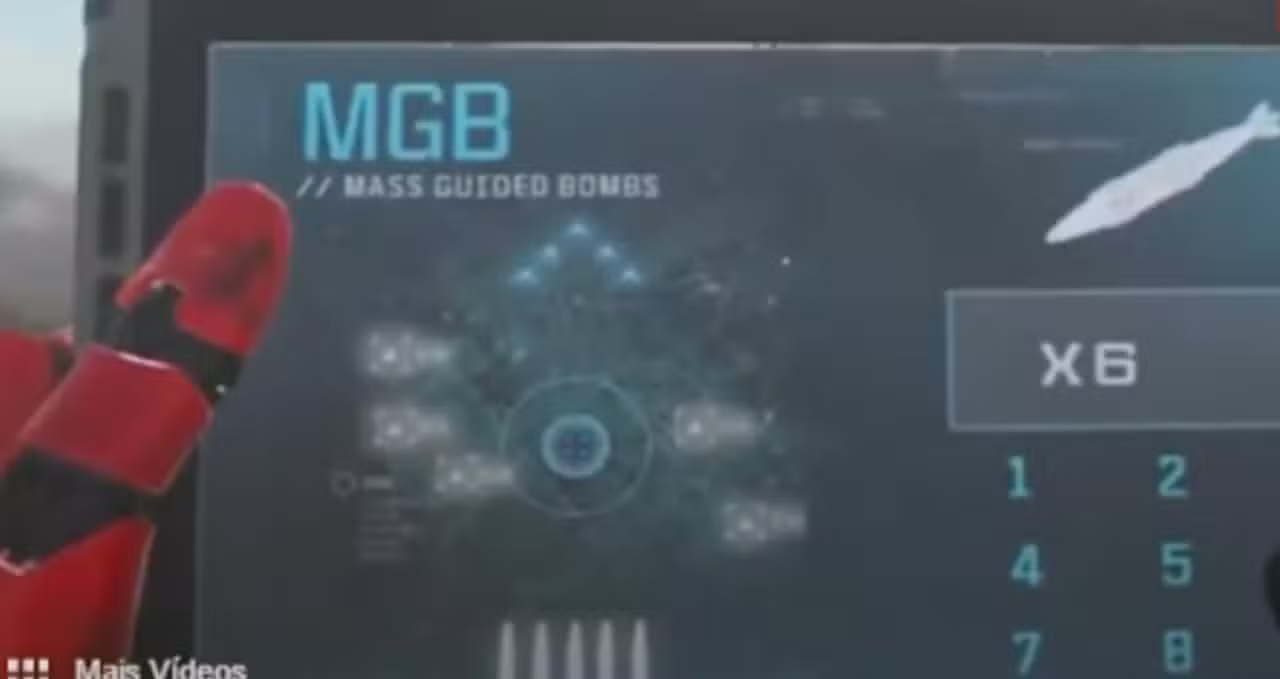
In a context of heightened tensions in the Oriente Médio, the government of President Donald Trump, through the official profile of Casa Branca on the social network The montage, about a minute long and titled “Courtesy of the Red, White & Blue” (Courtesy of the Vermelho, Branco and The action takes place amid the escalation of the clash between the Estados Unidos and Israel against the República Islâmica, which has already reached its sixth day of military intensification.
The release of the content, which took place on a Wednesday (4/2), quickly captured the attention of the global public, provoking a wave of reactions that ranged from perplexed humor, surprise and vehement indignation. Especialistas in communication and international relations have pointed to the measure as an audacious, but potentially risky, move in Casa Branca’s communication strategy.
The way the video was constructed to simulate a gaming experience raised deep questions about the trivialization of real war events, which by nature involve human loss and destruction. The strategy of mixing the fictional universe of video games with the harshness of military reality sets a precedent for the way conflicts are represented and perceived by society.
Immediate repercussions and controversy
Casa Branca’s official response to the initial criticism only added more fuel to the controversy. The communications director, Steven Cheung, when commenting on a reporter’s post about the video, used the expression “W’s in the chat, boys” – a common slang term among players to celebrate victories. Essa response reinforced the impression that the administration was embracing gaming aesthetics to address a highly serious national security issue.
Polarization on social media became evident, with some users expressing shock at the trivialization of the war and the other defending the initiative as a modern and accessible form of communication. The discussion went beyond virtual borders, reaching debate tables in international press vehicles and study groups on ethics in war and political communication.
Video game aesthetics and military reality
The video montage is meticulously designed to resemble the experience of “Call of Duty”, one of the best-known war game franchises worldwide, famous for portraying military conflicts from different eras. The video begins with scenes that appear to be taken directly from a game, showing a soldier triggering an air strike using a tablet. Essa transition between virtual and real is one of the most criticized points.
The sequence shows real clips of bombings carried out by the Estados Unidos on Iranian soil, hitting structures and military equipment in the Persian country. Para amplify the connection with the game, each target hit is accompanied by the overlay on the screen of a “+100”, a clear allusion to the score awarded for eliminations in “Call of Duty”.
In addition to the visual elements, the video incorporates excerpts of speeches and sounds characteristic of the game, such as “We are winning this war” and “We take control”. The insertion of these fictitious audios in a context of real military operations generated discomfort and raised questions about the intention of dehumanizing the conflict or making it more “palatable” for an audience accustomed to digital entertainment.
History of government communication and conflicts
Historically, governments have used a variety of media to shape public perception during periods of conflict. From Desde propaganda posters to Grandes Guerras Mundiais to television news broadcasts from Guerra to Golfo, the way information is presented plays a crucial role in internal mobilization and external image projection.
The rise of digital platforms, however, has ushered in a new era in strategic communication. Governos now compete for attention in a content-saturated environment, seeking innovative formats to engage their audiences. Casa Branca, with this production, seemed to seek a language that would resonate with a younger, digitally connected audience.
This episode highlights a growing trend of blurring the lines between entertainment and journalistic information, especially when it comes to geopolitical matters. The effectiveness of such tactics, however, is often put to the test by public reaction, which may interpret such efforts as insensitive or inappropriate given the seriousness of the issues addressed.



Analysis of Casa Branca’s digital strategy
The decision to employ the aesthetics of a video game to illustrate real military attacks can be seen as an attempt to “gamify” the narrative of the conflict. Essa approach aims to engage a demographic segment that consumes visual content quickly and interactively, potentially seeking to simplify a complex and, at times, brutal reality.
By tying military operations to a game score (“+100”), the strategy can aim to create a sense of tangible progress and success for domestic audiences. Isso can be interpreted as a tactic to solidify popular support for military actions, transforming serious events into a kind of digital competition.
However, this methodology carries significant risks. The trivialization of violence inherent to armed conflicts can alienate portions of the population that expect a more sober and respectful approach to events. The light tone and playful elements may clash with the seriousness of the human and diplomatic consequences of the war.
Casa Branca, by using such popular and informal language, may also be trying to connect more directly with voters and citizens, looking for a way to humanize or make foreign policy more accessible. Essa strategy, however, requires a delicate balance so as not to generate contrary effects, such as accusations of irresponsibility in official state communication.
Ethical and diplomatic implications
The use of wargame elements to represent real conflicts raises a number of ethical concerns. The main one is the potential dehumanization of victims and the trivialization of violence. By turning attacks into “points” or a video game “victory”, the human dimension and suffering inherent to war risk being minimized.
In addition to the ethical issues, there are considerable diplomatic implications. Depicting attacks on a sovereign country with such informal and aggressive language could be perceived as a further provocation, escalating tensions rather than trying to contain them. Isso could complicate diplomatic efforts and international relations at an already delicate time.
The international community and global bodies frequently monitor the rhetoric of nations involved in conflicts. A video like this could be seen as disrespecting the norms of diplomatic conduct and the principles of responsible communication in a wartime scenario, potentially further isolating the position of the Estados Unidos in international forums.
The role of social media in the war of narratives
Social media has become a crucial battleground in the modern narrative war, where governments, groups and individuals vie for the attention and loyalty of global public opinion. Plataformas like Este digital environment favors the proliferation of viral content, and Casa Branca, by choosing this platform and format, demonstrates an understanding of the power of social media to reach and influence large audiences, while at the same time risking loss of credibility with a portion of users who expect a more formal and respectful tone in government communications on such sensitive topics.
International reactions and future discussions
The Casa Branca initiative is expected to provoke ongoing debates in various international forums about the ethics of communication in times of war and the growing role of pop culture in geopolitics. Esse type of content fuels discussions about the responsibility of states in the way they inform their citizens and the world about their military actions.
Veja Tambem em Games
Jogos mensais do PlayStation Plus Essential chegam em junho com Grounded e Warhammer 40.000 Darktide

Fortnite Shattered live event acontece nesta sexta com horários por fuso

CEO da Xbox admite erro ao exibir logotipos de PS5 e Switch em evento

MSI lança Claw 8 Ex AI Plus com processador Intel Arc G3 Extreme e bateria de 80Whr

Microsoft revela novos detalhes do Projeto Helix e futuro do Xbox
RPG gratuito TBH Task Bar Hero alcança pico de 143 mil jogadores no Steam e lidera rankings

Veterano da Dragon Age vê product placement como caminho para manter diversidade de gêneros nos games

007 First Light recebe críticas excelentes no PS5 e entra na disputa por Jogo do Ano
The Legend of Zelda: Ocarina of Time revela combo de ataque que ficou escondido por 25 anos
Minecraft anuncia Chaos Cubed com data de lançamento e revela novo bioma Dappled Forest

Onde assistir ao Xbox Games Showcase 2026 e Gears of War E-Day Direct no domingo