

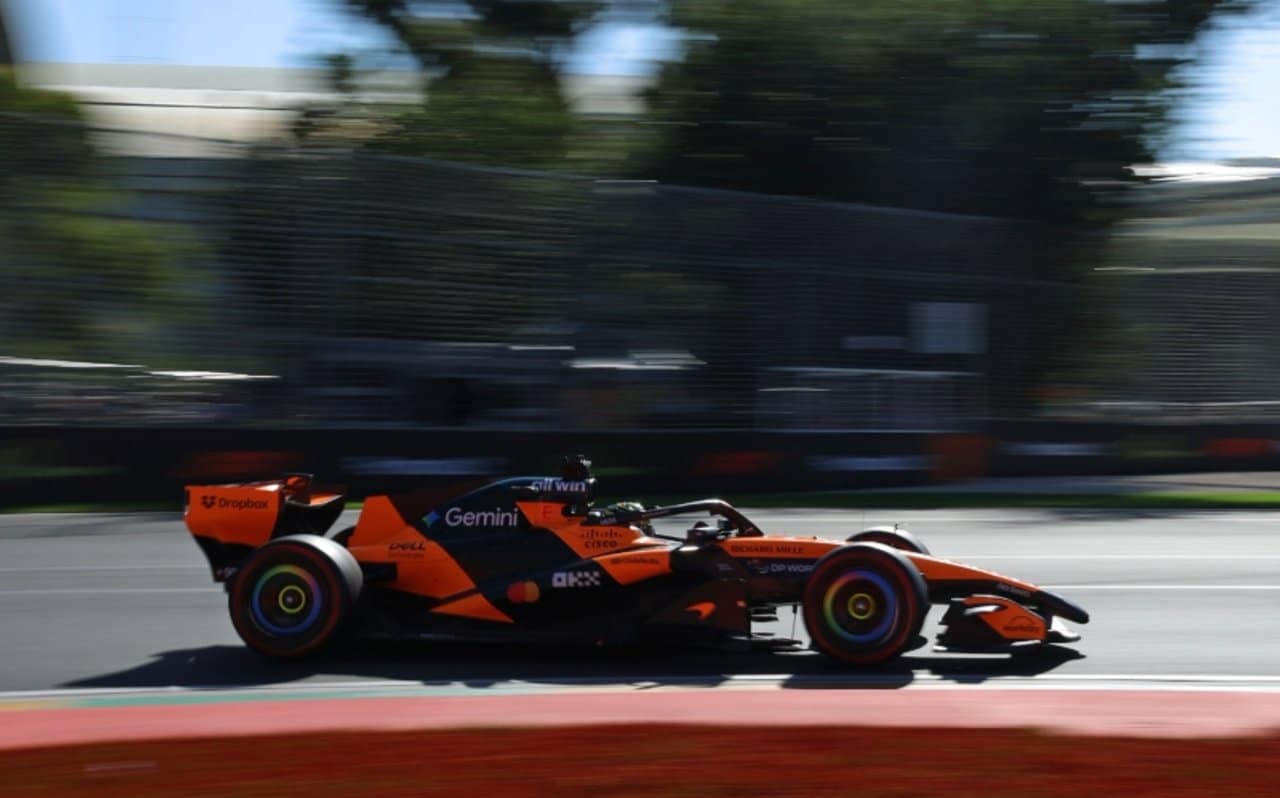
The Albert Park circuit, in
New technical era and sustainability
The teams face the immediate challenge of adapting their single-seaters to the new regulations, which prioritize sustainability with the use of 100% synthetic fuels and power units with greater electrical dependence. Além of the ecological issue, active aerodynamics debuts to increase competitiveness on straights and curves, promising to disrupt the traditional forces of the grid and require rapid and precise adaptation on the part of drivers and engineers.
Musical chairs and awaited premieres
There is immense expectation surrounding the new colors that the drivers wear this year, significantly changing the dynamics of the paddock. Lewis Hamilton makes its long-awaited official debut for Ferrari, seeking to break the Italian team’s title drought, while Carlos Sainz begins its journey at Williams. The renewal of the grid is also a highlight, with young talents like Kimi Antonelli in Mercedes and Oliver Bearman in Haas taking on the responsibility of performing in the elite from the first stage.
Dispute for pole position in Melbourne
Max Verstappen begins the defense of his title facing a scenario of uncertainty brought about by radical changes in cars. The three-part elimination format, consisting of Q1, Q2 and Q3, remains the ultimate test of pure speed, where any error on the semi-urban layout can cost valuable positions. The search for pole position in Melbourne is considered crucial, given that the circuit severely punishes mistakes and offers overtaking zones that require surgical precision from competitors.
For fans who want to follow every detail, real-time coverage is essential to understand the new hierarchy of forces that is being established. Plataformas digital channels and specialized portals, such as ge.globo, carry out minute-by-minute monitoring, offering statistics and analyzes that help to decipher who will start ahead in this historic opening that promises to redefine the standards of competition and technology in Fórmula 1.