
New Mitsubishi Xforce hybrid arrives on the Asian market with consumption of 24 km/l and 85 kW engine By Luís Henrique Costa
6 min read
 |
The Japanese automaker Mitsubishi has officially launched the hybrid version of the Xforce sports utility vehicle in the Asian market. The model incorporates an unprecedented electrified propulsion system for the category, focusing on high energy efficiency and reduced emissions of polluting gases. Initial production takes place at Tailândia, taking advantage of local policies and tax incentives aimed at manufacturing low-emission, high-technology vehicles.
The development of this vehicle represents a strategic change in the manufacturer’s assembly line, which seeks to consolidate its presence in the compact sports utility vehicle segment. The engineering design integrates traditional mechanical components with new electrical architectures, resulting in a powertrain optimized to handle the demands of congested urban traffic and high-speed highways.
The first units begin to be distributed to neighboring countries in Sudeste Asiático, focusing on regions with high demand for family passenger vehicles. The brand sets a new internal level of fuel economy with this launch, surpassing the numbers recorded by previous generations of vehicles in the same category and offering a viable alternative for the energy transition.
Mechanical architecture and efficiency of the electrified system
The vehicle’s mechanical set is made up of a 1.6-liter combustion engine combined with an 85 kW electric motor, operating in constant synergy. Essa combination generates a combined power of 114 horsepower, managed by a transaxle-type transmission recently developed by the brand’s engineering team. The electrical system provides an instantaneous torque of 255 Nm, ensuring quick responses in overtaking situations and regaining speed on expressways.
The model’s main standout metric is its fuel consumption, which reaches 24.4 km/l in official road tests. The compact 1.1 kWh battery allows the vehicle to operate in all-electric mode at low speeds and on short journeys. The thermal management of the electric motor has been improved with the use of an independent electric water pump, ensuring the durability of components under thermal stress.
Structural dimensions and adaptation to different terrains
The body has precise measurements for the segment, measuring 4.39 meters long and with a wheelbase of 2.65 meters. Essas proportions guarantee optimized internal space for occupants, in addition to providing directional stability at high speeds. The platform has been structurally reinforced to support the additional weight of the batteries and electric motors without compromising the torsional rigidity of the chassis.
One of the most notable attributes of the engineering applied to the chassis is the ground clearance of 222 millimeters. Esta technical specification places the model at the top of its class in terms of its ability to overcome urban obstacles, ditches and unpaved roads. The suspension has been entirely recalibrated to absorb impacts more efficiently, maintaining comfort in the cabin even on uneven surfaces.
The driver has seven different driving modes available, electronically programmed to alter the response of the accelerator, steering and traction control. Options include specific settings for wet asphalt, gravel and mud, significantly expanding the car’s versatility of use. Torque vectoring technology works to distribute force between the front wheels to correct the trajectory in tight curves.
The external design follows the automaker’s characteristic visual language, highlighting a prominent front grille and a high-intensity LED optical assembly. The 18-inch alloy wheels completely fill the wheel arches, giving the utility vehicle a robust and imposing stance. The overall aerodynamics were refined in the wind tunnel to reduce frontal drag and improve sound insulation at cruising speeds.
Embedded technology and entertainment system
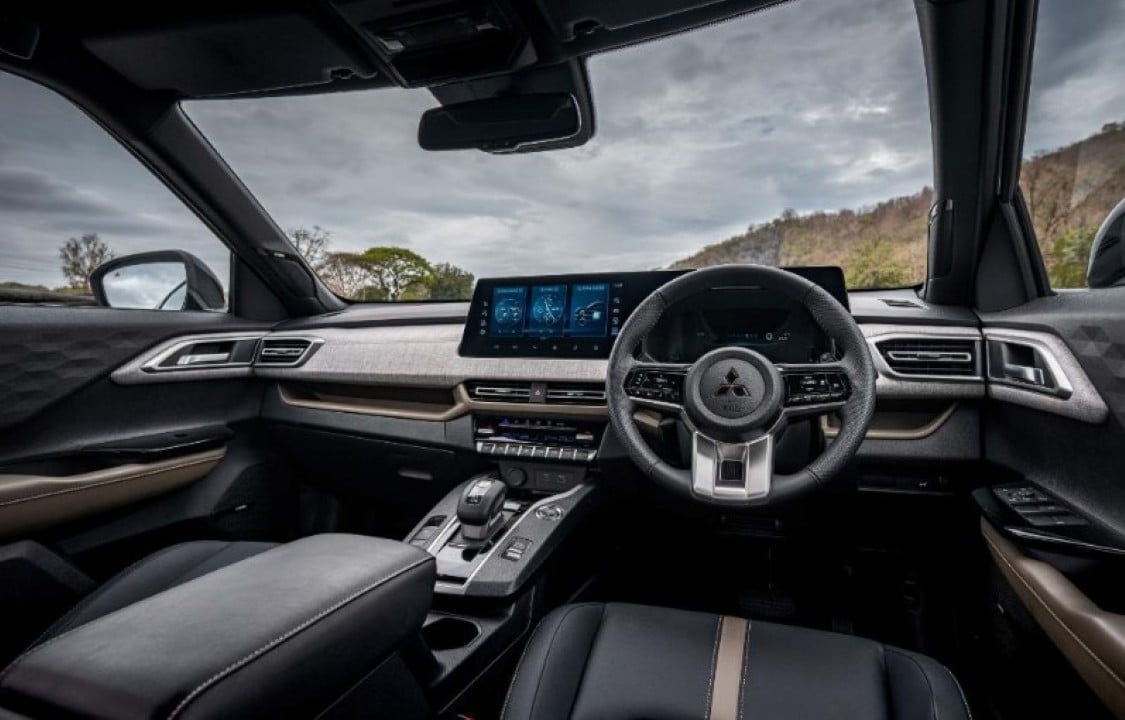
The instrument panel and infotainment system were designed to centralize driving and connectivity information in an ergonomic way. The main console houses a 12.3-inch touchscreen, which houses GPS navigation functions, media playback and detailed vehicle settings. The 8-inch digital instrument panel displays hybrid system data in real time, allowing the driver to monitor energy flow, battery charge level and consumption history. The graphical interface was developed with simplified menus to be highly intuitive, minimizing visual and cognitive distraction during daily driving.
The sound experience inside the cabin received special attention from the development team through a partnership with audio equipment manufacturer Yamaha. The Premium Sound system was specifically equalized for the acoustic signature of the utility vehicle’s cabin, actively compensating for external wind noise and frequencies generated by the tires rolling on the asphalt. High-fidelity speakers are strategically positioned in the doors and columns to create an immersive soundstage for all occupants. Materiais additional sound absorbers have been applied to the fire panel and floor to ensure that audio quality is preserved in any driving condition.
Safety and driver assistance package
The car’s safety architecture integrates a comprehensive package of state-of-the-art active and passive assistance. Adaptive cruise control uses radar sensors and high-resolution cameras to maintain a safe and constant distance from the vehicle in front, automatically adjusting speed according to changes in traffic flow. The frontal collision mitigation system emits visual alerts on the dashboard and audible signals when it detects an imminent risk of collision with vehicles or pedestrians, applying the brakes autonomously and fully if the driver does not react in time. Adicionalmente, blind spot monitoring in the rear view mirrors and rear cross traffic alert provide vital assistance when maneuvering lanes and exiting parking spaces with reduced visibility. The metal structure of the body was designed with programmed deformation zones to dissipate kinetic energy in the event of a severe impact, maintaining the integrity of the survival cell. The multiple set of front, side and curtain airbags complements the seat belts with pretensioners, offering full protection to passengers in various road or urban accident scenarios.
Commercial strategy and factory warranty
The choice of the Asian plant as a production hub meets a logic of logistical efficiency and taking advantage of government policies favorable to the expansion of electrified mobility. The industrial structure was extensively modernized to accommodate the new assembly line for hybrid sets, requiring technical training for hundreds of direct employees. From this operational base, the manufacturer plans to export the utility on a large scale to strategic markets such as Indonésia, Filipinas and Malásia.
The price positioning established by the automaker aims to attract consumers looking to transition from purely combustion engines to electrification, without facing the high cost of purchasing fully electric vehicles. The direct conversion of prices into local currency indicates an extremely competitive level compared to direct rivals sold by other Japanese and South Korean brands in the same region.
To convey security and confidence in the adoption of the new driving technology, the automaker established an extended warranty program focused specifically on high voltage components. The hybrid system’s traction battery has an official coverage of 10 years, ensuring mechanical durability and maintenance of charge retention capacity throughout the car’s useful life. Esta measure acts directly to preserve the resale value of the utility vehicle in the used car market.
Expansion of the electrified mobility portfolio
The commercial introduction of this model reaffirms the brand’s global commitment to diversifying its mobility options with a focus on energy efficiency in developing markets. The propulsion engineering applied in this project will serve as a base platform for the development and updating of the manufacturer’s future vehicles, accelerating the process of adopting low-emission technologies on an international scale.



