
BYD’s new line of electric SUVs features a battery that recharges in nine minutes and a robust look By Maria
5 min read
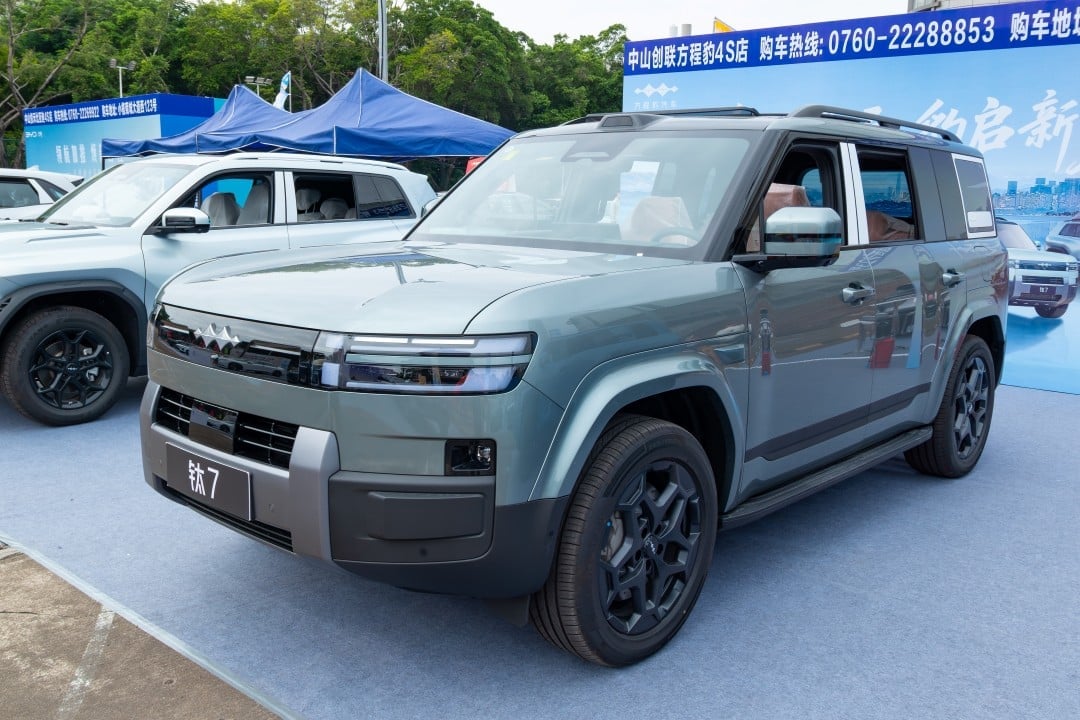 |
Chinese automaker BYD has officially expanded its portfolio of sports utility vehicles with the presentation of two new models from the Fang Cheng Bao sub-brand. The vehicles, named Tai 7 and Tai 3, reach the global automotive market integrating the manufacturer’s latest technological innovations in the electrification segment. The announcement highlights the advancement of Asian engineering in resolving historical bottlenecks in sustainable mobility.
The main technical difference of the launches lies in the adoption of the second generation of the Blade battery, developed internally by the company. The Este component works in conjunction with the unprecedented Flash Charging system, a very high-power recharging architecture. The combination of these technologies changes the dynamics of using electric cars on long-distance trips, bringing the stopping time closer to that of conventional refueling.
According to the technical specifications released by the brand’s engineering, the new system allows energy capacity to be recovered extremely quickly. Official data shows that it is possible to reach a ninety-seven percent charge in just nine minutes of plugging in. Para partial recharges, the jump from ten to seventy percent occurs in an interval of five minutes.
Advances in battery architecture
The development of the Flash Charging system represents an engineering leap forward in the contemporary automotive industry. The technology requires highly sophisticated thermal management to prevent the power cells from overheating during the massive flow of electricity. The manufacturer implemented new chemical compounds and improved liquid cooling systems to guarantee the stability of the set.
The second generation Blade battery delivers a five percent increase in energy density compared to its predecessor. Este efficiency gains allow more energy to be stored in the same physical space, reducing the total weight of the vehicle and improving consumption per kilometer driven. The structural architecture of the batteries also acts as part of the chassis, increasing the torsional rigidity of the vehicles.
The durability of the component was a central point during the development of the project. The automaker ensures that ultra-fast recharge cycles do not cause premature degradation of lithium-iron-phosphate cells. Testes of stress carried out in the laboratory confirms the maintenance of storage capacity even after thousands of extreme loading cycles.
Physical proportions and utilitarian aesthetics
The Tai 7 model assumes the top-of-the-line position in the new family of utility vehicles, featuring dimensions that place it in direct competition with icons in the off-road segment, such as the Land Rover Defender. The body stretches 4.99 meters in length, with an imposing width of two meters and a height of 1.87 meters. The interior space benefits from a wheelbase of 2,920 millimeters, ensuring comfort for occupants and ample cargo capacity in the trunk. The visual language adopts straight lines, pronounced wheel arches and a high ground clearance, characteristics that immediately communicate the vehicle’s vocation for use on unpaved terrain and severe trails.
The internal finish contrasts with the rusticity of the exterior, delivering an environment focused on the high standard of materials and the digitalization of control interfaces. Engineers designed the cabin to isolate passengers from vibrations and external noise, using state-of-the-art sound absorbing materials. The aesthetic similarity with classic European utility vehicles works as a design strategy to attract traditional consumers in the premium segment. The reinforced chassis structure and the approach and departure angles were calculated to overcome complex obstacles, proving that the square look is not just a stylistic feature, but a functional necessity for the car’s proposal.
Range and engine specifications
The all-electric variant of the Tai 7 is designed to mitigate range concerns among drivers. The vehicle reaches up to seven hundred and fifty-five kilometers on a single full charge, according to the measurement cycle adopted by the manufacturer. Este number places it among the most efficient large SUVs on the market today.
The catalog of options includes two- or four-wheel drive configurations, adapting to the specific needs of each consumer profile. The all-wheel drive system uses independent electric motors on each axle, providing precise torque vector control on low-grip surfaces.
For customers who demand even greater ranges, the line offers versions with plug-in hybrid powertrains. Nestas configurations, the combined autonomy exceeds the thousand and three hundred kilometers mark, combining the efficiency of the electric motor with the safety of a fuel tank for trips to remote locations.
The integration of ultra-fast charging with these high ranges brings the experience of using electric vehicles closer to that of combustion vehicles. A necessidade de planejamento minucioso de rotas para encontrar pontos de recarga é drasticamente reduzida, facilitando o uso diário e as viagens familiares de férias.
Compact alternative for the urban environment
The Tai 3 model complements the brand’s commercial strategy, offering a smaller option for consumers who predominantly travel on urban roads. The utility vehicle measures 4.61 meters in length, falling into the same size category as established vehicles such as the Toyota RAV4. Apesar’s reduced dimensions, the robust and square visual identity of the Fang Cheng Bao family is rigorously maintained.
The technical sheet of the smaller model also presents impressive performance and energy efficiency figures. The longer-range version reaches six hundred and twenty kilometers of autonomy, while the performance-focused configuration, equipped with two electric thrusters, delivers a combined power of five hundred and ten horsepower.
Technical infrastructure barriers
The practical implementation of the announced charging times comes up against the current limitations of energy distribution networks. The Flash charger developed by the automaker requires a power of 1,500 kW to operate at its maximum capacity. Este standard is significantly superior to systems currently used even by heavy electric trucks and buses.
In regions where this very high voltage infrastructure is not installed, vehicle owners will need to use conventional charging stations. In Nestes cases, battery recovery wait times return to normal industry standards, demonstrating that automotive technology has advanced faster than public infrastructure.
Commercial planning for foreign markets
The Asian manufacturer’s management designs a careful international expansion plan for the new line of sports utility vehicles. The assessment of markets outside the Asian continent considers the growing demand for vehicles with genuine off-road capability combined with zero-emission propulsion. The entry strategy into Europa, for example, could occur through already established premium divisions, replicating the movement made with the Fang Cheng Bao 5 model, which was renamed and marketed under the Denza banner in certain countries. The presence of advanced mechanical features such as physical differential locks and adaptive suspension makes the Tai models highly competitive in mountainous regions and countries with harsh winters. The consolidation of this global distribution network will depend on strategic partnerships for the gradual installation of ultra-power chargers on the main international highways.
Operational stability in extreme climates
The thermal management of the new battery architecture ensures dynamic performance is maintained regardless of external weather conditions. Sistemas active preheating and cooling protects power cells against loss of efficiency in freezing temperatures or extreme heat, ensuring that claimed range and recharge speed remain consistent year-round.



