
Honda launches new Fireblade in Brazil with 215 horsepower engine and cutting-edge MotoGP technology By Luís Henrique Costa
6 min read
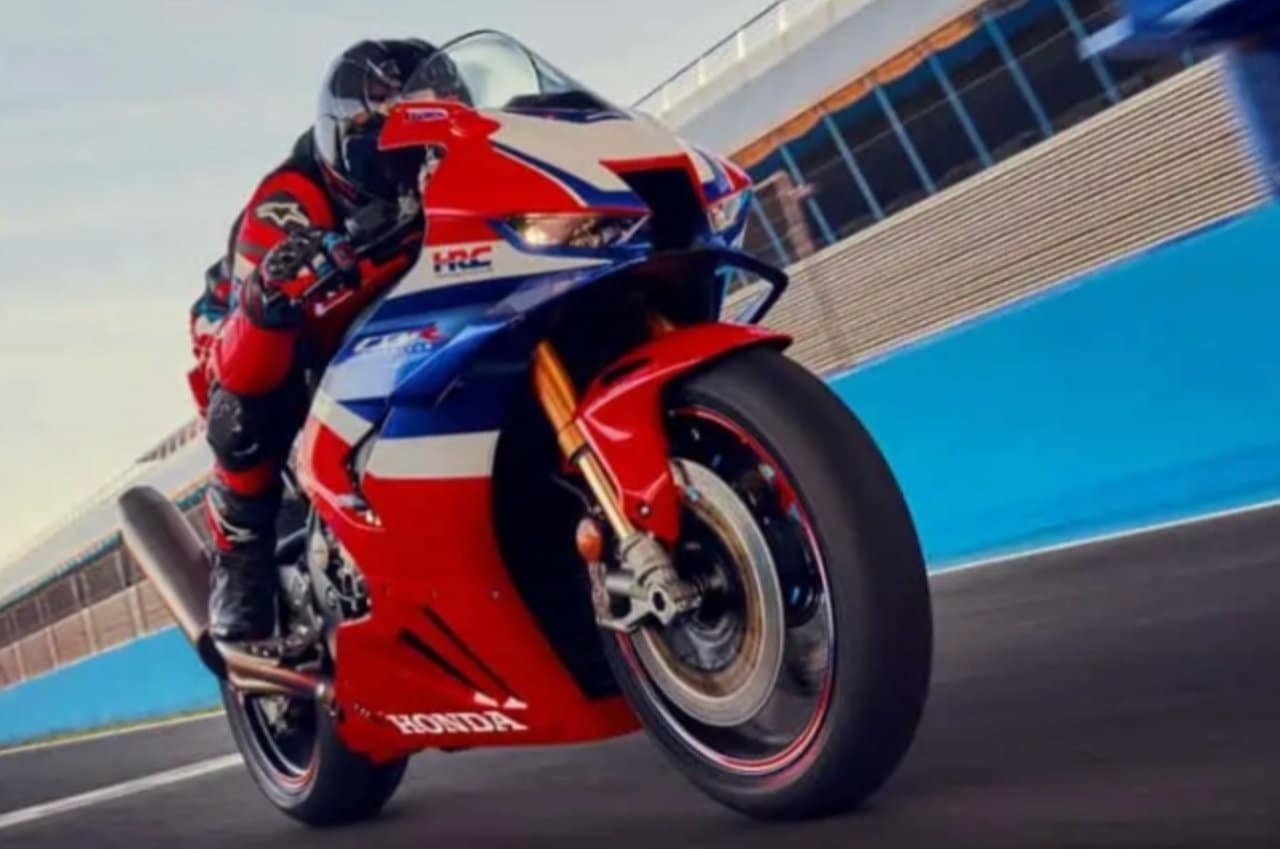 |
The Japanese manufacturer has officially announced the arrival of its latest super sports car on the national market, bringing severe updates in aerodynamics and engines to local consumers. The high-performance model was developed with an almost exclusive focus on performance on tracks, but maintains the necessary approval for circulation on public roads, expanding the range of options for motorcycle enthusiasts looking for a very high level of equipment. The introduction of this machine represents a strategic move by the automaker to solidify its presence in the premium motorcycle segment, a niche that requires constant innovation and direct transfer of technologies tested in world championships.
The development of the motorcycle included the full participation of the brand’s racing division, ensuring the application of engineering solutions that were previously restricted to competition prototypes. The engineering team focused intensely on optimizing directional stability at high speeds and refining the traction control algorithms, allowing riders with different experience levels to safely get the most out of the equipment. The structural design was revised to withstand extreme G forces during acceleration and braking, resulting in a vehicle that responds immediately and predictably to the driver’s commands, regardless of the severity of the maneuver required on the route.
Accredited dealerships across the country have already begun the vehicle pre-sale process, with the first invoiced units scheduled for delivery to customers throughout the current quarter. The initial imported batch aims to meet a repressed demand for new generation super sports cars, a segment that attracts consumers willing to invest large amounts in precision engineering on two wheels. Distribution logistics were planned to ensure that urban centers with the highest concentration of racetracks and track day enthusiasts receive priority in the allocation of initial stock, ensuring the model’s immediate presence on the country’s main circuits.
Mechanical engineering and propellant architecture
The heart of the new machine is a four-cylinder in-line engine measuring exactly 999.9 cubic centimeters, specifically designed to deliver maximum performance in extremely high rev ranges. The official technical sheet reveals a maximum power of 215 horsepower, accompanied by a forceful torque of 11.4 kgf.m, figures that guarantee vigorous accelerations and immediate restarts in any gear selected by the driver. Para can withstand such mechanical and thermal stress without compromising durability, the internal components received friction reduction and weight relief treatments, using noble materials such as forged titanium connecting rods and aluminum pistons with Teflon-coated skirts. The ram-air air intake system has been redesigned with more direct ducts to accelerate the flow of oxygen to the combustion chambers, while the exhaust system, developed in partnership with specialized suppliers in the competition sector, optimizes gas exhaustion and actively contributes to the motorcycle’s mass centralization. Essa drive architecture eliminates delays in the response of the electronic accelerator, providing a linear power delivery that facilitates control of rear tire skidding during corner exits on closed circuits, raising the level of dynamic performance.
Track-derived aerodynamic innovations
The front fairing features a set of multiple side wings integrated into the main design, an aerodynamic solution inherited directly from racing prototypes to generate continuous downforce. Esse technical feature presses the front tire against the asphalt during strong acceleration, inhibiting wheel lift and allowing the engine’s kinetic energy to be converted entirely into forward movement, without wasting traction. The overall aerodynamic drag of the package was minimized in the wind tunnel, resulting in a penetration coefficient that favors reaching maximum speeds on long straights with a notably lower thruster effort.
In addition to vertical downforce, the design of the fuel tank and seat has been geometrically lowered to allow the rider to fit neatly behind the windshield bubble. Essa aggressive riding posture reduces turbulence in the helmet and reduces physical wear and tear on the driver during prolonged riding sessions on the track. The cold air flow is also strategically directed through internal channels to the water and oil radiators, optimizing the engine’s thermal cooling even under continuous maximum demand on high ambient temperature days.
Advanced electronic management
The electronic brain of the motorcycle is a six-axis inertial measurement unit, responsible for monitoring lateral inclination, longitudinal inclination, acceleration and braking in real time. Este component sends data packets millisecond by millisecond to central control modules, adjusting the intervention of dynamic safety systems.
Traction control has multiple programmable sensitivity levels, allowing the driver to choose the exact degree of rear wheel slip before the ignition is automatically cut off. Essa fine calibration is essential to adapt the vehicle to different asphalt grip conditions or the level of progressive tire wear.
The anti-wheelie system also operates in direct conjunction with inertial measurement, softening the landing of the front wheel without abruptly interrupting the acceleration curve. The driver can configure the system’s intrusion level or turn off the assistance completely for exclusive use in controlled racetrack environments.
A high-resolution digital instrument panel acts as the main communications interface, displaying all settings clearly and legibly in direct sunlight. The controls on the grips have been ergonomically redesigned to facilitate quick navigation through the configuration menus without the driver having to take their eyes off the track.
Cycling and damping system
The main structure of the aluminum die-cast diamond-type chassis has been reworked in the thickness of its walls to offer greater torsional rigidity, ensuring precise responses to steering commands during rapid trajectory changes. The rear swingarm, now longer and lighter than the previous generation, improves mechanical traction and stabilizes the set in an exemplary way under strong braking.
The suspension system features inverted telescopic forks at the front and a single pressurized shock absorber at the rear, both equipped with state-of-the-art semi-active electronic adjustment technology. The internal valves automatically change the damping load hydraulically, based on the ground reading conditions and the riding mode selected by the user.
This intelligent suspension eliminates the need to use hand tools to configure complex parameters such as spring preload, high-speed compression or rebound. The driver selects pre-defined parameters directly on the instrument panel, and the system adapts the motorcycle’s dynamic behavior instantly to the road.
Braking capacity and weight reduction
To contain the momentum generated by the 215 horsepower, the front axle employs radially mounted monobloc brake calipers, biting into large diameter floating discs with high heat dissipation capacity. The radial master cylinder provides extremely precise feel on the right lever, an essential factor for applying the controlled braking technique to the center of the curve.
The motorcycle’s curb weight, taking into account all operating fluids and a completely full fuel tank, reaches a lean 201 kilograms, establishing a highly favorable power-to-weight ratio for acceleration. The mass distribution was mathematically calculated to allocate 53% of the total weight over the front wheel axle, favoring precision when entering corners.
Financial positioning in the luxury market
The suggested public price for the acquisition of the new model was set at R$189,174, a base value that does not include additional expenses with intercity freight or full mandatory insurance. Este financial amount positions the motorcycle separately at the top of the pyramid of the national automotive luxury market, competing directly with European models of similar specifications.
For purposes of understanding the necessary purchasing power and the exclusivity inherent to the asset, the list value of the motorcycle is equivalent to more than one hundred and sixteen times the current minimum wage of R$1,621. The primary target audience is strictly made up of collectors of special vehicles, businesspeople in the sector and regular practitioners of closed speed events.
Availability of colors and finishes
The model will be sold in its launch phase with exclusive graphics that directly refer to the official livery of the factory team’s motorcycles, reinforcing the visual identity linked to the world of competition. The automaker’s traditional tricolor color scheme, combined with a highly scratch-resistant varnish, highlights the aggressive lines of the design and underlines the premium finish applied to every detail of the plastic fairings and exposed metal components.



