
Meteorite hits house in Germany, causing confusion with possible Iranian missile By Luís Henrique Costa
5 min read
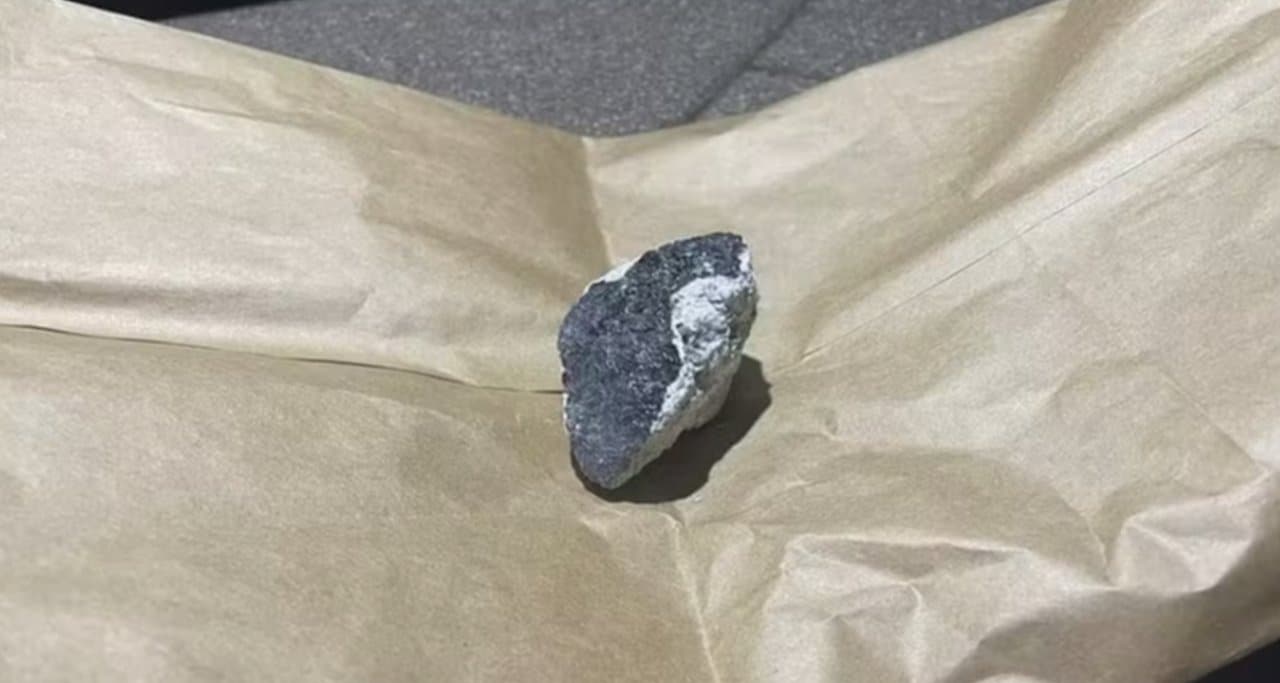 |
A meteorite fragment pierced the roof of a residence in Koblenz, a city located in the state of Renânia-Palatinate, southwest of Alemanha, at around 7pm (local time) on Sunday, March 8th. The incident caused a hole the size of a football in one of the rooms of the house, local authorities confirmed.
Despite significant structural damage, there were no injuries in the incident. The head of the operation of Corpo of Bombeiros of Koblenz, Benjamin Marx, assured that, although there were people in the building, no one was in the exact room hit by the impact.
The event generated a wave of speculation on social media, with many users even considering the possibility that it was an Iranian missile. Essa initial confusion highlights the unpredictability of natural phenomena and the speed with which information, sometimes misleading, can spread.
Visibility of the falling object was wide, being described by residents as a “bright flying object with a brief trail of fire”. Este luminous spectacle could be observed from hundreds of kilometers away, expanding the sighting range beyond Alemanha, including neighboring countries such as Holanda, Bélgica, França and Suíça.
Origin and characteristics of cosmic visitors
When a celestial body, known as a meteoroid, enters the Earth’s atmosphere, it often fragments into several parts. Muitos of these pieces burn and disintegrate due to friction, but others manage to resist the atmospheric passage and reach the ground, being then classified as meteorites or meteorite fragments.
Astronomy experts explain that the majority of these fragments originate from the asteroid belt, located between Marte and Júpiter. Esses bodies can be billions of years old, representing true time capsules that keep traces of the formation of our Sistema Solar. The luminous phenomenon that occurs in the sky, before the eventual impact, is known scientifically as a meteor.
The allure of sightings and public confusion
The occurrence in Koblenz reinforces human curiosity about celestial events and how they can be interpreted in different ways. The intense glow and fiery trail of a meteor often captures attention, turning the night into a stage for a natural spectacle.
Carolin Liefke, deputy director of Casa at Astronomia in The magnitude of the event’s visibility in different countries demonstrates the scale on which these phenomena can occur and the emotion they generate, regardless of initial scientific understanding.
Rarity of impacts and scientific value
Direct meteorite impacts on Terra, especially in inhabited areas, are considered extremely rare events. The chance of a fragment hitting a house is negligible, making the incident in Koblenz notable and worthy of analysis by the scientific community. Esses events, although uncommon, provide valuable information to researchers.
Analyzing the composition of meteorites allows scientists to uncover secrets about the origin of the universe and the evolution of planets. Cada fragment found is a piece of cosmic history, offering clues about the primordial matter that gave rise to stars and galaxies.
The role of social networks in disseminating information
The speed with which news of the shiny object spread across social media and the subsequent speculation about an Iranian missile illustrates the power and challenges of contemporary digital communication. In times of uncertainty, the absence of immediate official information can open space for the spread of unfounded rumors and theories.
The Kaiserslautern police had to issue clarifications to deny the speculation, emphasizing the importance of fact-checking by the population and the media. Este episode serves as a reminder of the need for caution when interpreting unusual events and seeking reliable sources of information.
Precedents in Alemanha and the search for fragments
Alemanha has had previous experience with falling meteorites. In April 2023, several fragments of a meteorite fell in the region of Elmshorn, where the largest piece weighed about 3.7 kilograms. Este The find was examined by scientists and later displayed, being considered the largest meteorite fragment found in the country in approximately one hundred years.
After the incident in Koblenz, it is still unknown whether other fragments of the celestial body that hit the house will be found. Segundo Benjamin Marx, the body fragmented into several parts, which suggests the possibility of multiple drop points. The search for these fragments is crucial to research, as each piece can contribute to a more complete understanding of the event and the spatial object.
Science behind meteoroids and their journeys
Meteoroids travel through space at incredible speeds before crossing the path of Terra. Quando encounter the Earth’s atmosphere, the intense friction generates enough heat to make them shine brightly, creating the visual phenomenon known as a meteor, popularly called a “shooting star”. The size and composition of the meteoroid determine the intensity of its brightness and the probability of surviving atmospheric passage and becoming a meteorite.
The most common components of meteorites include rocks (chondrites), iron and nickel (siderites), or a mixture of both (siderolites). Chemical and mineralogical analysis of these materials provides crucial data about the conditions of Sistema Solar in its early days, offering a unique window into the distant past.
The importance of international collaboration
The visibility of the meteor in several European countries demonstrates the transboundary nature of astronomical events. Collaboration between observatories, universities and space agencies from different nations is essential to monitor, record and study these phenomena. Redes of meteor cameras, for example, can triangulate an object’s trajectory and help predict its fall area.
The exchange of data and observations between Holanda, Bélgica, França, Suíça and Alemanha, in this case, can offer a more complete picture of the meteoroid’s path and its fragmentation. Essa scientific cooperation is vital for advances in understanding the dynamics of Sistema Solar and for planetary protection against potential asteroid threats.
Safety and low risk of significant impacts
Despite the incident in Koblenz, it is important to highlight that the risk of being hit by a meteorite or having property damaged is statistically negligible. Most objects that enter Earth’s atmosphere are small and completely disintegrate before reaching the ground. Grandes impacts, capable of causing widespread damage, are events that occur over geological time scales.
Continued surveillance of near-Terra objects (NEOs) by global space programs aims to identify and track larger asteroids that could pose a future threat, allowing humanity to be prepared if necessary. Contudo, for small events like Koblenz, surprise is almost inevitable given the vast expanse of space and the density of the atmosphere.
Legacy and learning from the event
The fragment that fell into Koblenz, in addition to generating curiosity and debate, reinforces the constant interaction of Terra with the space environment. Ele serves as a reminder that our planet is constantly moving and exposed to external elements, even if most of these encounters are harmless or go unnoticed.
The analysis of this meteorite, if recovered, will certainly enrich the collection of scientific and cultural knowledge about these cosmic messengers. The event will be recorded in local history, not only as material damage, but as an opportunity to learn about the vastness of the universe and the natural phenomena that shape it.



