
Bolivia calls up Santos players for World Cup playoff without Marcelo Moreno on the official list By Thiago Lemos
6 min read
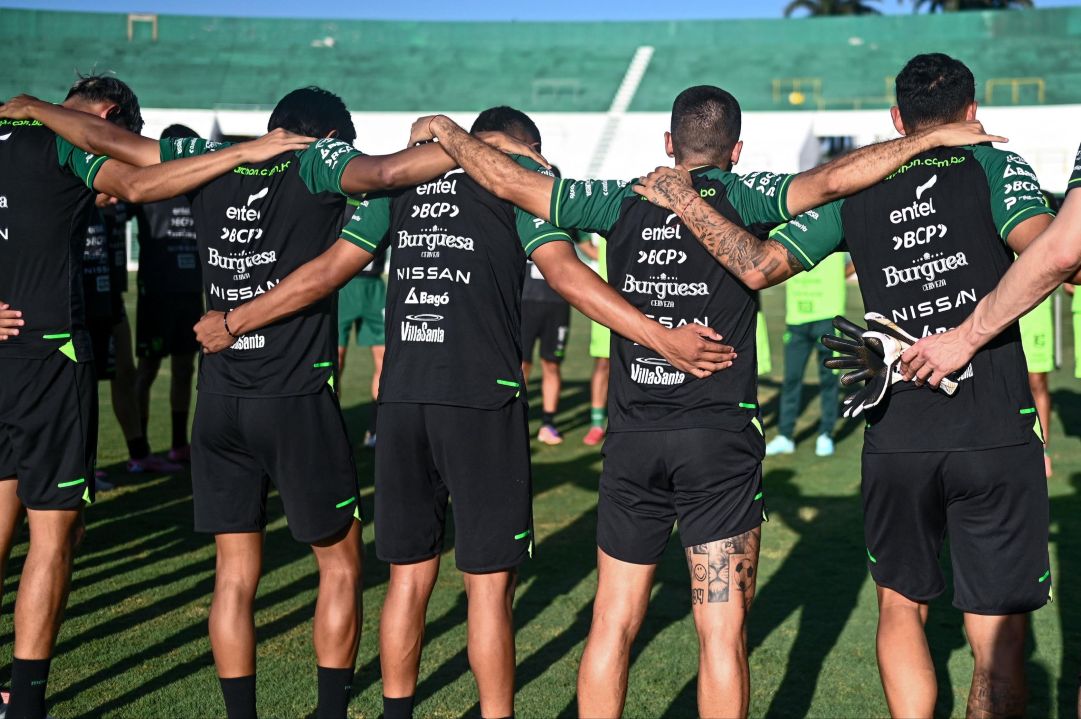 |
The Bolívia team made official this Monday the list of 28 players called up for the intercontinental repechage dispute, aiming to qualify for the Copa from the Mundo in 2026. Coach Óscar Villegas opted for a strategic renewal in the team, confirming the absence of In return, the Bolivian commander called up two well-known names in Brazilian football who play for Santos to strengthen the squad in the decisive duels.
The group begins preparations in Santa Cruz with the clear objective of ending a 32-year fast without participating in the main national team tournament on the planet. Bolivia’s trajectory in the Eliminatórias Sul-Americanas was marked by a historic recovery in the final stretch, guaranteeing seventh place in the table with 20 points achieved. Este performance allowed the team to continue living in the global dream, overcoming traditional opponents and securing a place in the play-offs after beating Brasil in El Alto.
- Calling up 28 athletes for the knockout matches.
- Inclusion of Miguelito and Marcelo Torrez, both from Santos.
- Confirmed absence of veteran Marcelo Moreno from the final list.
- Calendar defines semi-final against Suriname at México.
Focus on youth and talents in Brazilian football
The presence of Miguelito and Marcelo Torrez on the list of Óscar Villegas reinforces the technical committee’s confidence in the development of young people who work abroad. Miguelito, who has been gaining space in the offensive sector of Santos, is seen as one of the main creative pieces to break through opponent defenses during the playoff. Defender Marcelo Torrez also received the call to form the defensive sector, demonstrating the integration of the Santos base with the needs of the Bolivian national team.
The coach highlighted on previous occasions that the energy of these young athletes will be essential to withstand the pressure of elimination games on neutral grounds. The choice of players who experience the competitive level of Brazilian football brings a technical difference to the squad that mostly plays in local football. With the absence of old references, the responsibility of technically leading the team falls to this new generation that seeks to write its own name in the history of Bolivian sport.
Calendar and logistics for clashes in Monterrey
Bolívia will have an intense schedule of training and travel before the decisive clash against Suriname, scheduled for March 26th. The match will take place at 1pm local time at Monterrey, at México, at Estádio El Gigante of Caso advances in the semifinals, the South American team will face Iraque, who are already waiting in the group final due to their superior position in the Fifa ranking.
Before embarking for Mexican territory, the delegation will play a preparatory friendly against the selection of Trinidad and Tobago next Sunday, the 15th. The technical committee plans logistics that minimize wear and tear on athletes, especially those who need to travel from distant clubs to perform in Santa Cruz.
Absence of Marcelo Moreno and the end of an era
The big surprise for many fans was the confirmation that Marcelo Moreno will not be part of the squad in this final phase of classification for Mundial. The 38-year-old striker, who holds the record of 38 goals scored for the national team, came to play for Oriente Petrolero in February in an attempt to regain his competitive rhythm. Entretanto, the technical criterion of Óscar Villegas prevailed, prioritizing athletes who maintained greater physical and technical regularity throughout the cycle of recent qualifiers.
Moreno encerrou sua trajetória como o jogador que mais vezes vestiu a camisa da Bolívia, totalizando 108 partidas oficiais ao longo de quase duas décadas de serviços prestados. Sua absence marks a definitive transition of leadership within the Bolivian locker room, forcing the emergence of new protagonists for moments of decision. The impact of the captain’s departure is felt by the fans, but the coaching staff believes that the current collective game model makes up for the lack of historical individuality.
Structure of the global playoff and international opponents
The intercontinental play-offs format places Bolívia on a route that involves teams from different confederations, such as Ásia and Oceania. Iraque and República Democrática of Congo are seeded as they are better positioned in the world rankings of football’s highest entity. Isso means that Bolívia must beat Suriname to win the right to face the Iraqis in a unique final that is worth a direct ticket to Copa.
- Semifinal 1: Bolívia x Suriname on March 26th.
- Final of Chave: Vencedor of Semifinal x Iraque on March 31st.
- Location of matches: Estádio El Gigante of Acero, Monterrey.
Suriname secured their place through the Concacaf qualifiers and promises to be a physical and fast opponent for the Bolivian defenders. The diversity of playing styles at this stage of the competition requires that Óscar Villegas have a versatile squad capable of alternating strategies during the 90 minutes. Mental preparation has also been a pillar worked on by the Bolivian federation to prevent the weight of the 32-year-old taboo from interfering with performance on the four lines.
Technical preparation in Santa Cruz and cast analysis
Concentration at Santa Cruz allows summoned players to carry out activities at a lower altitude, resembling the conditions they will encounter at México. The squad has three experienced goalkeepers, including Carlos Lampe and Guillermo Viscarra, who compete for the starting spot under the goalposts. In the defensive sector, in addition to Marcelo Torrez, names like Luis Haquín and Roberto Fernández bring the necessary experience to organize the line of four defenders requested by the coach.
Midfield is the sector with the greatest number of options, featuring players who play in peripheral leagues of Europa and África, such as Ramiro Vaca and Moisés Paniagua. Essa mix of international experiences aims to give the team a greater ability to retain the ball and quickly transition into attack. In the offensive sector, Víctor Abrego and Enzo Monteiro appear as alternatives to fill the gap left by Moreno, betting on mobility and precise finishing within the opponent’s penalty area.
National expectations for a return to the world stage
The last time that Bolívia competed in an Copa of Mundo was in 1994, in the Estados Unidos, which generates unprecedented expectations among the local population for this month of March. The country’s government and sporting entities have offered full support to ensure that the team’s logistics are impeccable during their stay abroad. Campanhas of encouragement takes over social media and the streets of La Paz and Santa Cruz, uniting the country around the common goal of returning to the football elite.
The solid performance in the last rounds of the qualifiers, especially the triumph over powers from the continent, renewed the team’s prestige among international analysts. Bolívia stopped being seen just as an altitude team to show tactical organization in different game scenarios. Agora, the challenge is to translate this evolution into positive results against teams from other continents that have different physical and tactical characteristics than the usual South American teams.
Final details of the official call for Óscar Villegas
The complete list reflects a detailed mapping of Bolivian athletes around the world, with representatives in clubs from Rússia, Arábia Saudita, Bulgária and Marrocos. Essa decentralization of the squad is unprecedented in the recent history of the selection and shows an effort to professionalize the recruitment of national talent. The inclusion of players from Bolívar and Always Ready maintains the necessary interaction base, as these clubs dominate the domestic scene and compete in continental competitions.
Santos fans will also closely monitor the performance of Miguelito and Marcelo Torrez, hoping that the young players will return valued after their international experience. The duo’s success in the playoff could open doors for other Bolivian talents to seek Brazilian football as a gateway to larger markets. Tudo will be decided on Mexican soil, where Bolívia will try to stamp its passport into history and return triumphant to the tournament that last stopped the country in the nineties.