
Movement in the market takes DJ Moore to the Buffalo Bills during salary cap readjustment By Jeronimo Santos
6 min read
 |
Behind the scenes of North American professional sports, there is intense tactical and financial activity in franchise boards. With the spending limit set at US$301.2 million per team for next season, managers are racing against the clock to adjust payrolls before the official opening of the negotiating window, scheduled for March 9th. The period requires precise financial engineering maneuvers, forcing teams to make difficult decisions about maintaining idols and searching for new talent on the open market.
The restructuring aims to ensure not only immediate competitiveness within the field, but also the long-term fiscal health of organizations. The free market, which fully opens on March 12, is already showing clear signs of how conferences will be redesigned, with aggressive exchanges and surprising layoffs dominating the daily agendas of sports executives.
In this scenario of adapting to the spending limit, several consolidated stars enter the change radar. The main structural movements involve the following work fronts:
– Ajustes of contracts for elite receivers looking for new opportunities and tactical schemes.
– Liberação of defenders and passers with high costs in the teams’ salary cap.
– Uso strategy for exclusive brands to retain young promises and avoid competition.
These preliminary movements dictate the pace of what fans can expect in the coming months of official competition, defining the basis for assembling the squads.
Airstrike changes and veteran readjustment
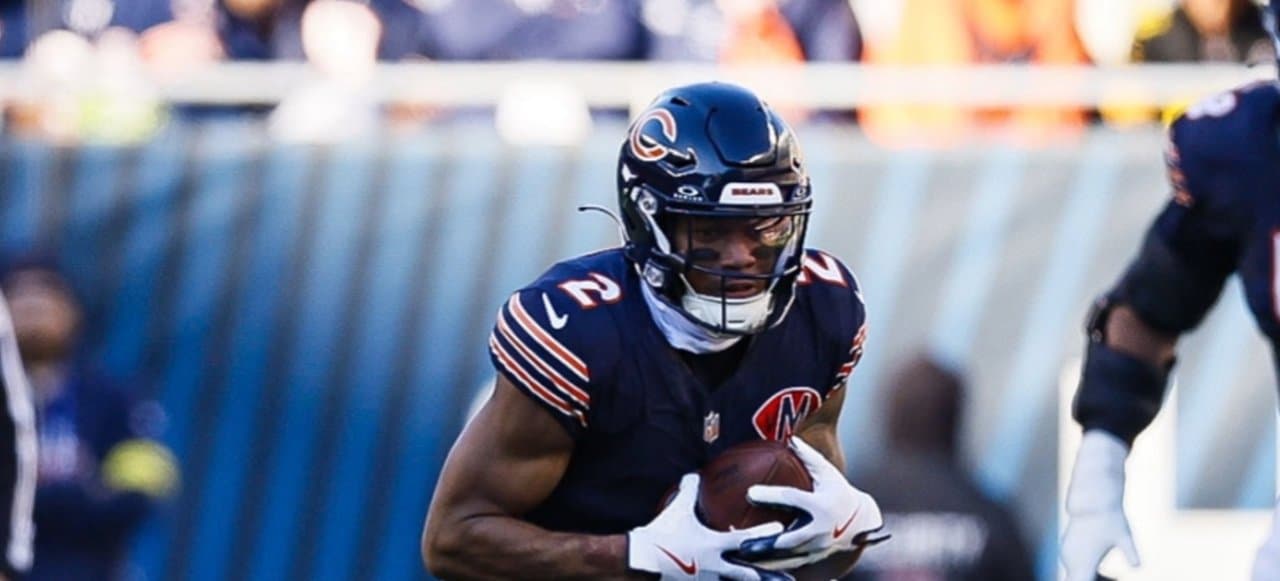
The most advanced behind-the-scenes talks involve moving wide receiver DJ Moore, currently at Chicago Bears, to Buffalo Bills. The team from the state of Nova York shows a willingness to give up a mid-range draft pick to secure the athlete. The main objective is to add firepower to the offensive system and keep the team at the top of the Conferência Americana.
Moore’s possible departure comes after a season with below-expected numbers in yards and receptions. The lower statistical performance coincided with head coach Ben Johnson’s first year in charge of Chicago’s team. The situation highlighted a tactical mismatch between the player’s characteristics and the newly implemented offensive scheme.
Aggressive strategies in land play and protection
Houston Texans chose not to wait for the official start of the signing period to reinforce its land game, demonstrating an aggressive stance in the market. The Texan franchise reached an agreement for the arrival of running back David Montgomery, who played for Detroit Lions. The transaction required the sending of draft capital, highlighting the team’s strategy of sacrificing future picks for a talent already proven in the league.
The addition of Montgomery seeks to bring consistency and immediate experience to the backfield, elements considered fundamental to success in high-pressure playoff games. On a parallel negotiation front, the Houston board also agreed to send the starting right tackle Tytus Howard to Cleveland Browns.
Ohio’s team acted extremely quickly to ensure the new blocker remained, signing a three-year contract extension worth US$63 million. The move resolves a critical lack in the Browns’s offensive line, ensuring high-level protection for its passer. Para to Texans, the exchange represents another step in the general restructuring of the squad and the efficient management of its financial assets.
Weight transfer in the defensive system
The balance of power between the conferences has suffered a significant shake-up with a high-profile trade involving elite defenders. The Kansas City Chiefs traded All-Pro cornerback Trent McDuffie to the Los Angeles Rams.
For the Califórnia franchise, the acquisition represents a massive investment in an attempt to maximize the current window of opportunity to win the title. The arrival of a defensive talent of this caliber immediately strengthens the team’s secondary.
It is clear that the organization’s priority is to have players ready for immediate delivery, to the detriment of future bets on college recruiting. The movement reflects the urgency of victories in a highly competitive market.
Meanwhile, Kansas City Chiefs acquires financial flexibility and draft picks to rejuvenate its roster. McDuffie’s departure opens up space in the salary cap, allowing the board to look for complementary pieces to keep the offensive dynasty operating at a high level.
Talent retention with exclusive assignments
The franchise tag deadline forced teams to make definitive decisions about their top free agents. Três big names in the offensive sector had their contracts compulsorily extended for another season. Atlanta Falcons used the resource to guarantee the permanence of tight end Kyle Pitts. In the same line of action, Dallas Cowboys applied the marking to wide receiver George Pickens, while New York Jets did the same to running back Breece Hall. The mechanism prevents athletes from testing the open market and offers boards an extended period, until July 15th, to negotiate long and definitive contracts.
A different dynamic involves the situation of quarterback Daniel Jones in Indianapolis Colts. The team chose to use the transition tag, which guarantees a value of US$37.833 million fully guaranteed to the player. Esta modality allows the athlete to negotiate with other franchises, but gives Colts the right to match any offer. Caso if the team decides not to cover a rival proposal, it will not receive compensation in draft picks. Essa strategy puts market pressure on a player’s true value, allowing the franchise to gauge outside interest before committing to the long term.
Contractual adequacy and payroll space
The release of players with heavy contracts is a common practice to adapt finances to the limit established by the league, requiring general directors to thoroughly evaluate the cost-benefit of each veteran in relation to the production delivered in recent seasons and the weight they represent in the organization’s coffers. New England Patriots, for example, organizes a complete overhaul of its receiver group, with Foxborough’s management team planning to release the experienced Stefon Diggs. The financial maneuver aims to alleviate payroll commitments and make room for the arrival of younger and cheaper parts for the sector. The movement to cut veterans extends throughout the league as a direct reflection of the new spending cap. Nomes of weight as the quarterback Kyler Murray, of Arizona Cardinals, top the list of probable exemptions. The list of athletes who should be free on the market also includes Aaron Jones and Javon Hargrave, from Minnesota Vikings, in addition to cornerback Marshon Lattimore, from Washington Commanders. The space created by these waivers allows teams to be aggressive in their pursuit of top-tier free agents, making financial flexibility franchises’ primary weapon during the early hours of the open market.
Final moves before official opening
The days before the official start of negotiations are marked by informal conversations and verbal agreements between agents and executives. The legal recruitment period serves to define the financial parameters of the contracts that will be signed later and registered with the league. Teams that can resolve their internal issues quickly gain a competitive advantage in attracting new talent. Advance planning avoids paying inflated amounts for rotation players, ensuring more assertive signings for the championship and ensuring that the squads arrive at the training camps with the main structure properly assembled and aligned with the tactical guidelines of the technical committees.