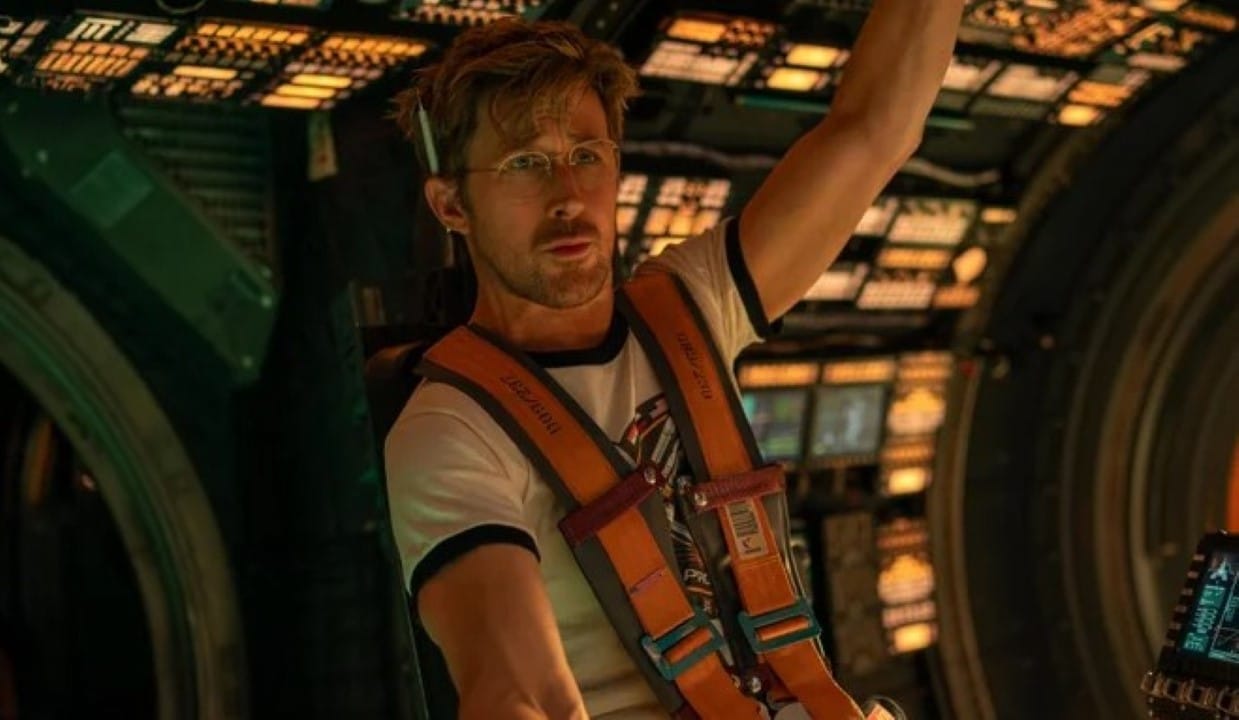
The film adaptation of the literary work by Andy Weir hits theaters on March 20, bringing a narrative focused on the survival of humanity in the face of an unprecedented astronomical threat. The feature film is directed by the duo Phil Lord and Christopher Miller, known for previous works that mix visual dynamism and engaging narratives. The plot follows the trajectory of a high school science teacher who suddenly finds himself at the center of a global rescue operation, needing to use his academic knowledge in a scenario of extreme isolation light years from our solar system. The production relies on a combination of scientific precision, visual effects developed for large format screens and performances focused on the psychological burden of space confinement.
Project development and behind the scenes
The process of adapting the book of the same name required meticulous work from screenwriter Drew Goddard, who sought to maintain fidelity to the concepts of physics and biology present in the original material. The production team prioritized the construction of practical scenarios integrated with digital extensions to provide greater realism to the interior of the spacecraft.
In addition to acting as the protagonist, the main actor also assumes the role of producer of the feature film, actively participating in creative decisions from the initial stages. Collaboration between the art departments and scientific advisors ensured that the equipment and control panels reflected plausible technologies for the near future.
Lonely awakening and memory loss
The narrative begins when Ryland Grace regains consciousness in a completely unfamiliar environment, surrounded by medical equipment and life support systems. The character suffers from amnesia induced by the long period of artificial coma, a predicted side effect of long-term interstellar travel.
With no immediate memories of his identity or mission, he begins to investigate the spacecraft’s compartments in search of answers. Aos few, the protagonist discovers that his two crewmates did not survive the journey, leaving him solely responsible for operating the complex machinery around him.
Through a series of logical deductions and improvised experiments with the available resources, the scientist is able to access the onboard computer records. Esses data reveals the coordinates of its current location, placing the ship in the Tau Ceti star system, at a distance of 11.9 light years from the planet Terra.
The global crisis and emergency recruitment
The script uses a non-linear structure, inserting strategic flashbacks that explain the catastrophic events that occurred before the launch of the mission. A cosmic anomaly, characterized by the proliferation of a microscopic organism that consumes stellar energy, caused a drastic decrease in the luminosity of Sol.
Faced with the imminence of an irreversible ice age and the mass extinction of the Earth’s biosphere, governments from several nations formed an unprecedented international coalition. Leadership of this global task force was handed over to Eva Stratt, a ruthless administrator played by Sandra Hüller, who was given absolute authority to mobilize resources and personnel.
The selection process for the mission required the identification of individuals with highly specific profiles, capable of withstanding isolation and solving complex problems under extreme pressure. The space program guidelines established the following fundamental criteria for crew:
– Especialização advanced in multiple scientific disciplines.
– Psychological Resistência proven in confinement simulations.
– Disposição to accept a trip with no guarantee of return.
– Capacidade to operate autonomous interstellar navigation systems.
Problem solving and scientific method
One of the differences of the work is the way in which science is treated not only as a background, but as the main mechanism for advancing the plot. The protagonist uses real concepts of thermodynamics, quantum mechanics and cell biology to fix flaws in the ship’s systems and analyze samples of the organism responsible for solar cooling. The direction chose not to oversimplify the technical dialogues, trusting in the actor’s ability to convey the urgency and fascination inherent in each new discovery made in the improvised laboratory on board.
The dynamic of trial and error permeates the entire second half of the feature film, illustrating human resilience in the face of seemingly insurmountable obstacles. Cada successful experiment represents a small victory against the clock, as calculations indicate that Terra has only a few decades left before temperatures fall to levels incompatible with agriculture. The cinematography of
Communication and interplanetary alliances
The narrative’s turning point occurs when the vessel’s sensors detect an anomaly in the orbit of Tau Ceti, revealing the presence of a second ship of non-human origin. Este chance encounter introduces an extraterrestrial being the human crew dubs Rocky, whose species faces an identical stellar crisis in its own planetary system. The interaction between the two survivors avoids the clichés of armed confrontations common in the genre, focusing entirely on the construction of a common language through mathematics and physics. The design of the creature and its technology was conceived to be radically different from anthropomorphic standards, requiring communication to occur through sound frequencies and physical models constructed from spare parts. Mutual collaboration becomes the only viable alternative for both, resulting in an exchange of technological and biological knowledge that increases the mission’s chances of success. Ryan Gosling’s performance in this segment is particularly notable, as he acts most of the time with elements that were inserted later in post-production, managing to establish a genuine emotional connection that supports the final dramatic arc of the cinematographic work.
Technical quality of photography
Capturing images using cameras certified for the IMAX format provides significant visual immersion, especially in sequences that detail the spacecraft’s anatomy and the astrophysical phenomena around Tau Ceti. The internal lighting of the sets was designed to reflect the psychological state of the main character, alternating between cold and clinical tones during moments of despair and warmer colors as the hope of success in the mission is consolidated.
Expert review assessment
The first screenings for press professionals, held in Londres at the beginning of March, generated largely positive reactions in relation to the balance between scientific rigor and entertainment. Especialistas in cinema highlight the directors’ ability to maintain narrative tension even in scenes focused purely on solving mathematical equations or analyzing chemical compounds.
The original soundtrack acts in a complementary way, avoiding intrusive melodies and focusing on atmospheric compositions that reinforce the feeling of spatial emptiness. The performance of the supporting cast, combined with state-of-the-art visual effects, positions the production as one of the studios’ main bets to attract adult audiences back to large-format theaters.
