
War between the USA, Israel and Iran causes chaos in aviation with the closure of airspace in the Middle East

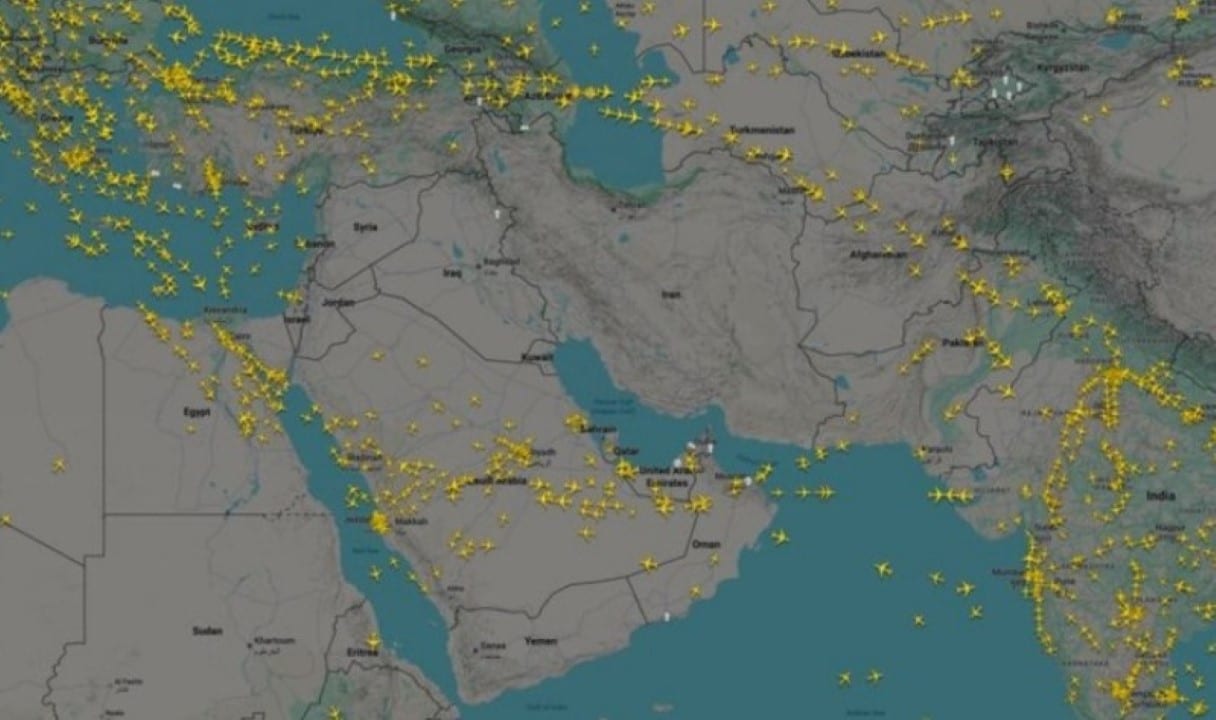
The conflict between Estados Unidos, Países as well as Irã, Iraque, Kuwait, Bahrein, Catar, Emirados Árabes Unidos and Essa measure generated a visible void on flight tracking maps, such as that shown by Flightradar24, where a vast central area of Oriente Médio appears without commercial activity. Companhias airlines had to change long-distance routes to avoid the risk zone, which increased flight time and fuel consumption.
Hundreds of thousands of passengers face travel disruptions, with thousands of flights canceled or delayed since the escalation began. Key Aeroportos, such as Dubai, the world’s largest international hub, and Doha, operate at minimum capacity or remain partially inoperative. Autoridades local and international agencies coordinate repatriation flights for stranded citizens, but the process occurs gradually and is limited by the persistence of restrictions.
Immediate impact on regional hubs
The airports of Dubai, Abu Dhabi and Doha concentrate most of the connections between continents. With the closure of airspace, these facilities have seen a drastic reduction in aircraft movement. Companhias like Emirates, Etihad and Qatar Airways have suspended or limited large-scale operations.
Flights to and from the region face mass cancellations. Dados indicate that more than 20,000 flights were affected in the first few days, with losses estimated at billions of dollars for the sector.
Alternative routes and increased costs
Planes that previously crossed directly between Irã and Golfo now follow longer paths. Corredores to the north, close to Cáucaso and Afeganistão, or to the south, via Arábia Saudita and Omã, receive diverted traffic.
These changes add extra hours to flights between Europa and Ásia. Fuel consumption rises significantly, increasing companies’ operating costs.
Experts point out that the central corridor functioned as a high-capacity bridge between continents. With the interruption, traffic is concentrated in narrow lanes, creating greater congestion and the risk of prolonged delays.
Challenges for crews and aircraft
Companies need to relocate crews and aircraft to maintain operations. Uncertainty about the duration of the conflict complicates scale and maintenance planning.
Aviation insurance records increases due to high risk. Algumas routes require extra approvals from countries flown over, which requires additional time for authorizations.
Similar precedents in aviation
Past situations show patterns of adaptation. Após the conflict in Ucrânia in 2022, flights between Europa and Ásia began to avoid Russian airspace, adopting routes through Pacífico or Alasca.
One example involves Japão Airlines flights from Tóquio to Londres, which previously crossed Rússia and now follow longer paths. Isso results in an increase of up to two and a half hours per section, with an increase of around 20% in fuel consumption.
The current crisis in Oriente Médio follows a similar pattern, but affects a region more central to global long-distance traffic.
Effects on air cargo and supplies
Cargo transportation is also impacted. Sensitive Produtos, such as medicines and electronic components, depend on fast flights through Oriente Médio.
Global air cargo capacity fell by around 18% in the opening days of the conflict. Isso puts pressure on supply chains in various sectors.
Companies adjust loads and prioritize viable routes, but the delay accumulates logistical losses.
Risk monitoring and planning
Airlines maintain advanced systems to monitor geopolitical tensions. Equipes of operations prepare alternative plans even before official closures.
When restrictions occur, adjustments to flight plans, fuel and crew take place in a coordinated manner. However, prolongations of the crisis may overload these mechanisms.
The sector continues to monitor the evolution of the conflict to resume normal operations as soon as conditions allow.



