Chinese automaker BYD considers entry into Formula 1 to boost hybrid engine technology
Electric and hybrid vehicle manufacturer BYD has begun internal studies to evaluate the feasibility of joining the Fórmula 1 grid. The strategic move’s main objective is to use the global showcase of the main category of world motorsport to expand brand recognition outside the Asian continent. The company’s management sees the competition as a rigorous testing platform for the development of new automotive technologies.
The company’s interest coincides with the profound change in the competition’s technical regulations, scheduled to come into force in the following season. The new guidelines established by Federação Internacional of Automobilismo require a complete redesign of power units, creating a scenario of technological equalization that attracts automakers with no recent history in the category. The move represents an opportunity for companies that have mastered automotive electrification.
Unlike its activities focused strictly on electric passenger vehicles in certain markets, the corporation seeks to validate its expertise in high-performance hybrid systems. Presence in a global championship allows it to demonstrate the reliability and efficiency of its components under extreme conditions of temperature and mechanical stress, subsequently transferring these innovations to mass production cars sold globally.
On the same topic: Japanese automaker updates Honda City lineup with focus on hybrid engines and new technologies
Changes in technical regulations attract new automakers
The technical specifications defined for the near future of the category determine that internal combustion engines will run exclusively on one hundred percent sustainable fuels. Além In addition, the architecture of the power units will undergo a drastic change with the removal of the complex thermal energy recovery system, known as MGU-H. On the other hand, the kinetic energy recovery capacity, managed by the MGU-K, will be significantly expanded, making electrical power represent practically half of the total energy generated by the vehicle during races.
This technical restructuring reduces entry barriers for new manufacturers, as the previous thermal system required years of research and development to reach the level of efficiency of already established teams. Para a company with the profile of BYD, which has extensive experience in manufacturing high-density batteries and efficient electric motors, the new regulation offers familiar ground. The application of prior knowledge in energy management puts the automaker in a favorable technical position to develop a competitive hybrid system in a short space of time.
Entry strategies and operating costs in the category
Entering the competition requires the definition of a clear business model, with two main routes currently being analyzed by the automaker’s leadership. The first alternative involves the acquisition of an existing structure on the grid, which would guarantee physical facilities, a wind tunnel and a team of engineers accustomed to the dynamics of the championship.
The second option is to act exclusively as a supplier of power units for independent teams. Este model reduces operational and logistical costs, allowing the company to focus its financial and human resources entirely on the development of the hybrid engine and energy recovery systems.
Whichever path is chosen, the financial investment required reaches hundreds of millions of dollars. The championship organization establishes strict fees for the entry of new participants, aiming to protect the commercial value of the ten teams that currently make up the grid and guarantee the financial stability of the sport.
The motorsport regulatory body maintains a careful selection process for approving new projects. Technical capacity, financial support and long-term commitment are thoroughly assessed before granting an official license to compete in the world championship.
More on this story: Drivers press and Formula 1 revises qualifying training rules for the new generation of cars
Alternatives in motorsport and the weight of the world championship
In parallel with studies on the main single-seater category, the manufacturer is also analyzing the possibility of joining the Campeonato Mundial of Endurance. The competition, whose main event is the traditional long-distance race at França, has regulations that allow for a wide variety of hybrid configurations and attracts several prestigious international manufacturers.
See Also

Alexander Albon garante permanência na Williams até 2027 e impulsiona planos da equipe na Fórmula 1
Gabriel Bortoleto detalha desafios da pista de Zandvoort no GP da Holanda de Fórmula 1

Lucas di Grassi, campeão da Fórmula E e ex-F1, anuncia adeus às pistas após três décadas
Despite the technical appeal of endurance racing, the marketing return and global audience of the open-wheel category are considerably higher. Continuous media exposure over more than twenty weekends a year provides an unparalleled visibility platform for a brand looking to consolidate its presence in competitive Western markets.
Growth of the Chinese market drives corporate decisions
The context of the Asian domestic market plays a fundamental role in the automaker’s strategy. The return of the Grande Prêmio of
Learn more: BYD recalls 89,000 Qin Plus units in China due to serious battery failure
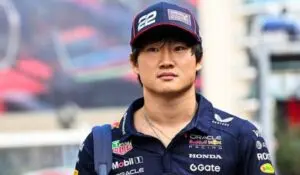
The presence of Guanyu Zhou as a starting driver in one of the teams on the current grid catalyzed the attention of the Chinese media and consumers. The pilot became a vector for popularizing the category in a country that represents the largest automotive market in the world, creating a commercial environment conducive to local investment in the sport.
By aligning its brand with a competition that gains traction in its country of origin, the company strengthens its institutional image before the government and local consumers. Simultaneamente, uses this solid foundation to project an image of technological innovation and cutting-edge industrial capacity to potential buyers in Europa and Américas.
Hypercar development validates cutting-edge technology
The intention to enter elite motorsport gains credibility through the recent launches of the manufacturer’s high-performance division. The Yangwang U9 model, an electric hypercar developed entirely by the company, recently reached the mark of 496.22 kilometers per hour in official tests, establishing new speed parameters for the brand’s production vehicles. The development of this project demonstrated the ability of in-house engineering to deal with complex challenges in aerodynamics, thermal management of batteries under extreme discharge and vector traction control. The transition of the knowledge acquired in the design of a street hypercar to the competition environment represents a natural evolution in the company’s research and development cycle, proving that the corporate structure has the necessary technical resources to face traditional automakers in an environment of high technological demand.
Learn more: Serious battery failure leads to recall of almost 90,000 BYD cars in China
Sustainability and the future of motor racing
The championship organization’s goal of zero carbon emissions by the end of the decade is directly aligned with the automaker’s environmental governance guidelines. The use of synthetic fuels and the greater dependence on electrical energy in races provide the ideal pretext to justify high investments to shareholders, transforming the track into a sustainability laboratory.
Next steps in negotiations with the international federation
The timeline for developing a competitive power unit requires that corporate decisions be made quickly. The cycle of design, manufacturing, dynamometer testing and integration into the chassis demands years of uninterrupted work, forcing the automaker to formalize its intentions with regulatory bodies within a short period of time to enable its debut in the new regulatory cycle.
The global automotive market follows behind-the-scenes movements closely. Confirmation of the Asian manufacturer’s entry would place the company in direct confrontation on the tracks with historic brands in the sector, promoting a technological dispute that reflects the current reconfiguration of the global automotive industry and the accelerated transition to more efficient propulsion systems.