
Indiana issues tornado warning for more than half of the state this Wednesday, March 11, with intense winds across the US
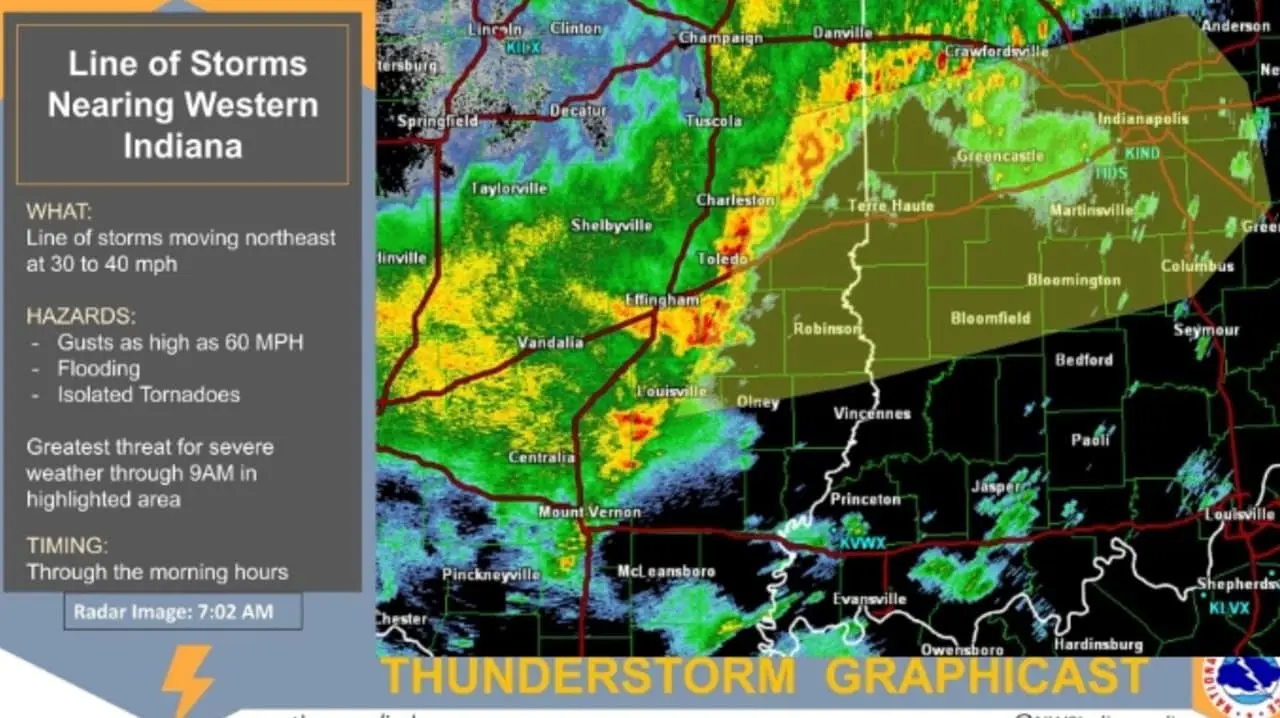
More than half of the state of Indiana was under a tornado warning this Wednesday, March 11, in a scenario of severe weather conditions that mobilized authorities and the local population. The situation demanded maximum attention from residents, who were advised to constantly monitor weather reports and prepare for the eventuality of more intense phenomena. The affected regions included a vast central area, as well as parts of the neighboring states of Illinois, Kentucky and Ohio, reinforcing the comprehensive nature of the severe weather front. The warning period extended until midday, with a high winds warning valid until late afternoon, indicating the complexity and duration of the unfolding weather event.
Authorities’ main concern was the rapidly evolving conditions, which could turn a warning into a tornado warning in a matter of minutes. The distinction between these two terms is crucial to the public response, and clearly disseminating this information has become a priority. The National Weather Service emphasized the need to have an individual and family safety plan, providing guidance on the best shelters and actions to take in the event of a confirmed tornado. Advance preparation was reiterated as the best defense against the risks associated with these unpredictable and potentially devastating events.
Communities across the Indiana area have demonstrated resilience, with many residents actively checking information and sharing safety guidance. Coordination between emergency services and effective communication with the public were essential elements in managing the situation and minimizing possible damage. March 11, 2026, therefore, was marked by constant vigilance and heightened awareness of the dangers of extreme weather, serving as a vivid reminder of the strength of nature and the importance of preparedness.
Understanding weather alert and warning
The terminology used by meteorological services is essential to guide the population in times of severe weather. A “tornado warning” means that atmospheric conditions are ripe for tornadoes to form in a certain region, but there has not yet been a confirmed sighting. Durante an alert, residents should remain in a state of vigilance, monitoring the news and the sky, and prepare to act quickly if the situation worsens. Esse attention span can last several hours, giving people time to review their emergency plans.
More on this story: Money on the road raises safety alert and discussion about fentanyl in banknotes
On the other hand, a “tornado warning” requires an immediate and urgent response. Ele is issued when a tornado has actually been sighted by observers in the field or detected by weather radar, indicating that the threat is imminent and ongoing. Neste scenario, there is no time for hesitation; immediate action to seek safe shelter is imperative. Tornado warnings are typically short in duration, generally covering periods of 15 to 30 minutes, or until the tornado’s path leaves the danger area.
Differentiating between alert and warning is vital to avoid unnecessary panic and ensure the right actions are taken at the right time. Enquanto the alert requires preparation and vigilance, the warning requires the execution of the security plan. The national weather service emphasizes that understanding this distinction can be decisive in protecting lives and minimizing damage, enabling citizens to react appropriately to each level of threat.
Indian regions under maximum attention
Read also: Heavy rains put New York on flash flood warning with up to 2 inches per hour
The vast extent of the tornado warning on Wednesday, March 11, covered a significant portion of the Indiana state, calling for widespread vigilance. Condados in all directions from the center to the borders with Illinois, Kentucky and Ohio were included in the area of concern. Essa Wide coverage highlighted the potency of the weather system in question and the need for a coordinated response across multiple jurisdictions.
Specifically, dozens of counties were listed under alert, including Adams, Bartholomew, Blackford, Boone, Brown, Clark, Dubois, Fayette, Floyd, Franklin, Gibson, Jay, Jefferson, Jennings, Johnson, Knox, Owen, Parke, Perry, Pike, Posey, Switzerland, Union, Vanderburgh, Vermillion, Vigo, Warrick, The geographic diversity of these counties illustrates the breadth of the impacted area, which spanned agricultural, urban and suburban regions.
Crucial recommendations for the safety of the population
Personal and family safety during a tornado event largely depends on prior preparation and knowledge of the appropriate measures to be taken. The National Weather Service has put together a comprehensive preparedness guide for all types of severe weather, and the guidelines for tornadoes are clear and imperative. The first and most vital recommendation is to have a security plan in place before any threat emerges.
This plan should include identifying a safe location in your home, ideally a basement or, in the absence of one, an interior room without windows, such as a bathroom or closet. The structure of these locations offers the best protection against flying debris and structural collapse. Regular practice of the plan, even if simulated, helps ensure that all family members know exactly what to do when time is critical, reducing stress and increasing the effectiveness of the response.
Learn more: Snowfall and high wave warnings issued for Ishikari Sorachi Shiribeshi regions in Hokkaido
For those who live in mobile homes or lighter structures, the recommendation is to look for the nearest sturdy building. Casas furniture is particularly vulnerable to the force of tornadoes and should not be considered a safe shelter. If you are outdoors and cannot reach a building, seeking shelter in a vehicle, fastening your seat belt and driving to a sturdy building is an alternative, although the best option is always a secure, fixed shelter.
How to prepare for the arrival of a tornado
Tornado preparedness goes beyond knowing where to take shelter; it involves a series of proactive steps that can save lives and mitigate harm. One of the first actions is to create an emergency kit with essential items. Este kit deve incluir água potável, alimentos não perecíveis, um rádio a pilhas ou manivela, lanternas, pilhas extras, kit de primeiros socorros, apito para sinalizar, máscara contra poeira e cópias de documentos importantes.
In addition to the physical kit, it is essential to develop a family communication plan. In emergency situations, cell phone networks may become overloaded or inoperative. Definir An out-of-town contact where all family members can call and leave messages can be an effective way to make sure everyone knows they are safe. Ensaiar this plan periodically ensures that all family members are familiar with it.
Home maintenance also plays an important role in staging. Reforçar braced doors and windows, pruning trees to remove dry or weak branches that could fall, and cleaning gutters are measures that can reduce the risk of structural damage during high winds. Embora These actions do not guarantee complete protection against a direct tornado, they can increase the property’s resistance to severe storms.
Staying informed is the basis of all preparation. Além of the alerts and warnings issued by meteorological services, it is advisable to have several reliable sources of information, such as weather apps, local radio and television, which can transmit real-time updates. Estar being aware of forecasts and current conditions allows decisions to be made in advance and without the stress of a last-minute emergency.
The impact of strong winds and their consequences
In addition to the threat of tornadoes, Wednesday, March 11, brought with it a warning of high winds, with speeds expected between 24 and 40 km/h and gusts that could reach 72 to 80 km/h. Tais winds, although not as destructive as a tornado, are capable of causing considerable damage and significant disruption to daily life. Objetos loose outside homes, such as garden furniture, trash cans and decorations, can be easily moved and transformed into dangerous projectiles, posing a risk to both people and property.
On the same topic: Japan prepares for intense approach of two typhoons with rain warnings
One of the most common impacts of strong winds is interruptions in the electricity supply. Galhos of trees can be uprooted and fall on wiring and poles, resulting in power outages that affect thousands of homes and businesses. Essas outages can last from a few hours to several days, depending on the extent of the damage and the complexity of the repairs. Power outages not only cause inconvenience, but can also compromise heating, cooling and communications systems, making them especially problematic for individuals who rely on electrical medical equipment.
The importance of family emergency plans
In the midst of severe weather scenarios, the existence and practice of family emergency plans are essential pillars for the safety and resilience of communities. Esses plans go far beyond simply identifying a safe location within the home; they encompass a comprehensive strategy for dealing with the uncertainty and chaos that can accompany a natural disaster. An effective plan details meeting points for the family if they become separated, either at an immediate safe location or at a landmark outside the neighborhood. Além In addition, it includes defining an out-of-area emergency contact, someone who family members can reach out to for communication as local lines may be down. Ter A prepared emergency kit, with basic supplies to survive for at least 72 hours without outside assistance, is another critical component. Esse kit must be easily accessible and regularly reviewed to ensure that items are in good condition and within their expiration date. The plan should also consider the specific needs of each family member, including seniors, young children, people with disabilities and pets, ensuring everyone has a clear protocol to follow. Regular, even annual, practice of emergency plan simulations helps to internalize the procedures, transforming actions into reflexes and minimizing panic when the threat is real. Esta proactive preparation is what ultimately strengthens a family’s ability to withstand and recover from extreme events, transforming fear into readiness.
Continuous monitoring and information sources
Monitoring weather reports from official sources is the best way to stay safe during adverse weather events. The National Weather Service and local radio and television stations are reliable channels for the most up-to-date information about alerts, warnings and forecasts. Using weather apps on smartphones, set to receive push notifications, can also be a valuable tool for always being aware of changing weather conditions.
More news in News (EN)
See more → Samsung releases new system update with new features for Galaxy Watch 4 users
 Digital retail reduces the value of the Galaxy S25 5G smartphone with bank bonuses and device exchange
 Amazon’s wireless CarPlay adapter has a 50% discount and high approval ratings from drivers
 Zach Cregger’s new Resident Evil ignores games and focuses on an unprecedented story with new characters
 Rumor suggests that Nintendo is preparing a special edition of the Switch 2 with a remake of Ocarina of Time
 Apple accelerates production of the iPhone 17e and develops new Air model with dual camera system
 Epic Games platform releases twelve high-budget games at no permanent cost for PC users
 PlayStation 5 Pro price drop accelerates digital retail sales and eliminates global stocks
 New Galaxy Watch 9 firmware appears on server and confirms progress in software development
 Apple’s commemorative project tests cell phone with 1.1 millimeter edge and curved screen for 2027
 New Apple system update optimizes urgent task management for iPhone users
 Leak details hardware of the new portable PlayStation with superior graphics to the Xbox Series S
More news on Mix Vale
- 1Colby Minifie confirms Ashley Barrett’s powers in The Boys season five
- 2Napoli x Milan in Serie A with confirmed lineups and where to watch live
- 3New battery test puts Galaxy S26 Ultra ahead of iPhone 17 Pro Max in global ranking
- 4Research reveals that parents are unaware of how their children use artificial intelligence
- 5Oppo officially launches the Find X9 Ultra worldwide with Hasselblad lenses and robust battery
- 6Tim Cook reveals new iPhone and iPod prototypes in celebration of Apple’s fiftieth anniversary
- 7New edition of foldable smartphone brings gold finish to Winter Games competitors
- 8Android system receives native Gemini Nano 4 integration for offline processing on smartphones
- 9Samsung updates QuickStar module and expands visual control of the panel in the One UI 8.5 interface
- 10Leak reveals Lords of the Fallen and Sword Art Online in April’s PS Plus Essential catalog