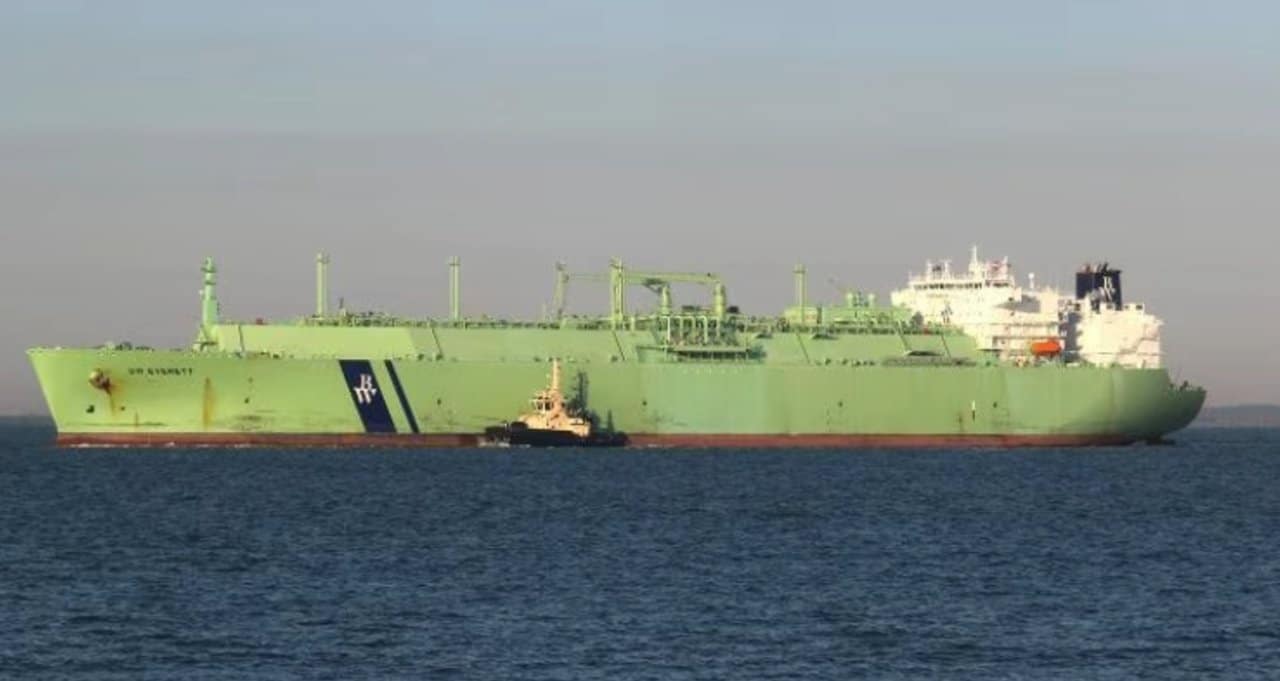
The Russian oil tanker Arctic Metagaz, loaded with more than 60 thousand tons of liquefied natural gas (LNG), remains adrift in Estreito of The vessel, which suffered significant damage after an explosion, is inoperative and without a crew, generating a scenario of high complexity and concern among maritime and environmental authorities. Este incident highlights the serious risks of a potential ecological disaster, given the substances on board and the vessel’s sensitive location in international waters.
The situation is closely monitored by Marinha Italiana, specialized anti-pollution vehicles from Ministério, Meio Ambiente and Segurança Energética (MASE), and an aircraft from Guarda Costeira. The vessel fluctuates between Malta and Lampedusa, and its current condition, without responding to commands, increases the urgency of containment and risk analysis operations. The evacuation of the 30 crew members has already been carried out, a crucial procedure to guarantee human safety, but attention is now fully focused on the colossal challenge of avoiding an environmental catastrophe.
Imminent risk and the vast cargo on board
On board the Arctic Metagaz, in addition to the 60 thousand tons of liquefied gas, there are approximately 900 tons of diesel oil. The combination of these two substances poses a multifaceted threat. An LNG leak could generate cryogenic clouds, capable of asphyxiating marine life over a vast area, in addition to the risk of uncontrollable fires, given the gas’s high flammability.
At the same time, the diesel oil spill would result in serious water and air pollution, affecting coastal ecosystems, beaches and local fisheries, with long-term environmental and economic consequences. The Maltese authorities, in recognition of the seriousness of the threat, have already issued a statement requiring all vessels in transit to maintain a minimum distance of five nautical miles from the damaged vessel.
Geopolitical implications and the “parallel fleet”
In addition to the environmental and maritime security aspect, the incident with the Arctic Metagaz carries significant political and geopolitical implications. Rússia publicly accused Ucrânia of having carried out a “terrorist attack” against the ship, although Kiev did not claim responsibility for what happened.
This episode takes on even more complex contours due to the fact that the Arctic Metagaz is included in the list of ships sanctioned by the Estados Unidos and the União Europeia. The vessel is considered part of the so-called Russian “parallel fleet”, a group of ships used to circumvent restrictions imposed by the G7 on the sale of energy products. The exact ownership of the ship is uncertain, and insurance coverage, crucial in cases of major maritime accidents, remains unknown, adding a layer of difficulty to managing the crisis.
Challenges in recovery and mitigation
The possibility of shipping the Arctic Metagaz to a safe location after the explosion that damaged it between March 3 and 4, in the waters between Líbia and Malta, is considered practically impossible by the authorities. The size of the steel colossus, 277 meters long, and the highly volatile nature of its cargo make any towing or rescue operation extremely risky.
Emergency scenarios and contingency plans
Emergency response teams are currently drafting and reviewing contingency plans for a range of scenarios, from a diesel spill to an uncontrolled release of LNG. The Estreito region of Sicília is one of the busiest shipping lanes in the Mediterrâneo and is home to fragile marine ecosystems, which amplifies the severity of any incident.
The formation of LNG vapor clouds, although invisible, can be extremely dangerous. The gas is denser than air in its cryogenic form and can accumulate in depressions, posing a risk of asphyxiation and explosion if it encounters an ignition source. Protection of marine life, including protected species and breeding areas, is a top priority.
The voice of authorities and local concern
Filippo Mannino, mayor of Ilhas Pelágias, expressed some relief with the management of the situation by the Italian authorities. “The situation is being managed by the Italian authorities; at this moment, I feel calmer”, declared Mannino. However, tranquility is relative, as the threat persists as long as the ship is not stabilized or removed. The concern of the local population, especially Linosa, which is just a few kilometers from the vessel, is palpable.
Fishing and tourism, economic pillars of the region, would be severely affected by an environmental disaster, with impacts that would last for years. Coordination between the various government bodies and the nations involved will be a determining factor in minimizing risks and ensuring an effective response if the worst-case scenario materializes. The international community is eagerly following developments in this complex and dangerous maritime situation.