
Truck drivers’ strike gains strength with rise in diesel prices and lack of supervision

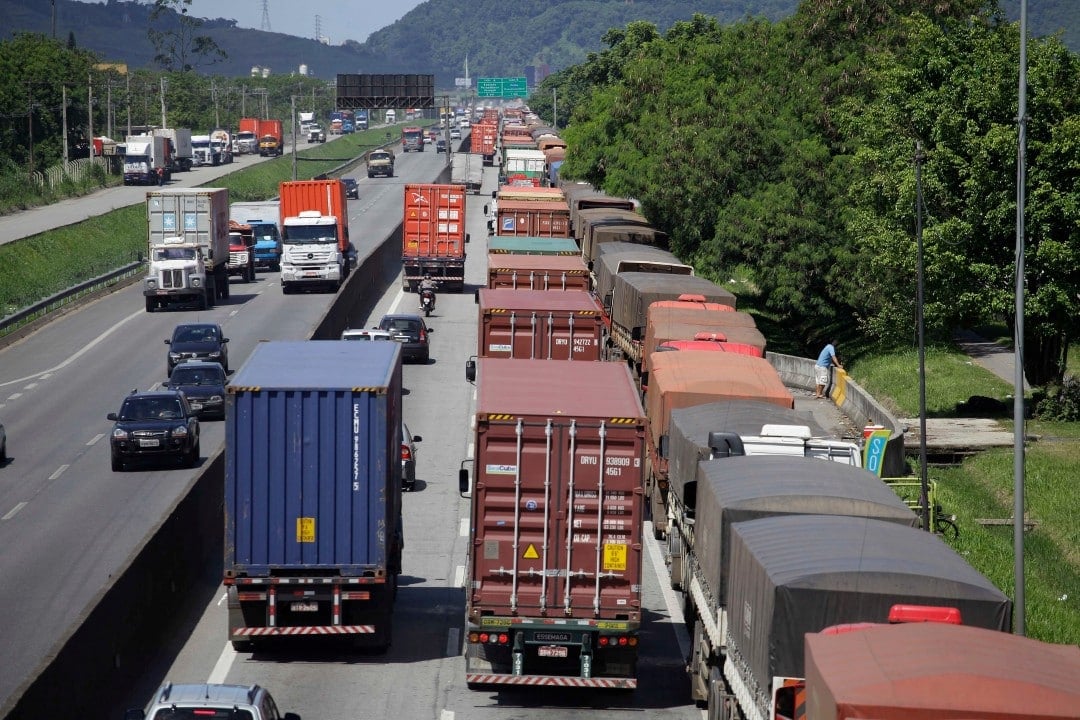
Truck drivers in several regions of the Brasil are organizing an imminent national strike, motivated by the persistent rise in diesel costs and widespread dissatisfaction with government initiatives to contain escalating fuel prices. The category, which includes both self-employed people and those hired by companies, decides to interrupt activities as a way of pushing for more effective solutions.
Wallace Landim, known as Chorão and president of Associação Brasileira of Condutores of Ele highlighted that the mobilization is not just restricted to independent drivers represented by their association, but also covers the so-called “celetistas”, who work under employment contracts with transport companies across the country.
There is still no official date defined for the start of the strike, but sector leaders assure that the decision to stand by has already been made. The current stage consists of coordination with regional entities, cooperatives and transport companies to align the exact date and maximize adherence to the movement, aiming for a significant impact on supply chains and the economy.
Diesel increase cancels emergency package
One of truck drivers’ main complaints lies in the perception that government measures to make diesel cheaper were ineffective. Poucos days after the announcement of a tax waiver package aimed at mitigating the impacts of the international crisis on fuel prices, Petrobras carried out an adjustment. Este increase in refineries, according to drivers, completely nullified the benefits of the tax reduction, leaving the category without the expected relief in operating costs.
Wallace Landim openly expressed the category’s disappointment, stating that “what has been done so far has served no purpose.” Ele criticized the government’s stance, suggesting that authorities were already aware of the imminent increase in Petrobras. Para Landim, this sequence of events resulted in, in practice, no cost reduction, generating a demand for concrete and lasting guarantees for the predictability of the sector.
Demand for effective measures and respect for the law
Truck drivers demand that the government adopt other measures to alleviate the final price of diesel and improve working conditions. Entre the main demands include the imposition of respect for the minimum price established in the freight table by the contractors, as well as the exemption from toll charges for vehicles that travel unladen. The implementation of these measures is seen as fundamental to the financial sustainability of transport companies.
The category also calls for effective compliance with the legislation that establishes minimum floors for road freight transport. Lei 13,703 of 2018, created after a major strike in 2018, established the national policy of minimum freight floors, but truck drivers argue that it is not applied in practice. The lack of supervision allows many to accept values below the minimum, due to market pressure and lack of control.
Chorão highlighted that the current fight is for the application of the law that already exists, but “there is no enforcement at the end”. Ele added that Agência Nacional of Transportes Terrestres (ANTT), responsible for supervision, already has the necessary means to electronically lock the minimum cost spreadsheet, ensuring that fair values are practiced throughout the national territory.
Scope of mobilization and government alert
Abrava, chaired by Wallace Landim, brings together approximately 35 thousand associated truck drivers, which demonstrates the entity’s mobilization capacity. On a national level, estimates from the sector itself point to the existence of around 790,000 self-employed truck drivers and approximately 750,000 drivers hired under the CLT regime. Esses numbers highlight the potential impact of a large-scale shutdown.
The mobilization for the national strike is noticeable in several regions of the country, including strategic hubs such as Santos (SP), in addition to the states of Rio Grande, Sul, Santa Catarina, Distrito Federal and Goiás. Essa capilaridade geográfica evidencia a amplitude da insatisfação e a articulação entre diferentes grupos de transportadores para formar uma frente unificada contra as atuais condições econômicas.
The federal government has been closely monitoring the signs of a possible shutdown, which had already been identified even before the emergency diesel package was announced. Essa attention demonstrates concern about the developments of a movement that, historically, generated serious economic and social impacts in Brasil. The search for dialogue and the attempt to avoid a strike are priorities for the authorities.
Dialogue with skepticism and persistent difficulties
Members of Casa Civil, Presidência, República contacted Wallace Landim on Monday, March 16, to discuss the situation and seek a solution to the impasse. Contudo, among truck drivers, skepticism prevails regarding the effectiveness of these negotiations. Há a feeling of tiredness with the process of sitting at the table with the government without obtaining concrete resolutions to the difficulties faced.
Landim expressed this feeling of disappointment, stating that, despite contact from Casa Civil and the possibility of further dialogue, “the difficulties are the same and nothing can be resolved”. Para self-employed truck drivers, who directly bear the costs of fuel, vehicle maintenance and tolls, the combination of expensive diesel and pressured freight rates creates a relentless and unsustainable situation in the long term.
Given the scenario of high costs and lagged revenues, the strike is seen as one of the few tools available to press for significant changes. The category seeks measures that guarantee greater cost predictability, allowing road freight transport work to be economically viable and fair for everyone involved in the logistics chain.
Escalation of oil and governors’ refusal
In the context of the international escalation in oil prices, driven by the war spreading over Oriente Médio, state governments decided to deny the request of President Luiz Inácio Lula of Silva to reduce the ICMS on diesel. The governors justified their refusal in an official note released on March 17, arguing that they had already suffered substantial losses from previous state tax cuts, forced by the government of Jair Bolsonaro.
Furthermore, the states accuse distributors and gas stations of not passing on any price drops to the end consumer, which would nullify the positive impact of a reduction in ICMS. Essa divergence between the federal government and the states adds another layer of complexity to the search for solutions to the cost of diesel, which continues to be a critical point for the transportation sector. Diesel A, a fuel that leaves refineries before the mandatory blend of biodiesel, had an increase of R$0.38 per liter announced by Petrobras, worsening the situation for transporters.



