Kirato Teshimori, Hokushō captain, inspires future generation in the 98th Koshien and new DH By Luís Henrique Costa
5 min read
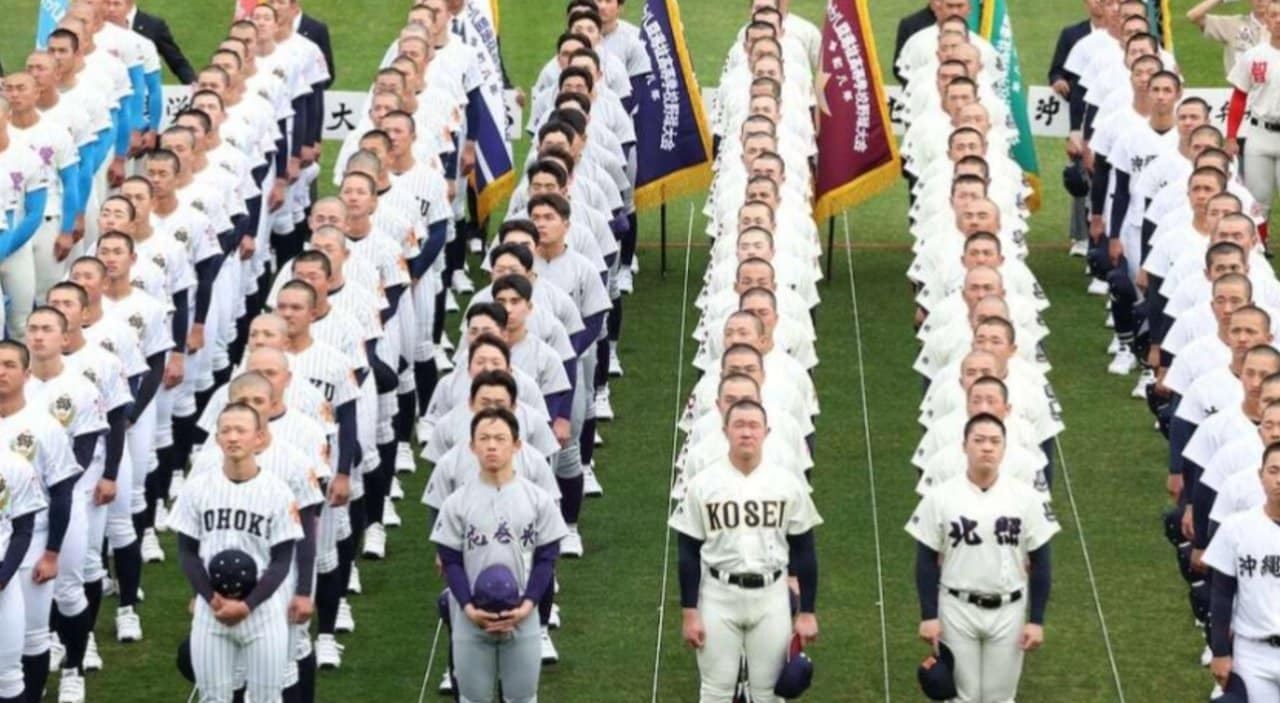 |
The 98th Torneio Nacional of Beisebol of Ensino Médio had its official opening ceremony at Estádio Koshien, in Nishinomiya, Hyogo province. The event, held in an atmosphere of great expectation, marked not only the beginning of a fierce competition, but also the introduction of a significant rule change: the designated hitter (DH) system.
Emotion took over those present as the 32 participating teams paraded in order of their regions, starting from the south and heading north of Japão. Liderando marching was the team of Yokohama, of Kanagawa, who were looking for an unprecedented second championship, demonstrating the intensity and tradition that surround this championship.
The last teams to enter the field were Teikyo, from Tóquio, and Okinawa Shogaku, who would have their debut clashes right after the ceremony. Essa decision was strategic to minimize the impact on the athletes’ physical conditioning, ensuring that they could perform at their best level from the first throw.
Oath Marcante and Visão of Futuro on Koshien
The highlight of the ceremony was the players’ oath, eloquently delivered by Kirato Teshimori, captain of Hokkaido’s Hokushō team. Suas words resonated through the stadium, expressing deep gratitude to the predecessors who shaped the rich history of Japanese baseball. Ele highlighted the legacy built by generations of athletes who contributed to elevating Japão to the status of “baseball kingdom.”
Teshimori articulated the joy and honor of being part of an event of such magnitude, promising that he and his teammates would cherish the moment forever. The captain emphasized their commitment to fight with dignity and honor, with the clear goal of becoming an inspiration and a “dream for the next generation” of young baseball players. The statement reinforced the sporting spirit and social responsibility associated with the tournament.
The Hokushō captain’s speech was not only emotional, but also set the tone for the 13 days of competition that would follow, including the strategically scheduled rest days after the quarterfinals and semifinals. The expectation was that the grand final, crowning the champions, would be held on March 31, if the schedule ran without unforeseen weather or other postponements.
To Chegada of Rebatedor Designado: Mudança Tática Histórica
The introduction of the designated hitter (DH) system in the 98th Torneio Nacional of Beisebol of Ensino Médio represented one of the greatest tactical innovations in the competition’s recent history. Pela For the first time, teams were able to use a player exclusively as a hitter in place of the pitcher, without the latter needing to take the bat. The measure generated extensive discussions among coaches, analysts and fans.
Historically, the DH rule is common in professional baseball, especially in Liga Americana, and in many college leagues. Sua arrival at Koshien aimed to enhance the teams’ attack and, simultaneously, protect the pitchers, who are often not excellent hitters. The decision to implement it at the high school level reflects an adaptation to modern trends in the sport.
The tactical impacts of this change are varied. Para the coaches, the rule offers unprecedented flexibility in assembling the lineup. Eles can now include a stronger hitter in the lineup without sacrificing the pitcher’s performance on the mound, potentially increasing run production and making games more dynamic and unpredictable. Além In addition, the health of young pitchers, who face rigorous physical demands, can benefit.
Strategies and Desafios with Nova Regra
The adoption of DH has not come without its challenges and debates. Muitos technicians expressed different views on how the system would be used. Alguns, like coach Hiroshi Sasaki, of Essa conservative stance reflects an appreciation of the essence of traditional Japanese baseball.
On the other hand, teams with a talented pitching corps, but with less offensive capacity, were able to benefit enormously. The ability to insert a star hitter who does not have a primary defensive position allows coaches to further explore the depth of their roster and optimize performance on both sides of the game. Isso could level the playing field between schools with different player profiles.
The rule also adds a layer of complexity to game strategies. Technicians now need to consider:
The Palco Koshien and Suas Lendas
Estádio Koshien is more than a gaming venue; is a shrine to Japanese baseball. Desde its foundation, witnessed the rise of countless sports legends and became the epicenter of the dreams of thousands of young athletes. The Torneio Nacional of Beisebol of the Ensino Médio, held annually in spring and summer, is an event that paralyzes the country, with extensive broadcasts and intense journalistic coverage.
The atmosphere at Koshien is unique, with passionate fans, marching bands and rituals that are part of the tournament culture. Every year, new stories of overcoming, determination and talent emerge, reinforcing the importance of baseball as a pillar of Japanese sporting identity. The quest for the title in Koshien is a journey of sacrifice, discipline and camaraderie that shapes the character of young players.
Impact on Formação of Atletas and Cenário Esportivo
The introduction of DH in Koshien, although a technical change, could also have implications for the training of future athletes. While on the one hand it protects pitchers, on the other hand it can encourage specialization earlier, with players focusing exclusively on hitting or pitching. Essa discussion is relevant to the long-term development of baseball in Japão, which traditionally values complete players.
Still, the tournament continues to be a hotbed of talent, attracting scouts from professional and college teams. The performance in Koshien can define a player’s career, transforming him from a teenager into a national hero. Kirato Teshimori’s promise to be a “dream for the next generation” is not just rhetoric; it’s a genuine aspiration for many young men who see high school baseball as a path to a bright future.
With the opening ceremony and players’ swearing-in completed, the spotlight turned to the field, where the teams were ready to compete for every pitch, every hit and every run. The 98th Torneio Nacional of Beisebol of Ensino Médio, with its innovations and traditions, promised to deliver yet another memorable chapter in the rich saga of Japanese baseball.