
Neymar’s goal from a penalty kick defines a draw between Santos and Internacional in the Brasileirão By Luís Henrique Costa
6 min read
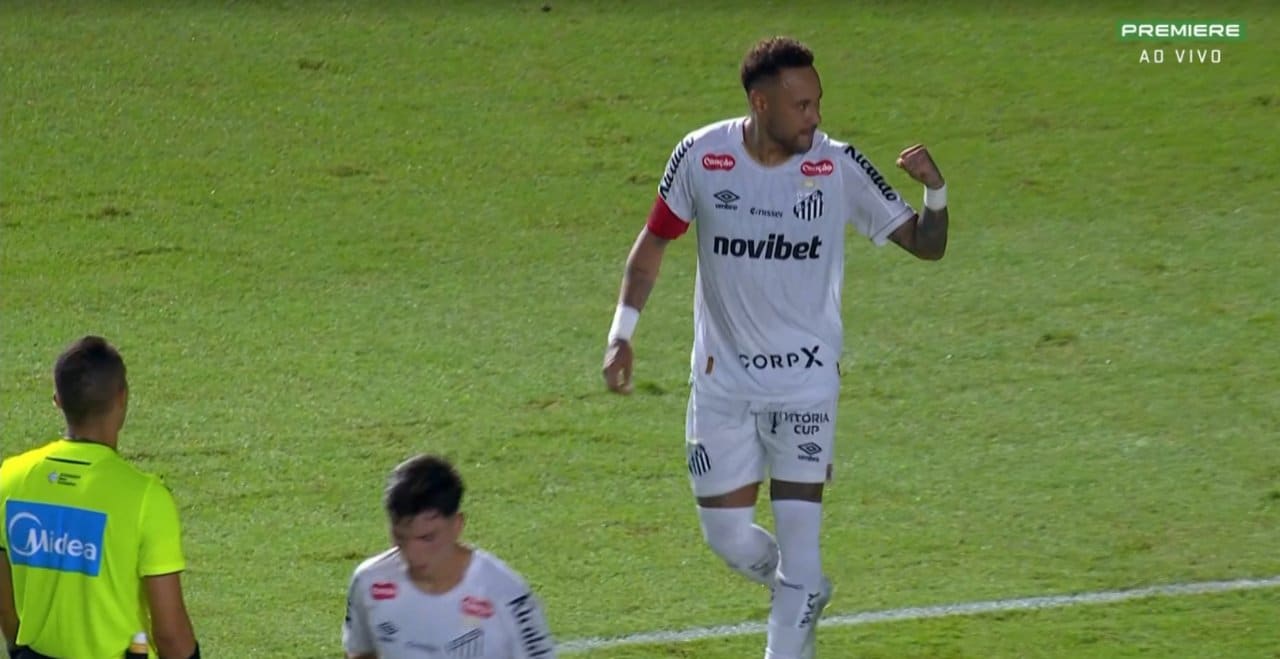 |
Estádio Urbano Caldeira was the scene of a fierce confrontation on the night of March 18, 2026, when Santos and Internacional met in a match valid for Brasileirão Betano. The duel ended with the score equal at 1-1, a result created after a busy additional stage marked by referee interventions. The visiting team took the lead with an own goal in the early stages of the second half, but the home team sought equality with a penalty kick taken by striker Neymar. The final score reflects the urgency of both associations to gain points to improve their respective positions on the national tournament leaderboard.
The match brought together two teams in delicate situations in the competition, requiring offensive postures from the referee’s opening whistle. Santos entered the field occupying 14th place, while Internacional was in 20th position, which turned the game into a direct dispute for immediate recovery.
The key moments of the confrontation occurred in the second half, changing the tactical dynamics established by the coaches in the dressing rooms. The need to seek results forced changes to the original formations and considerably increased the number of infractions committed by both sides on the pitch.
Developments of the complementary stage and decisive moves
The start of the second half surprised the fans present with an immediate change in the score in favor of the team from Rio Grande do Sul. Aos 46 minutes in, an unfortunate situation from defender Zé Ivaldo resulted in an own goal, putting Internacional ahead shortly after the break. The unexpected move forced Santos to advance their marking lines and intensify their presence in the attacking field, while the opponent strategically retreated to explore the spaces left in the São Paulo defense. The visiting team’s reactive stance generated counterattack opportunities, but Santos’ pressure became constant in the search for a draw.
The home team’s offensive insistence had an effect in the 53rd minute, when an infiltration move into the penalty area culminated in a maximum penalty. Attacker Moisés was brought down by Vitinho, defender of Internacional, leading referee Davi of Apesar due to vehement complaints from the players of the Rio Grande do Sul team, the decision was maintained. Neymar took responsibility for the charge and, with a precise shot with his right foot, beat the opposing goalkeeper in the 56th minute, declaring equality on the scoreboard and generating intense celebrations in the stands.
Tactical strategies and initial team formations
Coach Juan Pablo Vojvoda organized Santos in a 4-4-1-1 system, prioritizing possession of the ball and building plays on the sides of the field. The formation allowed Neymar to act freely as an attacking midfielder, floating between the marking lines to provide the offensive sector. The active participation of players like Rony and Á. Barreal was essential to maintain the volume of play.
On the Internacional side, coach Paulo Pezzolano opted for a 4-4-2 formation, focused on defensive solidity and quick transitions. The team included Rafael Borré and Á. Rodríguez in command of the attack, seeking to pressure the opponent’s ball. In midfield, Bruno Gomes and Rodrigo Villagra were responsible for containing and distributing the plays.
The dynamics of the game required quick adaptations from both coaches throughout the regulation 90 minutes. The numerical disadvantage in possession of the ball by Internacional was compensated by aggressive marking, while Santos needed to find alternatives to break through the defensive blockade established at the entrance to the area.
Chronology of the main events of the match
The confrontation was marked by a series of crucial moves that defined the course of the score and the distribution of cards. The sequence of events in the second half illustrates the intensity of the dispute between the teams on the São Paulo lawn.
- In the 46th minute, Zé Ivaldo scores against his own team, opening the scoring for Internacional.
- In the same minute, Moisés replaces Rony, in a tactical change promoted by Santos.
- In the 49th minute, F. Torres receives a yellow card for delaying the restart of the match.
- At 53 minutes, the referee signals a penalty in favor of Santos after a foul by Vitinho on Moisés.
- At 55 minutes, Vitinho is warned with a yellow card for the infraction committed inside the area.
- In the 56th minute, Neymar converted the maximum penalty with a right-footed shot, tying the game.
- In the 57th minute, Neymar receives a yellow card for celebrating the equalizer.
- At 58 minutes, Benjamín Rollheiser replaces Gonzalo Escobar in the Santos team.
- Still in the 58th minute, Christian Oliva commits a hard foul on Bruno Henrique in midfield.
Arbitration performance and disciplinary control
The conduct of the match by referee Davi of Oliveira Lacerda required rigor to contain the heated emotions of the athletes on the field. The combativeness in the dispute for possession of the ball resulted in a high number of fouls and the application of several yellow cards for both teams. The referee’s stance sought to maintain the physical integrity of the players and the fluidity of the game during both halves.
Defender Vitinho, from Do on the São Paulo side, the punishment given to Neymar for her celebration demonstrated the strict application of the disciplinary rules in force in the national competition regulations.
Situation on the championship leaderboard
The draw at Estádio Urbano Caldeira keeps Santos in 14th position from The team from São Paulo was looking for a victory at home to definitively move away from the relegation zone and begin their journey towards the top of the table.
Achieving just one point as home team increases the pressure on the Santos squad for the next commitments of the season. The need for regularity becomes the main focus of daily work at the training center, aiming to avoid fluctuations that compromise the club’s annual planning.
For Internacional, the result has a different weight, considering the team’s critical situation in the competition. Ocupando in 20th and last place, the team from Rio Grande do Sul has gained important points away from home, but the lack of victories prolongs its stay at the bottom of the national championship.
The technical committee of the Porto Alegre club recognizes the urgency of a sequence of positive results to reverse the current scenario. The point achieved on the coast of São Paulo serves as an indication of competitive improvement, but the team needs greater offensive efficiency to guarantee triumphs in subsequent rounds.
Final minutes and intensity in the search for victory
The final stretch of the match was characterized by an incessant search for the tiebreaker, with both teams giving up part of their tactical organization in favor of more direct offensive attacks. Santos used the speed of its wingers to force crosses into the area, trying to take advantage of the presence of its attackers and Neymar’s constant movement through the creative sector. On the other hand, Internacional maintained its focus on counterattacks, using its front men whenever it regained possession of the ball in the midfield sector. The tension in the stands reflected the balance of the actions on the pitch, where each wrong pass or successful tackle generated immediate reactions from the local fans. The athletes’ physical exhaustion became evident in the final minutes, forcing coaches to use all available substitutions to maintain the level of competitiveness and stamina. Apesar of the countless attempts and the pressure exerted in the additions granted by the referee, the defensive systems prevailed over the attacks, consolidating the score of equality and dividing the points between the associations in a round that was fundamental to the aspirations of both in the national tournament.