
Bruce Willis at 71: Demi Moore reveals moving photo with granddaughter in celebration By Carolina Costa
7 min read
 |
In a gesture of deep affection and family solidarity, the actress Demi Moore used her digital platforms to share a rare and moving moment of her ex-husband, the icon of captured the attention of the public and the media. Este visual record offers a rare insight into the life of Willis, who since her diagnosis of frontotemporal dementia in 2022, has maintained an increasingly private public life, making each appearance a significant event. The actor’s ongoing struggle with the progression of FTD, which affects his cognitive and communication abilities, makes these glimpses into his family intimacy all the more precious, underlining the importance of continued love and support throughout his journey.
Moore’s message, “All you need is love. Feliz birthday, BW!”, accompanied the photographs, expressing a sense of unwavering affection and support. Essa statement reflects the lasting friendship and mutual respect that persists between the two, even after their divorce, and underlines the unity of the extended family around Bruce.
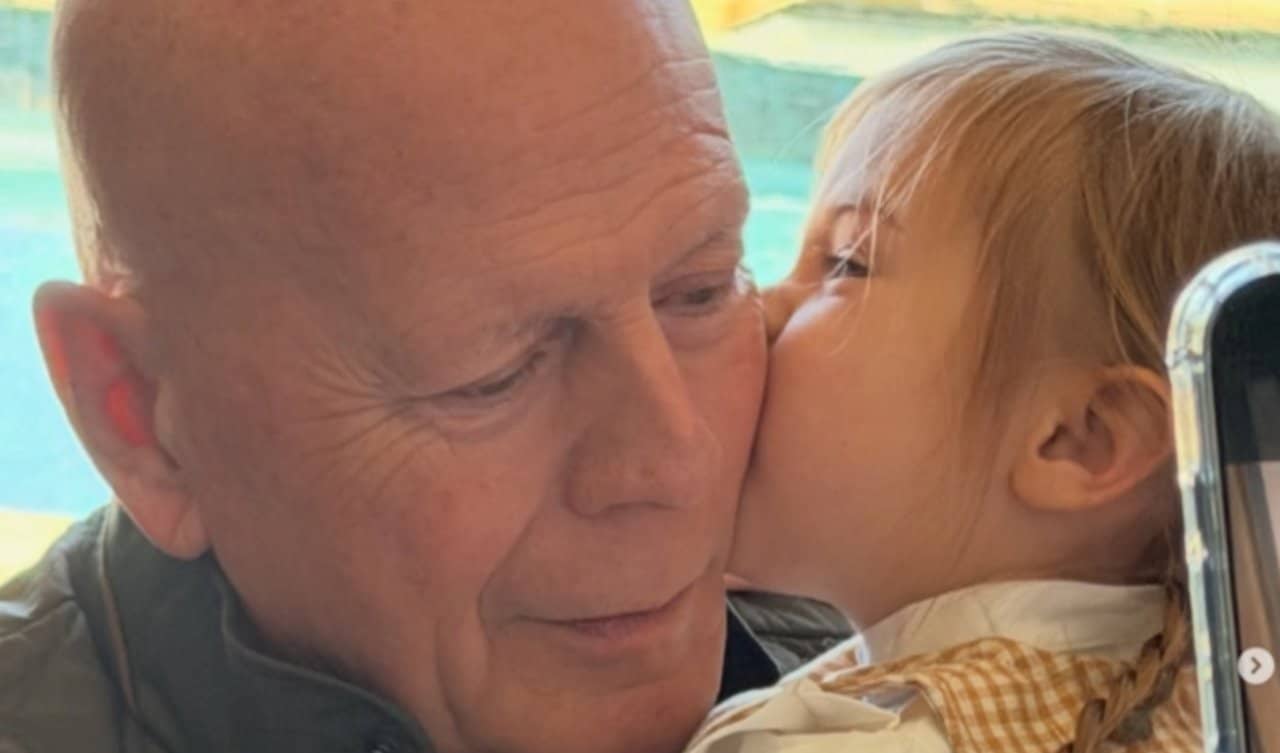
The images released portray Bruce Willis with a serene expression, tenderly hugging little Louetta, daughter of her firstborn Rumer Willis, born in April 2023. In one of the photos, the granddaughter is seen kissing her grandfather’s cheek, a pure gesture that highlights the affectionate connection between the generations and the happiness of the moment captured.
Family affection amid the star’s seclusion
This glimpse into Bruce Willis’s life alongside his granddaughter Louetta is of particular importance, considering the advanced stage of frontotemporal dementia that the actor faces and the seclusion that the condition imposes. The photographs become symbols of hope and continuity, showing that, despite the limitations imposed by the disease, moments of joy, affection and family connection continue to be a vital part of his existence, strengthening the bonds that surround him in his daily routine.
Bruce Willis’s family, including his current wife Emma Heming Willis and their daughters, has been open about the challenges of living with FTD, sharing the harsh realities of the condition. Cada new image or public statement, like that of
The progression of FTD and the impact on communication
Since 2022, when Bruce Willis announced his retirement from artistic life due to an initial diagnosis of aphasia, his health trajectory has been followed with concern by fans and the industry. The condition was later re-evaluated and confirmed as frontotemporal dementia (FTD), a neurodegenerative disease that severely compromises the frontal and temporal lobes of the brain, areas crucial for functions such as personality, behavior, language and decision-making. Sua deterioration explains the actor’s increasing communication challenges, which led him to a phase of “non-verbality” in which his verbal interactions are extremely limited, culminating in his early retirement from cinema where he left an indelible mark.
The pillar of family unity and the defense of awareness
Family unity and support have been the foundation in Bruce Willis’s battle against FTD, setting an example of resilience and love. Demi Moore, the actor’s ex-wife to whom she was married from 1987 to 2000 and had daughters Rumer, 37, Scout, 34, and Tallulah, 32, maintains a harmonious and deeply supportive relationship with Bruce and his current wife, Essa network of affection transcends conventional and geographic ties, demonstrating a collective commitment to the actor’s well-being. The constant presence of all family members on social media, sharing moments and information, serves as a powerful testimony of unconditional love and unity, highlighting that, despite the difficulties imposed by the disease, affection remains the strongest link.
Emma Sua Honesty and vulnerability have been instrumental in humanizing the experience of FTD and in demystifying the anticipatory grieving process that many families face, transforming a personal tragedy into an opportunity for public service. Esse joint effort of the extended family strengthens support for Bruce and inspires others in similar situations to seek and offer help, building a community of mutual understanding and support.
Repercussions on Hollywood and public engagement
Demi Moore’s tribute reverberated deeply within Hollywood and among Bruce Willis’s fans around the world, generating a massive wave of solidarity and affection. The artistic community, with many colleagues and friends who worked alongside the actor in his extensive filmography, publicly expressed their admiration for the way the family has dealt with the disease, sending messages of affection and support that multiplied on social networks and in various media outlets. Esses tributes reinforced the impact that Bruce Willis had and continues to have on the lives of many people, both for his cinematographic work and for his courage in facing adversity.
The visibility of Bruce Willis’s situation plays a fundamental role in raising awareness about frontotemporal dementia, a condition less known than Alzheimer, but equally devastating and requiring greater attention from medical research and society. Family openness in discussing symptoms and challenges contributes significantly to public understanding of the disease, encouraging further scientific investigation and improving support for patients and caregivers. The case of Willis, a global star, highlights the urgent need for greater attention and resources for dementia, which affects millions of people globally, often in silent and little understood ways.
This open dialogue, driven by public figures like Bruce Willis and her family, is essential to breaking the stigma that often surrounds neurodegenerative diseases. By witnessing the actor’s journey, the audience is invited to reflect on compassion and empathy, realizing that dementia can affect anyone, regardless of their fame or success, and that love and family support are the most important pillars to face such challenges, offering an example of how dignity can be maintained even in the face of vulnerability.
Details About Frontotemporal Dementia: A Guide
Frontotemporal dementia (FTD) is actually a group of progressive brain disorders that specifically attack the frontal and temporal lobes of the brain, crucial areas associated with personality, behavior, language and, in some cases, movement. Unlike other forms of dementia that predominantly affect memory, such as Alzheimer, FTD is characterized by notable changes in personality and decision-making, as well as progressive difficulties in communication, which explains Bruce Willis’s aphasia and deterioration in verbal ability. The condition generally manifests in individuals younger than Alzheimer, with the majority of diagnoses occurring between the ages of 45 and 65, significantly impacting the professional and personal lives of those affected.
The symptoms of FTD are diverse and can be grouped into two main categories, reflecting the brain areas affected. In the behavioral variant (VCFTD), disinhibition, apathy, loss of empathy and repetitive compulsive behaviors predominate, often leading to drastic changes in personality that can be misinterpreted as psychiatric problems. Já nas afasias progressivas primárias (APP), o foco está na deterioração da capacidade de falar, entender, ler ou escrever, com diferentes subtipos dependendo das habilidades de linguagem específicas que são afetadas em primeiro lugar, tornando a comunicação diária um grande desafio.
Although there is still no cure for frontotemporal dementia, treatment focuses primarily on managing symptoms and improving patients’ quality of life, aiming to slow progression and alleviate discomfort. Abordagens Multidisciplinary approaches are essential, involving neurologists, psychiatrists, speech therapists and occupational therapists, who work together to mitigate the impacts of the disease on the daily lives of the patient and their family.
Continuous support from family and caregivers is a vital component in this management and support process. Creating a safe and structured environment, along with adjusting expectations and celebrating small victories, can make a significant difference in a patient’s quality of life and maintaining their dignity. Programas support for caregivers is also essential, as caring for a person with FTD can be emotionally and physically exhausting, requiring a robust support network for everyone involved.
The cinematic legacy of Bruce Willis
Bruce Willis’s career is a testament to versatility and talent, with a filmography that spans genres and generations, solidifying his status as one of Hollywood’s biggest stars, an icon of action and drama. Desde from the irreverent charm of David Addison in “The Gata and the of an action hero with depth and humanity, capable of moving between drama and comedy with equal mastery, captivating audiences globally. Sua Retirement, although painful for fans, does not diminish the brilliance of a professional career that marked world cinema indelibly.
Bruce Willis’s cultural impact transcends its performances; he became an icon who represented a certain resilience, quick-witted humor, and vulnerability that set him apart from other action stars. The way he and his family have coped with frontotemporal dementia adds a new layer to his legacy, transforming him from a screen hero to a real-life example of dignity and strength, inspiring millions. Sua história continua a inspirar, não apenas pela brilhante carreira que teve, mas pela forma corajosa e aberta como enfrenta os desafios da saúde, reafirmando sua humanidade.
The resilience of emotional bonds
The photos shared by Demi Moore are more than just records; they are a powerful reminder of the resilience of the human spirit and the indissoluble strength of family love, which remains unwavering even in the face of such challenging health conditions as frontotemporal dementia. In a context where words can fail and memory can fade, images become essential vehicles for memory, connection and the continuous demonstration of affection, not only for Bruce Willis, but for everyone who surrounds him and follows his journey with devotion and hope.



