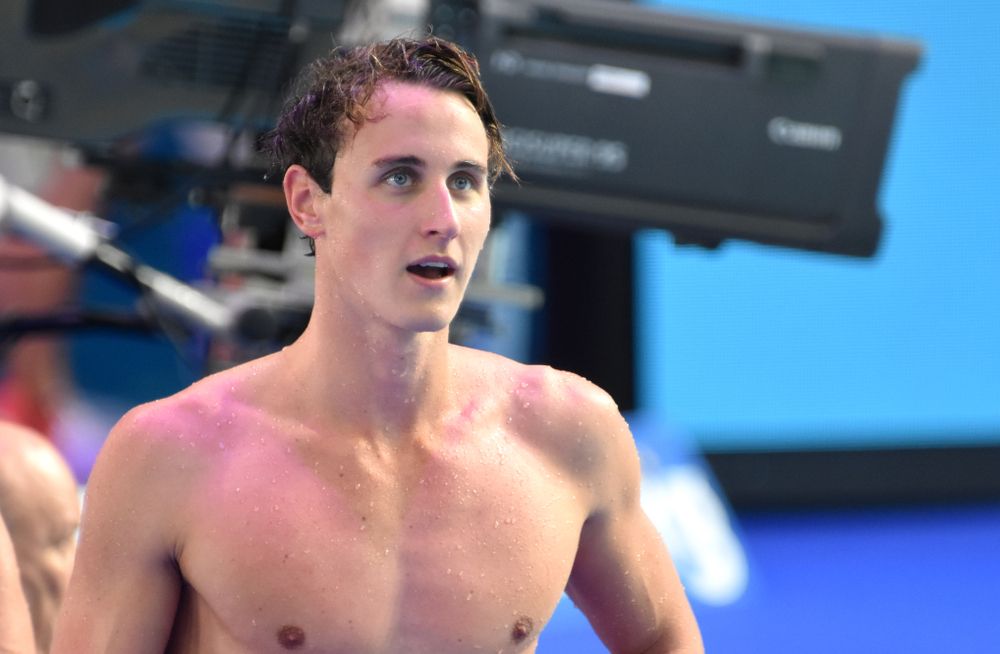
Australian swimmer Cameron McEvoy achieved a historic feat this Friday morning, March 20, by setting a new world record in the 50m freestyle event. Durante the dispute between Aberto and China, the athlete completed the distance in an impressive 20s88, surpassing the previous mark that belonged to the Brazilian Cesar Cielo. The time of Cielo, 20s91, had been in effect since December 2009 and was one of the most lasting marks in modern swimming.
The record-breaking performance came on the back of a dominant performance from McEvoy, which confirmed his exceptional form in international pools. The result represents the first time that a swimmer has managed to lower the 20.90 mark in an official competition since the end of the era of technological suits. The Australian’s achievement ends Brasil’s reign of more than 16 years at the top of the world swimming speed chart.
- New world record: 20s88 set by Cameron McEvoy in China.
- Previous record: 20s91 recorded by Cesar Cielo on December 22, 2009.
- Technical difference: 0.03 thousandths of a second separated the two historic marks.
- Context: The mark of Cielo was obtained during the Open of Natação in São Paulo.
End of Brazilian sovereignty in world swimming pools
With surpassing the Cesar Cielo mark this Friday, the Brasil no longer holds any current world record in long and short pool swimming events. The 50m freestyle record was the last bastion of a golden era that began at the end of the 2000s, when the country became a reference in speed events. Além of this event, Cielo also held the 100m freestyle record for 13 years, a mark that was beaten by the Romanian David Popovici in 2022.
The loss of this symbolic mark reflects a generational and technical shift in the global water sports landscape. Especialistas pointed out that the time of 20s91 was one of the most difficult to beat due to the conditions in which it was originally established. However, advancements in training methods and the physical evolution of athletes like McEvoy allowed the barrier to finally be overcome on Chinese soil.
Cameron McEvoy’s meteoric career at speed
Cameron McEvoy has consolidated his position as the fastest man in swimming history after a string of impressive results in recent years. The Australian had already demonstrated his favoritism by winning the gold medal in the Jogos Olímpicos and Paris in 2024, when he won the final with a time of 21s25. Sua technical consistency is evidenced by the fact that he is the current two-time world champion in the distance, with titles in Fukuoka and Singapura.
The athlete adopted a different training approach focused exclusively on maximum power for the 50m, which resulted in constant improvement in his times. Diferente than other swimmers who divide their efforts between several events, McEvoy specialized in the explosion required for the shortest event on the Olympic program. The new world record is the crowning achievement of a meticulously planned cycle to reach the physical peak at Aberto of China.
Technical and physical evolution in the men’s 50m freestyle
The 50m freestyle event requires a perfect combination of starting reaction, underwater swimming and stroke frequency with no room for error. McEvoy managed to optimize his transition from water to swimming, maintaining maximum speed throughout the 50-meter long pool. The biomechanical analysis of the race carried out today shows that the Australian maintained a cadence higher than the historical average for the category.
Many swimmers have tried to approach the 20.91 mark over the past two decades, but the barrier has seemed insurmountable for most. The time of 20.88 now serves as the new global benchmark for sprinters targeting upcoming international competitions and the Olympic cycle. McEvoy’s precision in technical details was the difference in removing the three hundredths necessary for the historic break.
Impact on international swimming rankings
Federação Internacional of Natação should confirm McEvoy’s time in the coming days, officially updating the world record tables. With this result, the Austrália reaffirms its strength in swimming pools, especially in speed events where it historically competes for space with the Estados Unidos. The performance in the Aberto of the China places the country in a prominent position in the ranking of medals and records for the current season.
The competitors who participated in the race highlighted that the level of demand rose drastically with the new brand established. Para to win the 50m freestyle from now on, athletes will need to plan strategies that allow them to consistently swim under 21 seconds. McEvoy’s achievement is seen as a watershed moment that definitively ends the discussion about the longevity of records from the costume era.
Preparation for the 2026 competitive cycle
The Aberto of the China serves as an important thermometer for athletes seeking indexes and preparation for the continental championships taking place later this year. Cameron McEvoy used the competition to test new adjustments to his swimming, which proved extremely effective in achieving the record. Sua technical team indicated that the focus will remain on maintaining this speed for the next commitments in Asian and European territory.
The swimmer’s physical preparation involved periods of high intensity and controlled recovery, specifically aimed at this morning’s contest. Unlike previous seasons where the training volume was greater, the current strategy prioritized the technical quality of each movement. The practical result was a clean race, with no failures at the turn or finish, guaranteeing the athlete’s definitive entry into the history of the sport.
Historical comparison of world speed brands
When we analyze the trajectory of world records in the 50m freestyle, we realize that developments usually occur in small fractions of a second over years. Antes set his time in 2009, the record belonged to Frenchman Frederick Bousquet, who had swum in 20.94. The stability of the Brazilian brand for more than 16 years demonstrates how extraordinary Cielo’s achievement was at the time.
- 2009: Cesar Cielo sets 20s91 on São Paulo.
- 2022: David Popovici breaks Cielo’s 100m freestyle record.
- 2024: Cameron McEvoy wins in Paris with 21s25.
- 2026: McEvoy sets a new world record of 20.88 in the China.
Repercussion on the Brazilian sports scene
Brazilian swimming receives the news with a mix of respect for the new record holder and nostalgia for the brand that has lasted for almost two decades. Cesar Cielo continues to be the biggest name in the history of national swimming, but the loss of the record signals the urgency of new investments in the base. The country is now seeking to renew its roster of athletes to try to regain its leading role in speed events in the next Olimpíadas.
Brazilian coaches say that McEvoy’s mark was expected given the athlete’s growth in recent world competitions. The work carried out at Austrália is cited as an example of how specialization in short tests can yield historic results. Brasil now focuses on developing talents that can, in the future, challenge the times set by the new generation of international swimmers.
Future of speed in world swimming
With the new record of 20s88, the question arises as to what the human limit will be for the men’s 50m freestyle event. Atletas and coaches believe the 20.80 barrier could be the next big challenge for elite swimmers. Cameron McEvoy, at 31 years old, demonstrates that age has not been an impediment to technical and physical evolution in high-performance swimming.
Future competitions in fast pools, such as the China and Estados Unidos, should attract even more attention after this achievement. Breaking a 16-year-old record renews the interest of the public and sponsors in water sports. The world is now closely watching McEvoy’s every entry into the water, waiting to see if the Australian can lower his own all-time mark even further.