
Scott McTominay scores a quick goal in Cagliari vs Napoli in Serie A in Italy By Luís Henrique Costa
5 min read
 |
The Unipol Domus stadium hosts a high-intensity clash valid for the thirtieth round of the Campeonato Italiano, pitting two teams with different objectives in the competition face to face. The match demands maximum attention from the defensive systems from the referee’s initial whistle Maurizio Mariani, reflecting the importance of each ball possession.
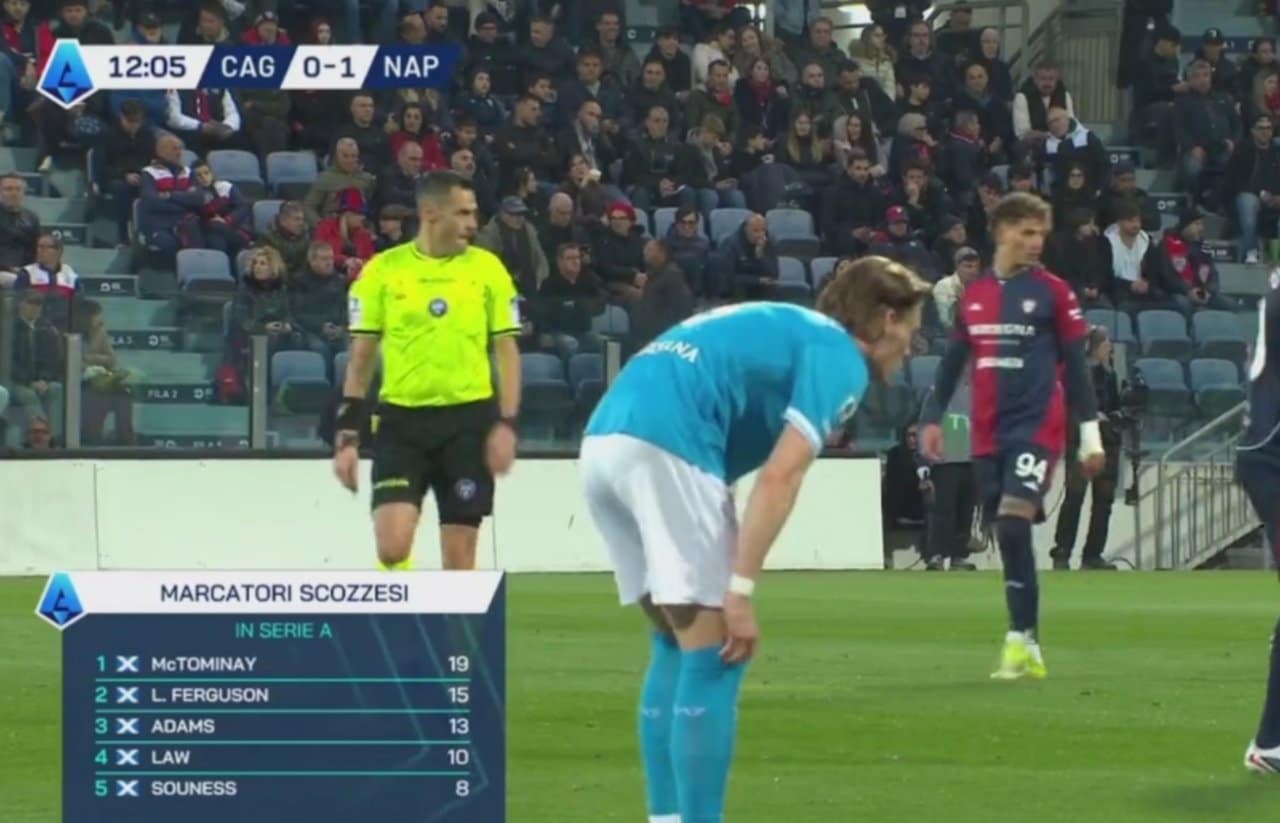
The visiting team demonstrated immediate efficiency in its offensive proposal, changing the score in the first moments of the duel. Midfielder Scott McTominay found space in the opponent’s area to find the net after two minutes of the ball rolling, establishing a new rhythm for the match.
With the favorable score of 1-0 built early, the team led by Antonio Conte dictates actions in the creative sector. The hosts, under the guidance of Fabio Pisacane, seek to reorganize their lines to neutralize the opponent’s movement and find spaces for quick counterattacks.
Initial strategy and building the Neapolitan advantage
The tactical movement in the opening minutes showed a preparation focused on high pressure by the visiting squad, which did not allow the home team to establish their usual style of play. The play that led to the opening of the scoring came from a corner kick conceded by defender Alberto Dossena, demonstrating the effectiveness of the set pieces rehearsed during the week of training. The cross found Sam Beukema, who finished with precision from the small area, requiring a complex intervention from the local defensive system before the ball was free in the danger zone.
The rebound fell directly at the feet of Scott McTominay, who demonstrated agility and privileged positioning to shoot with his right foot, with no chance of recovery for goalkeeper Elia Caprile. Este quick goal forced an immediate change in the posture of the host team, which had to abandon its initially cautious formation to advance its marking lines. The need to seek a draw opened up spaces in the midfield sector, allowing quick transitions and considerably increasing the volume of shots from both sides even before the ten-minute mark of the game.
Continuous pressure and offensive responses in the first half
Even with the advantage on the scoreboard, the offensive posture of the Nápoles team remained unchanged, using the sides of the field to create new dangerous situations. Aos six minutes in, striker Matteo Politano found space in the middle and risked a strong shot with his left foot, which forced the opposing goalkeeper to make a difficult save in the top right corner.
The distribution of moves had the active participation of Kevin De Bruyne, responsible for activating Rasmus Højlund in the attack command. The front duo constantly moved between the defenders, creating instability in the three-man defensive line set up by the opposing coach and forcing successive retreats.
On the other side, the Sardenha team tried to respond through direct calls and speed plays on the flanks. Striker
At twenty-one minutes, Esposito had the home team’s best chance up until that moment, finishing from long distance after a quick transition. The attempt did not result in an equal score, but served to demonstrate the local team’s ability to react in the face of adversity imposed by the visitors.
Increased physicality and referee interventions
The intensification of disputes over possession of the ball increased the level of physical contact between athletes, requiring specific interventions from the refereeing team to maintain disciplinary control of the confrontation. Aos seventeen minutes in, the match had to be stopped for medical attention to player Michael Folorunsho, who suffered a harsh tackle in the midfield sector.
The infraction resulted in the application of the first yellow card of the game, directed at midfielder Stanislav Lobotka. The referee’s rigidity established a clear limit for tackles, which did not prevent Zé Pedro from also being cautioned with a yellow card after thirty-five minutes, after committing a foul on the scorer of the goal in a fierce dispute in the center of the pitch.
Creation of opportunities and solidity of defensive systems
Efficiency in intercepting passes became a determining factor in maintaining the minimum score during the first stage. Defender
At eighteen minutes, the Colombian defender himself contributed in the offensive sector by heading a ball for Michael Folorunsho, who ended up wasting the opportunity on the penalty spot. Esta play highlighted the strategy of using tall defenders in set pieces to surprise the opponent’s marking and create numerical superiority in the area.
The visiting containment system demonstrated synchrony by making quick covers whenever the opposing wingers managed to overcome the first line of combat. The compactness of the midfield made infiltrations difficult, forcing the home team to risk frequent crosses that were safely neutralized by goalkeeper Vanja Milinkovic-Savic and his defense line.
Sequence of main events in the initial stage
The dynamics of the first thirty-nine minutes of the ball rolling was marked by a succession of events that dictated the intense rhythm of the confrontation at the Unipol Domus stadium. Logo in the first minute, a corner given by Alberto Dossena signaled the initial pressure that would culminate in Scott McTominay’s goal after two minutes, completely changing the tactical panorama planned by the technical committees. Aos five minutes in, a foul on Rasmus Højlund in midfield demonstrated an attempt to stop the visiting momentum, followed by a crucial save from Elia Caprile on a shot by The game continued with intercepted opportunities, such as McTominay’s header in the fifteenth minute, and moments of tension, evidenced by the stoppage to assist Michael Folorunsho in the seventeenth minute, which resulted in a yellow card for Stanislav Lobotka. Attempts at local reaction took shape with shots from Sebastiano Esposito at twenty-one minutes, while the physical rigor of the match was punished again at thirty-five minutes, with a warning to
Tactical disposition and reflections on the leaderboard
The 3-4-2-1 formation chosen by the visiting technical committee provided numerical superiority in the creative sector, facilitating the retention of ball possession and territorial control. The presence of two articulating midfielders close to the center forward made it difficult for the line of three defenders set up by the local team to individual mark, creating spaces for constant infiltrations.
The 3-5-2 formation adopted by the home team sought to populate the midfield to block the passing lines, but the early disadvantage forced the wingers to act more advanced, exposing the side corridors. The tactical adaptation throughout the minutes demonstrated the flexibility required in high-level technical clashes in Italian football, requiring quick reading of the game by coaches.
Importance of the result for the teams’ aspirations
The partial score directly reflects the ambitions of the clubs within the Campeonato Italiano, with the Nápoles team seeking to consolidate its third position and reach fifty-nine points in the general classification table. Para the team from



