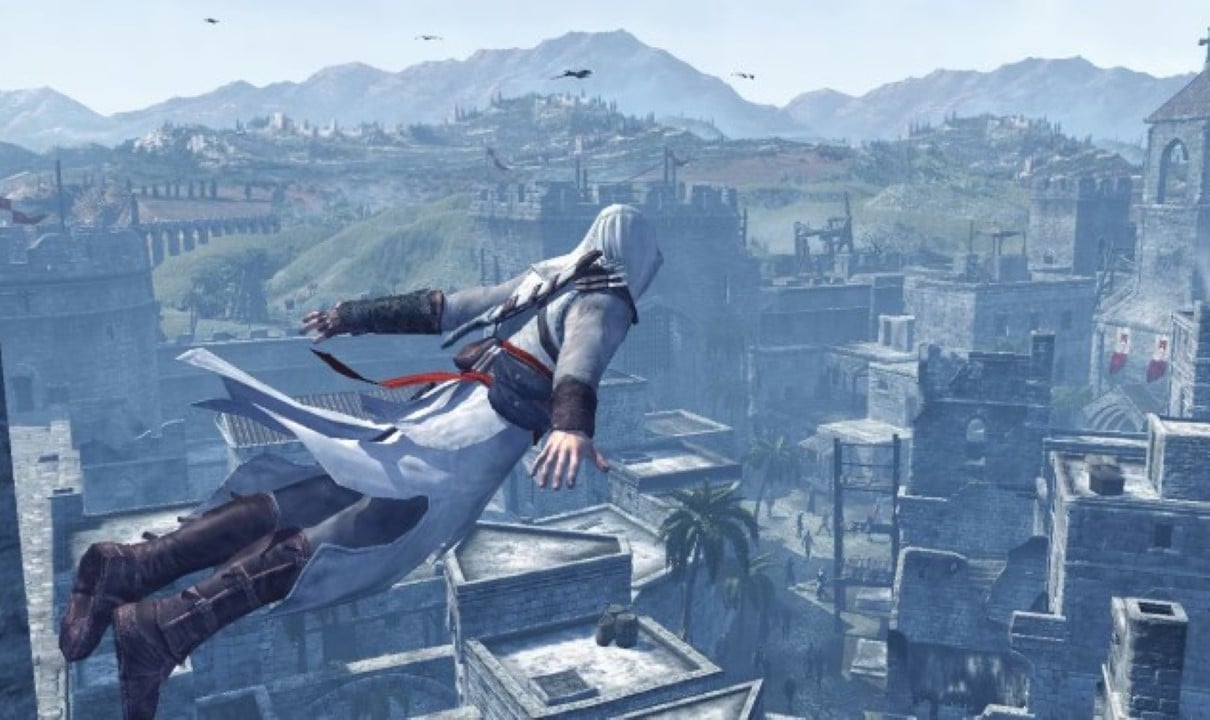
The Assassin’s Creed community expresses strong rejection of the announcement of DLSS 5 integration in the game Assassin’s Creed Shadows. Nvidia’s new artificial intelligence upscaling and rendering technology generates concern among players even before the title’s official launch. Muitos point out that the resource could change the series’ characteristic aesthetics, with changes in lighting, materials and appearance of characters that deviate from the original artistic style.
Discussions on forums and social media highlight fears that the intensive implementation of AI will compromise the immersion and visual quality that fans have come to expect from the franchise. Críticas appear mainly after demonstrations of Nvidia that show comparisons with and without the resource applied in Assassin’s Creed Shadows.
Reactions from the gaming community
Players organize debates on platforms like Reddit to express opposition to DLSS 5. One topic gained prominence by calling for action against Ubisoft’s decision to adopt the technology as its main showcase.
Part of the messages criticizes the leadership involved in the project. Comentários question choices that prioritize technical advances to the detriment of the artistic direction consolidated over the years in the series.
This image of AC What really bothers me is changing the characters’ appearance. Acho which is something fully adjustable.
—Ariel Combo (@arielsis)March 16, 2026
For now it’s a demo. Curioso for the future (worried too 🙃)pic.twitter.com/GVYtNx02ak
Concerns about aesthetic changes
DLSS 5 uses AI models to infuse scenes with photorealistic lighting and enhanced materials in real time. Demonstrações reveal significant changes to the rendering of characters and environments.
Fans fear that these modifications will generate inconsistent or generic results. Exemplos displayed by Nvidia in partnership with the game indicate transformations that some describe as excessive in facial appearance and textures.
Position of Ubisoft and Nvidia
Representatives from Ubisoft argue that the resource expands the possibilities for creating more realistic worlds. Declarações emphasize improvements in the way light, materials and characters are rendered to elevate the feeling of immersion.
Nvidia reinforces that DLSS 5 represents an advance in visual fidelity. The technology arrives alongside titles such as Assassin’s Creed Shadows, Resident Evil Requiem and Starfield to demonstrate its potential in different styles of play.
Game implementation context
Assassin’s Creed Shadows serves as one of the main examples of support for DLSS 5. The partnership aims to highlight performance and quality gains in historical scenarios of feudal Japão.
The game already supports ray tracing and other upscale technologies. The inclusion of DLSS 5 comes at a time of high expectations for its launch, but also of debates about the balance between technical innovation and artistic preservation.
History of controversies in the franchise
The Assassin’s Creed series has faced recent wear and tear with decisions that divide opinions. Mudanças in creative direction and development framework fuel discussions about the future of intellectual property.
The presence of figures linked to the founding family of Ubisoft in charge of new studios revives conversations about internal influence. Críticas to nepotism arise in parallel to complaints about the use of generative AI.
Expected impact at launch
Resistance to DLSS 5 may influence the public’s initial perception of Assassin’s Creed Shadows. Jogadores await options to disable or adjust the feature in the game menu.
Developers and publishers closely monitor reactions. The technology remains in preview phase, with launch scheduled for fall 2026 in several titles.
The community continues to monitor official updates. Debates persist about the role of AI in the evolution of graphics in games.
Feature technical details
DLSS 5 operates with color and motion vector input to generate frames with AI-enhanced lighting and materials. Diferente from previous versions, the neural model infuses photorealistic elements into the scene.
Support spans multiple studios and publishers. Exemplos include improvements in contrast and detail in open environments.
The feature requires compatible Nvidia hardware. Jogadores with recent cards can test previews in technical demonstrations.
