
Luis de la Fuente announces Spanish team list with four newcomers for preparatory friendlies By Jeronimo Santos
5 min read
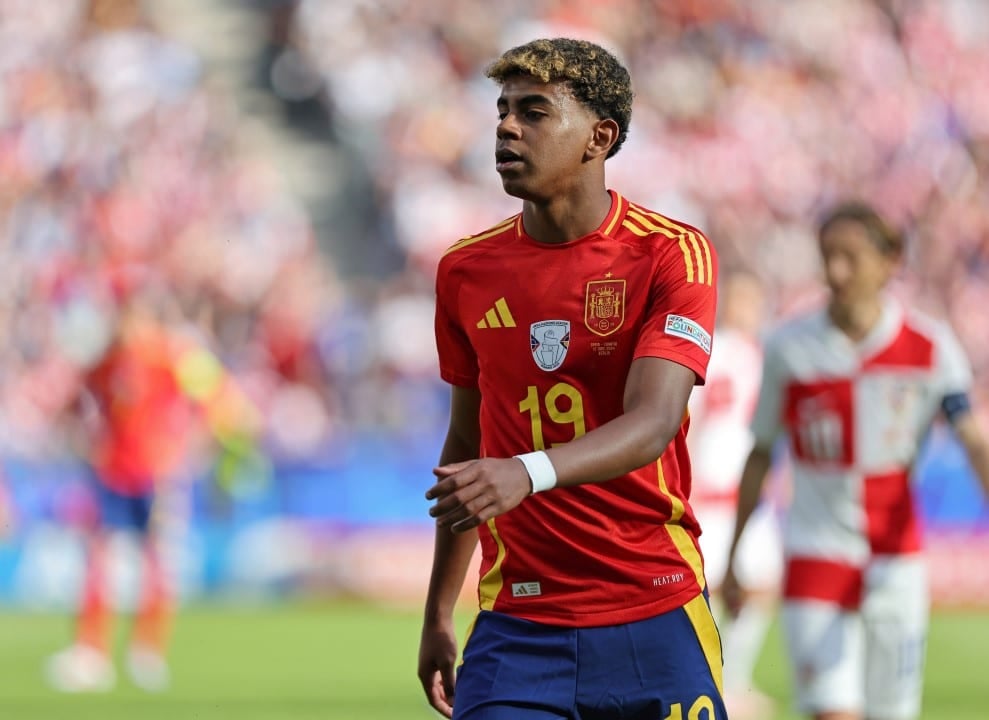 |
Coach Luis of the Fuente released the squad list for the Spanish football team for the next date reserved for international commitments. The list includes twenty-seven players who will represent the country in two preparatory friendlies scheduled for the end of March.
The clashes are scheduled against the teams of Sérvia and Egito, serving as fundamental tests for the European team. The first game will take place on the twenty-seventh of March, while the second match is scheduled for the thirty-first of the same month, both in Spanish territory.
These matches represent the last opportunity for observation and tactical adjustment before defining the squad that will travel to América from Norte. The world team tournament will take place between June 11th and July 19th, jointly hosted by Estados Unidos, México and Canadá.
News in the national team call-up
The main attraction of the list presented by the technical committee is the inclusion of four athletes who receive the opportunity to wear the main team’s shirt for the first time. Goalkeeper Joan García, from FC Barcelona, and defender Cristhian Mosquera, from Valencia, are part of the defensive system called up, awarded for their regular performances in club competitions.
In the offensive sector, the news comes from Ander Barrenetxea, attacker of Real Sociedad, and Víctor Muñoz, who plays for Osasuna. The technical committee seeks to observe how these young talents integrate into the main team environment and whether they are able to assimilate the tactical concepts required at international level against opponents from different continents.
Details of the preparatory clashes
The first commitment of the team led by Luis from Fuente will be against the Sérvia selection. The match is scheduled for 21 pm, local time, and will take place at Estádio de la Cerámica, located in the city of Villarreal. Este venue is known for its vibrant atmosphere and proximity of the stands to the pitch, which should provide a strong supportive environment for local players.
Four days later, the Spanish delegation travels to Catalunha, where they will face the Egito team. Este second friendly will be held at RCDE Stadium, home of Espanyol, marking the return of the national team to the city of Barcelona after a period of four years without playing in the region. The expectation is that the stadium, which has a capacity for more than thirty-eight thousand spectators, will receive a large audience to support the national team.
The choice of these opponents occurred after a restructuring of the federation’s calendar. Inicialmente, there was an agreement for a friendly against the Argentina team, but logistical issues made the confrontation unfeasible, leading management to look for alternatives that offered a similar level of demand for the squad’s preparation against different football schools.
Squad structure and defensive positions
For the goalkeeper position, the coaching staff chose to maintain a basis of trust, combined with the introduction of a new name. Unai Simón, from Athletic Club, David Raya, from Arsenal, and Álex Remiro, from
The defensive system was set up with the aim of guaranteeing solidity and ability to release the ball, essential characteristics in the Spanish game model. The list of defenders includes players with varied characteristics, capable of playing in different tactical schemes depending on the opponent’s position on the field.
The full-backs and defenders called up include Marcos Llorente, from Atlético from Madrid, Pedro Porro, from Tottenham, and Aymeric Laporte, from Athletic Club. Young Pau Cubarsí, from FC Barcelona, was also called up, consolidating his place in the main team after consistent performances for his club and demonstrating maturity when leaving the game.
The defensive sector is completed by athletes Dion Fisen, Real Madrid, Cristhian Mosquera, Valencia, Marc Cucurella, Chelsea, and Alejandro Grimaldo, Bayer Leverkusen. Esta combination of players plays in high-intensity leagues, which the coaching staff considers vital to face the physical and tactical challenges of the world tournament.
Midfield and offensive options
The Spanish national team’s midfield sector continues to be the pillar of the game system implemented by Luis de la Fuente, focused on possession of the ball and controlling the pace of the match. The list of players called up for this area of the field includes Rodrigo Hernández, from Manchester City, Martín Zubimendi, from Real Sociedad, and Pedri González, from FC Barcelona. Juntam belongs to them Pablo Fornals, from Real Betis, Carlos Soler, from Real Sociedad, Dani Olmo, from FC The massive presence of players who play together for their clubs or have a history in the national team’s youth categories aims to facilitate interaction and the quick execution of offensive transitions during friendlies.
In attack, the technical committee sought to diversify the options, mixing speed spikes with area finishers to break through different defensive blocks. The attackers named include Yeremy Pino and Álex Baena, both from Villarreal, Ander Barrenetxea, from Real Sociedad, and Víctor Muñoz, from Osasuna. Para to complete the offensive power, Mikel Oyarzabal, from Real Sociedad, Ferran Torres and Lamine Yamal, from FC Barcelona, were selected, in addition to the experienced Joselu Mato, from Esta variety allows the team to change its attacking dynamics throughout the ninety minutes, using both plays from the flanks and infiltrations through the center of the opponent’s defense, adapting to the needs of each confrontation.
Training logistics in the capital
The preparation of the national team will officially begin on Monday, March 23rd, when all twenty-seven players called up must report to Ciudad del Fútbol, the federation’s training complex located in Las Rozas, on the outskirts of Madrid. The schedule established by the technical committee provides for rigorous physical assessments on the first day, considering the wear and tear accumulated by athletes in their respective national leagues and continental club competitions. From Tuesday onwards, on-field training will be intensified, focusing on behind-closed-doors tactical sessions to rehearse set pieces, high-pressing dynamics and defensive compaction. The delegation will remain concentrated in the Spanish capital until the day before the first friendly match, when it will travel to the province of Castellón for the clash against Sérvia. After the game at Estádio to Cerámica, the group will briefly return to Madrid for physical recovery sessions and video analysis before continuing their journey to Barcelona, where they will finalize the international friendlies window against Egito. Toda this logistics was meticulously designed to simulate the concentration environment and constant displacement that the team will face during the competition in América of Norte, testing the players’ ability to adapt, physical recovery and focus in short periods of time.
Expectations for the world tournament
The Spanish football federation treats these two friendlies as the definitive filter for drawing up the final squad list for the competition based in Estados Unidos, México and Canadá. The tournament, which will feature an expanded format of forty-eight teams, will require a deep, versatile and physically prepared squad. The individual and collective performance against Sérvia and



